

Can Trulieve (TRLV) Turn Rising Losses Into a Sustainable Margin and Cash Flow Strategy?
Trulieve Cannabis Corp TRLV | 0.00 |
- Trulieve Cannabis Corp. reported second-quarter 2026 results showing sales of US$270.95 million versus US$302.09 million a year earlier, with net loss rising sharply to US$405.98 million and basic loss per share from continuing operations at US$2.10.
- Over the first half of 2026, sales slipped to US$557.71 million while net loss widened to US$403.57 million, highlighting a significant deterioration in profitability that may prompt investors to reassess the company’s ability to manage costs and sustain its business model.
- We’ll now explore how this sharp increase in quarterly net loss affects Trulieve Cannabis’s existing investment narrative around rescheduling, margins and cash flow.
AI is about to change healthcare. These 44 stocks are working on everything from early diagnostics to drug discovery. The best part - they are all under $10b in market cap - there's still time to get in early.
Trulieve Cannabis Investment Narrative Recap
To own Trulieve Cannabis today, you need to believe that federal rescheduling, tax relief from 280E and maturing medical markets can eventually outweigh current operating pressure. The latest quarter’s sharp net loss challenges confidence in that path and puts near term focus on cash generation and cost control. In my view, the biggest short term catalyst remains clarity on rescheduling and tax treatment, while the key risk has shifted toward execution and balance sheet strain if losses persist.
Against this backdrop, the recently authorized share repurchase program of up to US$50 million, or 5% of outstanding subordinate voting shares, stands out. It links directly to the investment debate around capital allocation, margins and cash flow at a time when Trulieve’s losses have widened. For some, the buyback underlines management’s conviction in the business, while others may question committing cash to repurchases given the magnitude of the latest quarterly loss.
Yet behind the headline of rescheduling upside, investors should be aware that Trulieve’s worsening losses raise fresh questions about how long its balance sheet can comfortably support...
Trulieve Cannabis' narrative projects $933.9 million revenue and $183.7 million earnings by 2029. This requires a 6.4% yearly revenue decline and a $651.5 million earnings increase from -$467.8 million today.
Uncover how Trulieve Cannabis' forecasts yield a $18.18 fair value, a 88% upside to its current price.
Exploring Other Perspectives
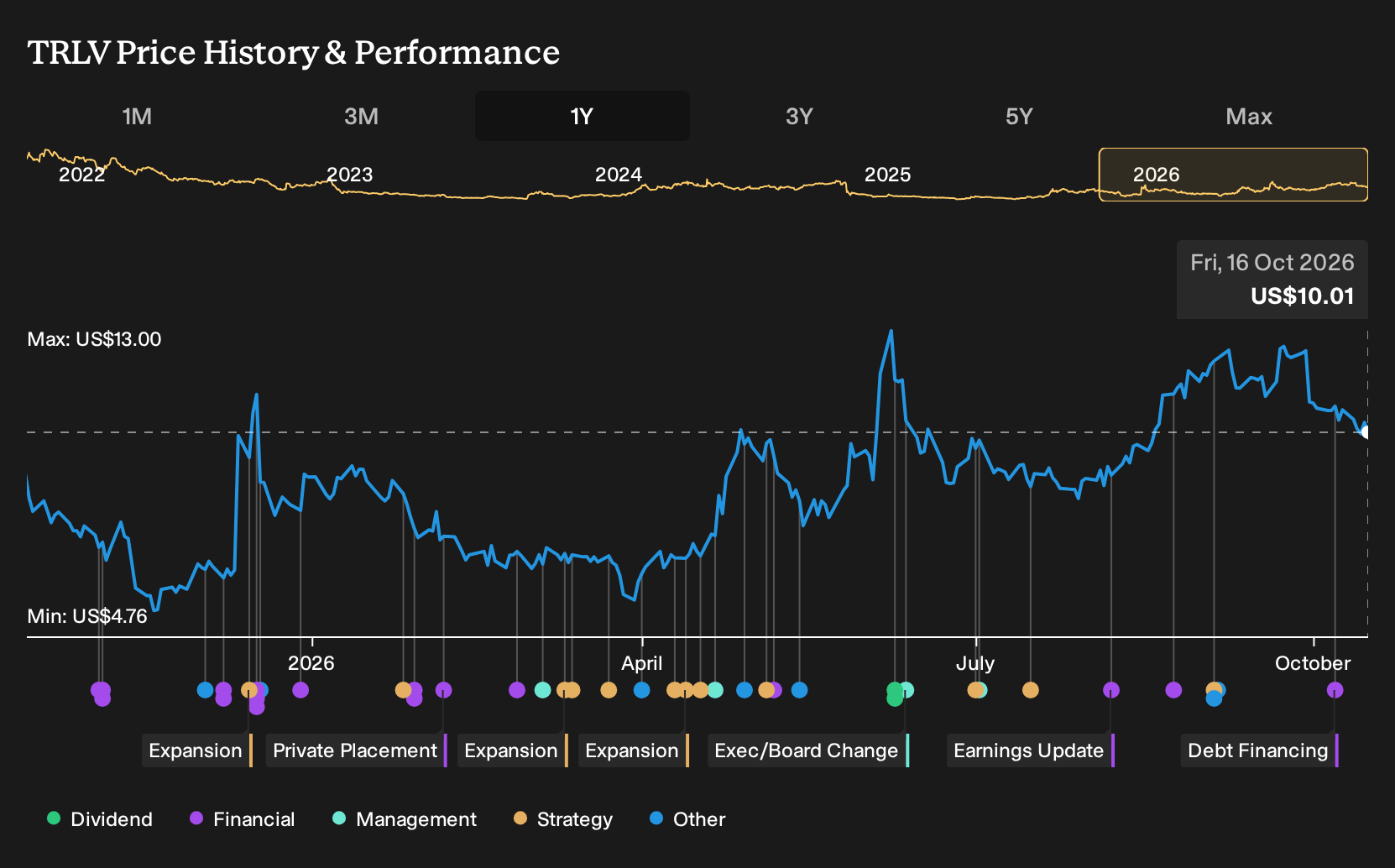
Before this earnings shock, the most cautious analysts still expected revenue near US$870 million and earnings of about US$250 million by 2029, whereas today’s results highlight how quickly those assumptions and the Georgia and Texas growth story might be reassessed.
Explore 4 other fair value estimates on Trulieve Cannabis - why the stock might be worth as much as 95% more than the current price!
Decide For Yourself
Disagree with existing narratives? Extraordinary investment returns rarely come from following the herd, so go with your instincts.
- A great starting point for your Trulieve Cannabis research is our analysis highlighting 3 key rewards and 2 important warning signs that could impact your investment decision.
- Our free Trulieve Cannabis research report provides a comprehensive fundamental analysis summarized in a single visual - the Snowflake - making it easy to evaluate Trulieve Cannabis' overall financial health at a glance.
Seeking Other Investments?
These stocks are moving-our analysis flagged them today. Act fast before the price catches up:
- Invest in the nuclear renaissance through our list of 91 elite nuclear energy infrastructure plays powering the global AI revolution.
- The future of work is here. Discover the 37 top robotics and automation stocks leading the charge in AI-driven automation and industrial transformation.
- We've uncovered the 10 dividend fortresses yielding 5%+ that don't just survive market storms, but thrive in them.
This article by Simply Wall St is general in nature. We provide commentary based on historical data and analyst forecasts only using an unbiased methodology and our articles are not intended to be financial advice. It does not constitute a recommendation to buy or sell any stock, and does not take account of your objectives, or your financial situation. We aim to bring you long-term focused analysis driven by fundamental data. Note that our analysis may not factor in the latest price-sensitive company announcements or qualitative material. Simply Wall St has no position in any stocks mentioned.