
Chewy Options Surge Signals Bearish Sentiment And Earnings Risk Focus
Chewy CHWY | 26.87 | +0.94% |
- Options trading in Chewy (NYSE:CHWY) has spiked ahead of its upcoming earnings announcement.
- The Put/Call Ratio is unusually high, with put contracts seeing far higher than expected activity.
- This options activity points to strong bearish sentiment and increased volatility expectations around the earnings release.
Chewy, the online pet products and services retailer, sits at the intersection of e commerce and the pet care industry, an area that often attracts investors looking for consumer spending trends. When options activity surges like this, especially in puts, it can indicate that larger traders are actively positioning around potential earnings surprises or guidance updates.
For you as a shareholder or prospective investor, the key question is what this options skew might be implying about perceived risk rather than trying to copy the trades themselves. Elevated puts and volatility pricing can affect short term share price moves around earnings, so it can be helpful to revisit your time horizon and risk tolerance before that report is released.
Stay updated on the most important news stories for Chewy by adding it to your watchlist or portfolio. Alternatively, explore our Community to discover new perspectives on Chewy.
What the options spike is really signaling
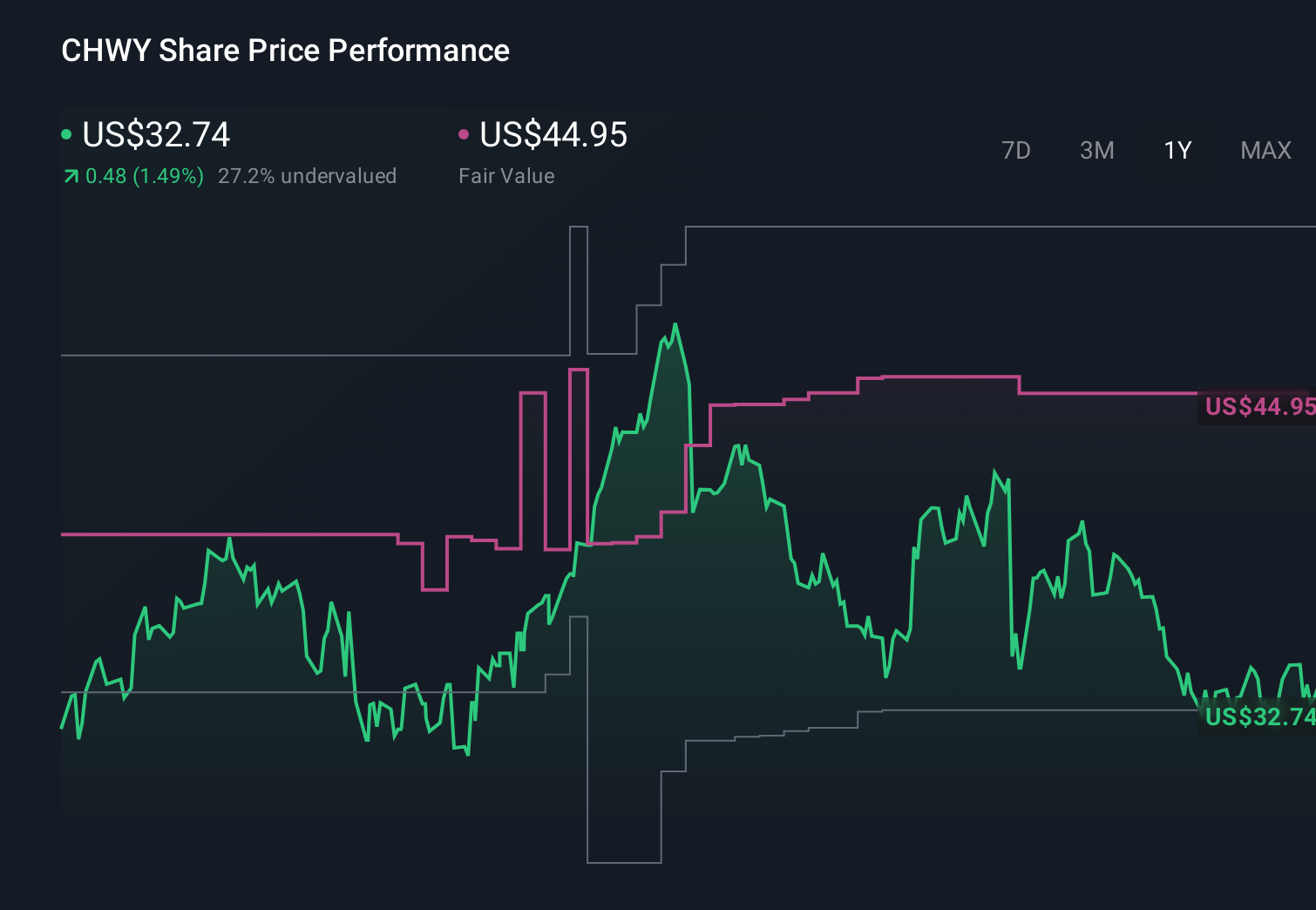
The Put/Call Ratio of 8.39 is an extreme skew toward puts. This tells you that a lot of capital is being put to work to hedge or speculate on downside into Chewy's 25 March earnings date. That aligns with a 4.30% share price drop on 3 February and suggests traders are bracing for a wide range of earnings outcomes, rather than a quiet report.
How this fits into the broader Chewy narrative
This bearish options setup sits against a backdrop where many analysts still frame Chewy as an execution story on membership, Autoship and newer earnings drivers like veterinary services, similar to how investors look at other pet and e commerce names such as Petco and Amazon. Recent commentary has highlighted improving operational leverage, recurring subscription type revenue and Chewy+ membership changes. The current options positioning may reflect short term nerves around guidance and margins rather than a complete reset of the longer term story.
Risks and rewards investors are weighing
- ⚠️ A very high Put/Call Ratio and recent price weakness can increase the risk of sharper swings around earnings if results or guidance disappoint versus expectations.
- ⚠️ Analysts have flagged pressure points like marketing spend, margin assumptions and slow active customer growth, which options traders may be keying off when they load up on puts.
- 🎁 On the reward side, several firms still carry "Outperform" or "Overweight" labels and price targets in the mid to high US$40s and low US$50s, which indicates ongoing confidence in Chewy's business model from parts of the market.
- 🎁 If earnings or guidance come in better than the cautious options setup implies, heavily one sided positioning can sometimes work in favor of existing shareholders through short term relief moves.
What to watch into earnings
Into the 25 March report, it is worth focusing less on the options noise and more on what Chewy says about Autoship stickiness, Chewy+ membership trends, vet services traction and any reset or reaffirmation of guidance. If you want to see how different investors are connecting these moving parts to long term value and risk, you can read community narratives on Chewy by heading to check what other investors are saying about Chewy's narratives.
This article by Simply Wall St is general in nature. We provide commentary based on historical data and analyst forecasts only using an unbiased methodology and our articles are not intended to be financial advice. It does not constitute a recommendation to buy or sell any stock, and does not take account of your objectives, or your financial situation. We aim to bring you long-term focused analysis driven by fundamental data. Note that our analysis may not factor in the latest price-sensitive company announcements or qualitative material. Simply Wall St has no position in any stocks mentioned.