

Coinbase Deepens Crypto ISAC Ties As Cybersecurity Costs And Trust Loom
Coinbase COIN | 0.00 |
- Coinbase Global (NasdaqGS:COIN) has expanded its integration with Crypto ISAC to continuously share proprietary threat intelligence across the crypto sector.
- The move formalizes ongoing, real time collaboration with vetted industry members focused on identifying and responding to cybersecurity risks.
- This development represents a sector wide effort to build collective defenses against sophisticated attacks on exchanges and blockchain platforms.
For you as an investor, this matters because Coinbase is a major gateway to trading and custody for digital assets, and cybersecurity is a core part of that business model. As regulatory scrutiny on crypto platforms continues, industry backed information sharing through Crypto ISAC can support more consistent security practices and potentially influence how risk is viewed across listed crypto companies.
Looking ahead, broader intelligence sharing could affect how institutional clients, custody partners, and regulators assess operational risk in the crypto sector. While the financial impact of this move is not yet clear, it adds another data point for how NasdaqGS:COIN is positioning itself within ongoing efforts to standardize security across digital asset infrastructure.
Stay updated on the most important news stories for Coinbase Global by adding it to your watchlist or portfolio. Alternatively, explore our Community to discover new perspectives on Coinbase Global.
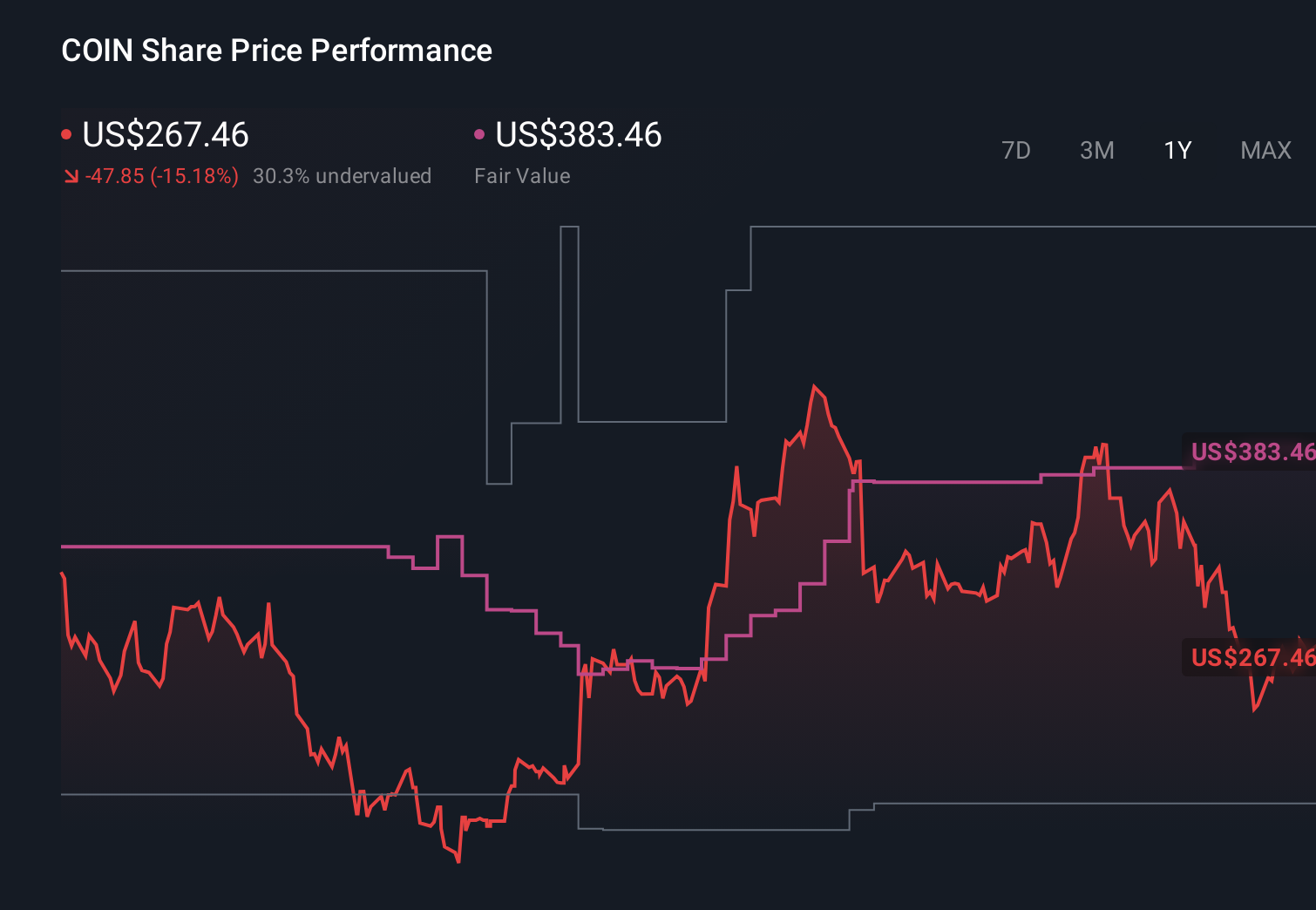
For Coinbase, shifting from ad hoc to continuous, automated threat intelligence sharing with Crypto ISAC looks like an operational upgrade in how it handles cyber risk across its trading, custody, and on-chain services. Because regulators already focus heavily on cyber resilience at systemically important platforms, this move may help show that Coinbase is aligning with financial sector style information sharing practices that you also see at players such as Binance and Kraken, which can matter when authorities assess supervision, licensing, and incident response expectations.
How this fits into the Coinbase Global narrative
Both the more optimistic and more cautious narratives around NasdaqGS:COIN highlight cybersecurity and compliance costs as key swing factors for future profitability, and this integration sits squarely in that debate. On one hand, better intelligence sharing can support the idea of Coinbase as a trusted access point for institutions and large stablecoin users. On the other hand, it underlines that security and regulatory infrastructure are ongoing investments that may keep operating expenses elevated as the company expands into areas like prediction markets and broader financial services.
Key risks and rewards to keep in mind
- ⚠️ Cybersecurity incidents remain a major risk, and more sharing does not remove the possibility of costly breaches or regulatory penalties if incidents occur.
- ⚠️ Continuous data contribution to a sector hub could attract further regulatory expectations, potentially adding to already high compliance and reporting workloads.
- 🎁 Participation in a vetted, FedRAMP Ready, SOC 2 Type 2, and ISO 27001 certified hub may support Coinbase’s case with regulators that it is operating to higher security standards than some smaller exchanges.
- 🎁 Faster detection and coordinated responses can help protect trading volumes, custody relationships, and institutional trust during periods of heightened threat activity.
What to watch next
As an investor, it is worth watching whether regulators or large institutional clients explicitly reference Crypto ISAC style collaborations when they talk about expectations for crypto-market infrastructure, and whether any future cyber incidents at Coinbase or peers trigger new rules, fines, or operating restrictions. If you want to see how other investors are thinking about how security, regulation, and new products fit into the long term story, check community narratives on NasdaqGS:COIN.
This article by Simply Wall St is general in nature. We provide commentary based on historical data and analyst forecasts only using an unbiased methodology and our articles are not intended to be financial advice. It does not constitute a recommendation to buy or sell any stock, and does not take account of your objectives, or your financial situation. We aim to bring you long-term focused analysis driven by fundamental data. Note that our analysis may not factor in the latest price-sensitive company announcements or qualitative material. Simply Wall St has no position in any stocks mentioned.