
Consolidated Edison (NYSE:ED) Will Pay A Larger Dividend Than Last Year At $0.8875
Consolidated Edison, Inc. ED | 115.43 | +1.33% |
Consolidated Edison, Inc. (NYSE:ED) will increase its dividend from last year's comparable payment on the 16th of March to $0.8875. This makes the dividend yield about the same as the industry average at 3.3%.
Consolidated Edison's Future Dividend Projections Appear Well Covered By Earnings
We like to see a healthy dividend yield, but that is only helpful to us if the payment can continue. Based on the last payment, Consolidated Edison's earnings were much higher than the dividend, but it wasn't converting those earnings into cash flow. No cash flows could definitely make returning cash to shareholders difficult, or at least mean the balance sheet will come under pressure.
Over the next year, EPS is forecast to expand by 16.7%. Assuming the dividend continues along recent trends, we think the payout ratio could be 54% by next year, which is in a pretty sustainable range.
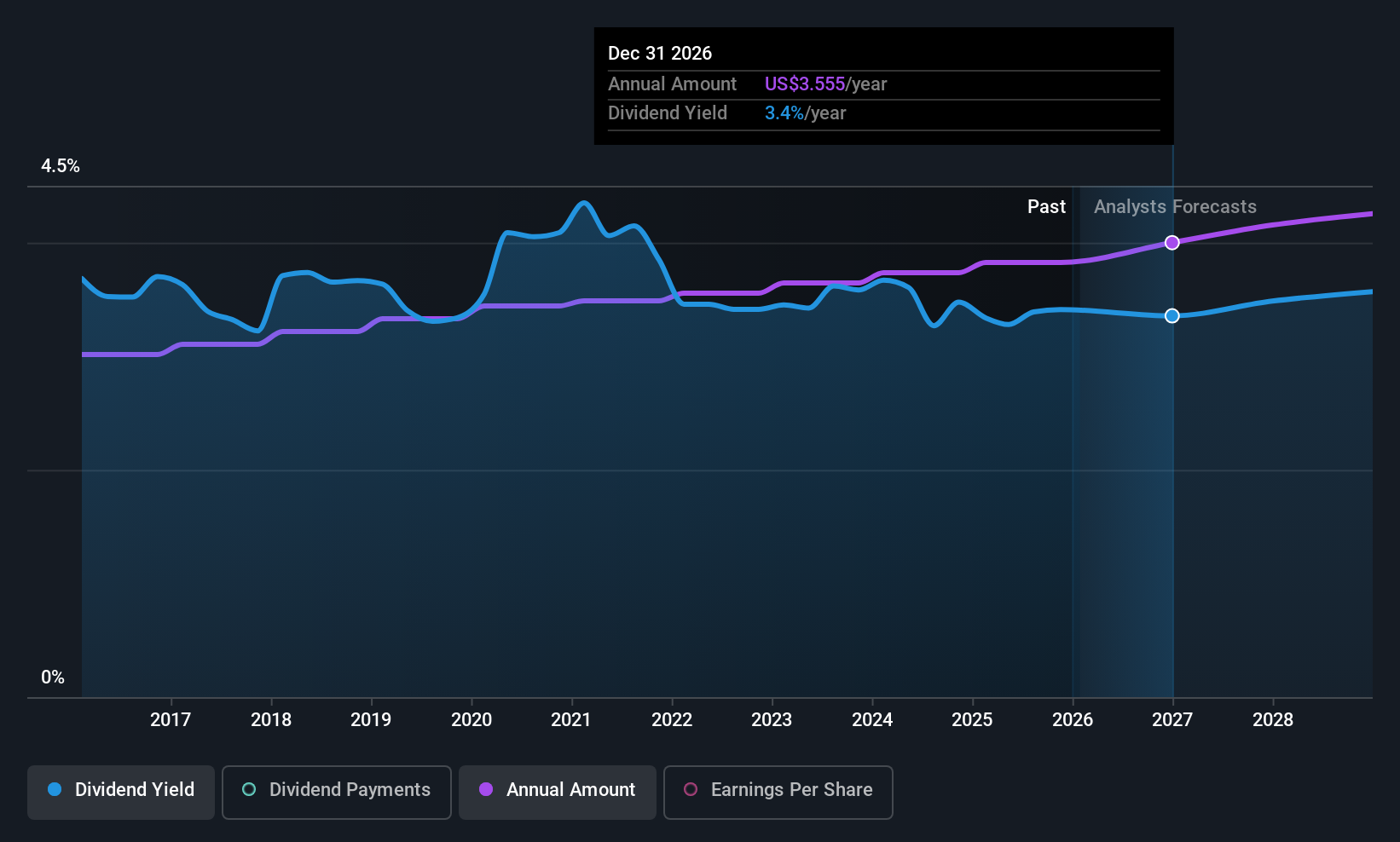
Consolidated Edison Has A Solid Track Record
The company has been paying a dividend for a long time, and it has been quite stable which gives us confidence in the future dividend potential. Since 2016, the annual payment back then was $2.60, compared to the most recent full-year payment of $3.55. This works out to be a compound annual growth rate (CAGR) of approximately 3.2% a year over that time. Slow and steady dividend growth might not sound that exciting, but dividends have been stable for ten years, which we think makes this a fairly attractive offer.
Consolidated Edison Could Grow Its Dividend
The company's investors will be pleased to have been receiving dividend income for some time. Consolidated Edison has impressed us by growing EPS at 6.8% per year over the past five years. The lack of cash flows does make us a bit cautious though, especially when it comes to the future of the dividend.
Our Thoughts On Consolidated Edison's Dividend
Overall, this is probably not a great income stock, even though the dividend is being raised at the moment. While Consolidated Edison is earning enough to cover the payments, the cash flows are lacking. Overall, we don't think this company has the makings of a good income stock.
Companies possessing a stable dividend policy will likely enjoy greater investor interest than those suffering from a more inconsistent approach. Still, investors need to consider a host of other factors, apart from dividend payments, when analysing a company. To that end, Consolidated Edison has 2 warning signs (and 1 which is a bit unpleasant) we think you should know about. Is Consolidated Edison not quite the opportunity you were looking for? Why not check out our selection of top dividend stocks.
This article by Simply Wall St is general in nature. We provide commentary based on historical data and analyst forecasts only using an unbiased methodology and our articles are not intended to be financial advice. It does not constitute a recommendation to buy or sell any stock, and does not take account of your objectives, or your financial situation. We aim to bring you long-term focused analysis driven by fundamental data. Note that our analysis may not factor in the latest price-sensitive company announcements or qualitative material. Simply Wall St has no position in any stocks mentioned.