
Corteva Resets With Bayer Deal And Seed Spin Off Plans
Corteva Inc CTVA | 85.46 | +1.97% |
- Corteva (NYSE:CTVA) has reached a comprehensive settlement with Bayer that resolves all "freedom to operate" litigation between the two companies.
- The agreement is expected to support Corteva's corn licensing activities and open a path into the cotton licensing market.
- Separately, Corteva is moving ahead with a planned separation of its seed operations into a standalone company.
- The spin off may include relocating the new seed company headquarters to Iowa, with implications for regional economic activity.
Corteva sits at the intersection of crop protection and seed technologies, serving farmers across major global row crops. In that context, the settlement with Bayer removes a legal overhang tied to technology rights and gives Corteva clearer room to operate its licensing models. For investors, the combination of legal clarity and a reshaped corporate structure represents a meaningful shift in how this agricultural inputs business is organized to compete.
Looking ahead, the separation of the seed business and the potential Iowa headquarters move indicate a more focused corporate setup, with one entity centered on seeds and another on other operations. The settlement and spin off plans together could affect Corteva's capital allocation priorities, partnership approach, and regional footprint, all of which are worth tracking as the restructuring progresses.
Stay updated on the most important news stories for Corteva by adding it to your watchlist or portfolio. Alternatively, explore our Community to discover new perspectives on Corteva.
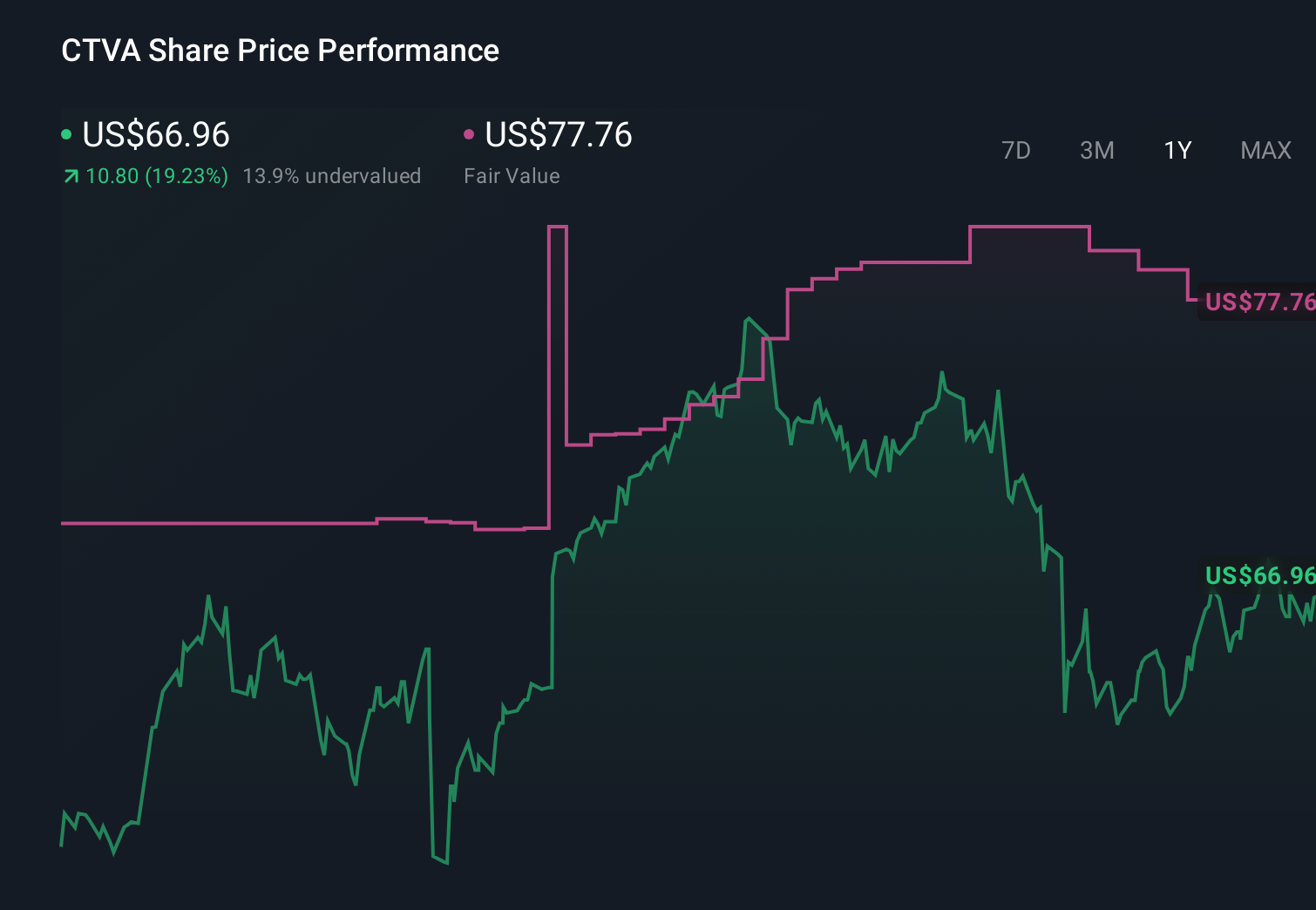
The Bayer settlement gives Corteva clearer legal rights around key seed traits, which directly ties into its corn and cotton licensing plans and removes uncertainty that could have complicated the planned seed spin off. The one time US$610 million payment sits alongside a recent quarter that already carried a US$552 million net loss, so investors may want to think about how these cash and earnings effects balance with management’s expectation of roughly US$1 billion of earnings benefit over ten years and a move toward royalty neutrality in 2026.
Corteva narrative, now with a cleaner legal backdrop
The company has been framed in the existing Corteva narrative as a seeds and crop protection supplier leaning on higher margins, cost discipline and new products, and this legal resolution fits that storyline by simplifying the economics of its trait portfolio. As Corteva prepares to split seeds from crop protection and targets operating EPS of US$3.45 to US$3.70 in 2026, the settlement and spin plan shape how investors might compare it with peers such as Bayer, Syngenta and FMC that also balance patent portfolios, regulation and capital returns.
Risks and rewards to weigh
- ⚠️ Earnings volatility risk. The recent quarterly net loss of US$552 million and the US$610 million settlement payment add complexity to short term profitability and cash flows.
- ⚠️ Execution risk on the spin off. Separating seed operations, standing up new IT systems and potentially moving headquarters could distract management or add unforeseen costs.
- 🎁 Royalty and licensing upside. Management points to roughly US$1 billion of aggregate earnings benefit over ten years and improved freedom to license corn and cotton traits.
- 🎁 Capital return flexibility. Record free cash flow of US$2.9b, margin expansion above 22% and a planned US$500 million share repurchase program in early 2026 give the board options alongside the regular US$0.18 dividend.
What to watch from here
From here, it is worth tracking how quickly corn and cotton licensing ramps, how the seed spin off terms are structured for existing shareholders, and whether 2026 guidance for operating EBITDA of roughly US$4.0b to US$4.2b is reaffirmed as the year progresses, especially relative to competitors like Bayer and FMC. If you want to see how other investors are thinking about these moving parts, take a look at the community narratives for Corteva on this dedicated page and compare the legal and restructuring news with your own expectations.
This article by Simply Wall St is general in nature. We provide commentary based on historical data and analyst forecasts only using an unbiased methodology and our articles are not intended to be financial advice. It does not constitute a recommendation to buy or sell any stock, and does not take account of your objectives, or your financial situation. We aim to bring you long-term focused analysis driven by fundamental data. Note that our analysis may not factor in the latest price-sensitive company announcements or qualitative material. Simply Wall St has no position in any stocks mentioned.