

Coterra And Devon Merger Puts Shareholder Value And Fairness Under Review
Coterra Energy CTRA | 0.00 |
- Coterra Energy and Devon Energy have entered a definitive merger agreement, combining the two oil and gas producers.
- The deal involves significant shareholder participation, including input from major investor Kimmeridge.
- Coterra has announced upcoming changes to its board structure tied to the merger.
- A shareholder fairness investigation is underway to review the terms and process of the transaction.
Coterra Energy, trading on the NYSE under ticker NYSE:CTRA, is entering a new phase as it prepares to merge with Devon Energy. The company comes into this announcement with a share price of $30.66 and multi year returns of 36.9% over 3 years and 116.7% over 5 years. For existing and prospective shareholders, those figures provide context when considering what this merger could mean.
As this deal progresses, it will be important to follow how the merger terms, board reshuffle, and shareholder feedback develop. The fairness investigation adds an additional layer of scrutiny, which may influence how different investor groups view the transaction and its potential impact on NYSE:CTRA over time.
Stay updated on the most important news stories for Coterra Energy by adding it to your watchlist or portfolio. Alternatively, explore our Community to discover new perspectives on Coterra Energy.
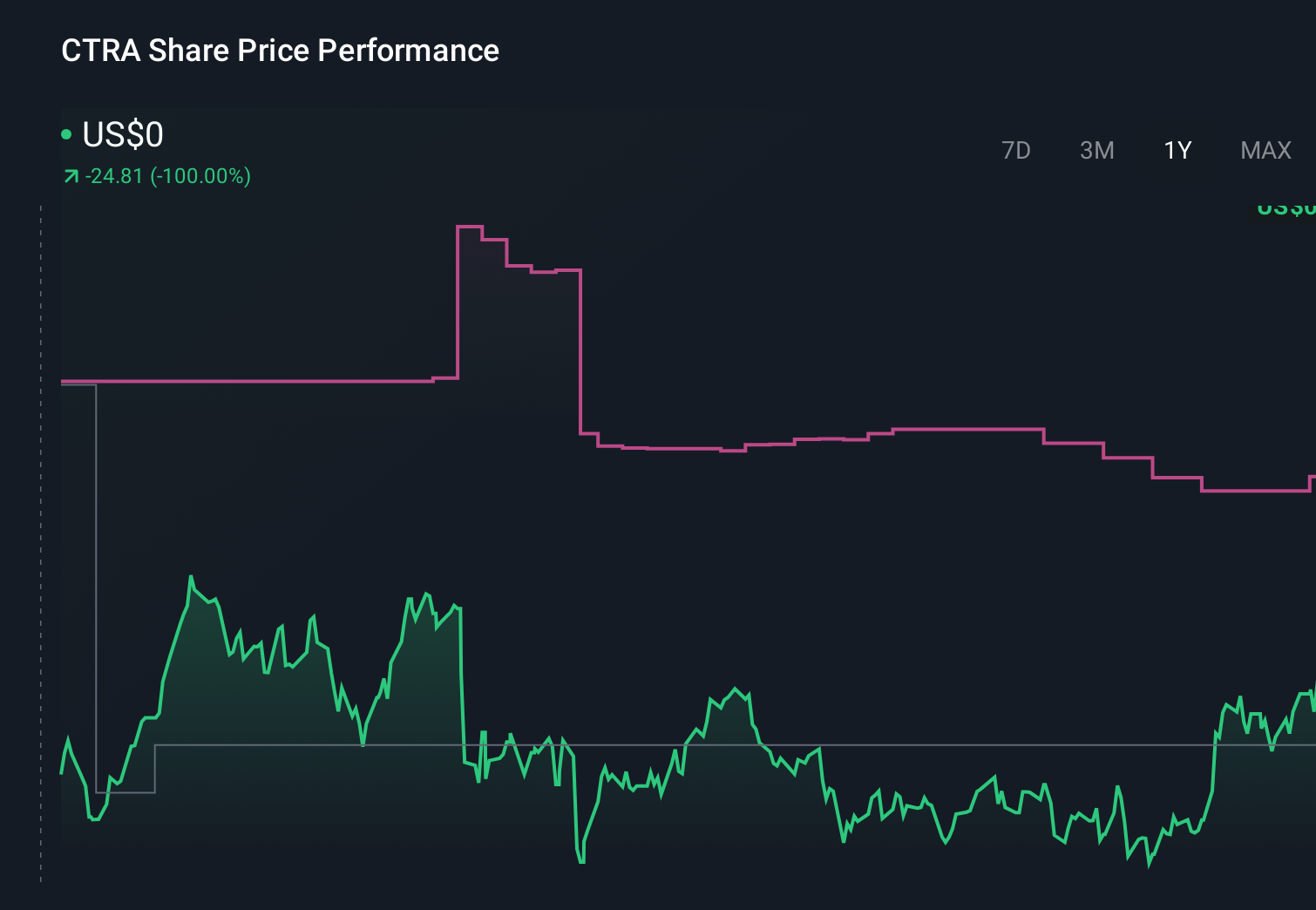
The Devon and Coterra all stock merger on a fixed 0.70 share exchange ratio tells you this is effectively a paper-for-paper deal, with Coterra holders swapping standalone exposure for a 46% stake in a larger US$58b shale operator. Investor activity has already surfaced on both sides, from Kimmeridge publicly backing the combination and pushing for Delaware Basin focus, to a class-action firm questioning whether the exchange ratio and process are fair, which signals a wide range of views on value and governance.
Coterra Energy narrative, now through a Devon lens
The existing Coterra narratives highlight a company built around diversified oil and gas production, LNG-linked gas marketing and efficiency gains in the Permian, Marcellus and Anadarko. This merger effectively plugs that story into Devon’s larger Permian footprint, putting the combined group up against peers like ConocoPhillips, Chevron and EOG Resources as a scale shale player, while also testing earlier activist arguments that consolidation and portfolio rationalisation could be a key driver for Coterra’s long term story.
Risks and rewards for Coterra shareholders
- All stock deal gives Coterra investors ongoing exposure to the combined Devon platform, with claimed accretion to free cash flow and net asset value per share if the merger delivers as outlined.
- Kimmeridge’s support and focus on Delaware Basin rationalisation suggest some shareholders see scope for capital discipline and portfolio simplification within the larger company.
- The fairness investigation and a downgrade from Roth Capital, which called the takeout price modestly disappointing, highlight concerns that Coterra holders might be accepting less than some expected for a company with key Delaware and Marcellus positions.
- Execution risk around board reshaping, leadership based in Houston and integration of assets means Coterra investors now also need to factor in how Devon’s management will set priorities relative to other large shale competitors.
What to watch next
From here, it is worth tracking the shareholder vote, any updated terms, details from the M&A call and how regulators assess the combination, especially around Permian and Delaware Basin concentration. If you want to see how other investors are thinking about Coterra’s long term role inside Devon and how that compares with pre deal expectations, take a look at the community narratives for Coterra Energy on the company’s narrative page.
This article by Simply Wall St is general in nature. We provide commentary based on historical data and analyst forecasts only using an unbiased methodology and our articles are not intended to be financial advice. It does not constitute a recommendation to buy or sell any stock, and does not take account of your objectives, or your financial situation. We aim to bring you long-term focused analysis driven by fundamental data. Note that our analysis may not factor in the latest price-sensitive company announcements or qualitative material. Simply Wall St has no position in any stocks mentioned.