

Coursera (COUR) Revenue Guidance Puts Fair Value Back In Focus
Coursera Inc COUR | 0.00 |
Why Coursera’s latest updates matter for investors
Coursera (COUR) has drawn fresh attention after issuing detailed 2026 revenue guidance and being added to several Russell value indices. This has put its shifting revenue mix and segment trends in sharper focus.
The company expects 2026 reported revenue of US$1.21b to US$1.24b, alongside a higher normalized revenue range of US$1.49b to US$1.52b. The normalized figure separates subscription activity from transactional pressures and paid marketing changes.
Against this backdrop, Coursera’s 1 month share price return of 5.92% and 7 day gain of 2.79% sit alongside a year to date share price decline of 16.67%, while the 1 year total shareholder return is down 31.16%. This points to improving short term momentum after a difficult longer period.
If Coursera’s guidance and index adds have you rethinking where growth could emerge next, it may be worth scanning other education related and tech enabled opportunities with the 62 profitable AI stocks that aren't just burning cash
With Coursera now guiding to a detailed 2026 revenue range and trading well below some intrinsic value estimates, the key question is whether the stock still trades at a discount or whether the market is already pricing in future growth.
Most Popular Narrative: 26.2% Undervalued
At a last close of $5.90 versus a fair value narrative of $8.00, Coursera is framed as underpriced, with the gap resting on detailed growth and margin assumptions.
The accelerating global need for technology-driven upskilling and reskilling continues to fuel new user growth and broadens Coursera's addressable market, as evidenced by record new learner additions and surging demand for AI, tech, and industry-specific credentials; this is likely to directly impact future top-line revenue expansion.
Read the complete narrative. Read the complete narrative.
Curious what kind of long term revenue path and profit margin shift would need to sit behind that $8.00 fair value for Coursera? The most followed narrative leans heavily on sustained top line expansion, improving unit economics, and a future earnings multiple that assumes investors are willing to pay up for those outcomes. The detailed numbers behind that view are all laid out for you.
Result: Fair Value of $8.00 (UNDERVALUED)
However, the Coursera narrative could easily be challenged if employer and learner skepticism around micro credentials rises or if free and low cost alternatives put sustained pressure on pricing.
Another view: Coursera’s valuation through sales multiples
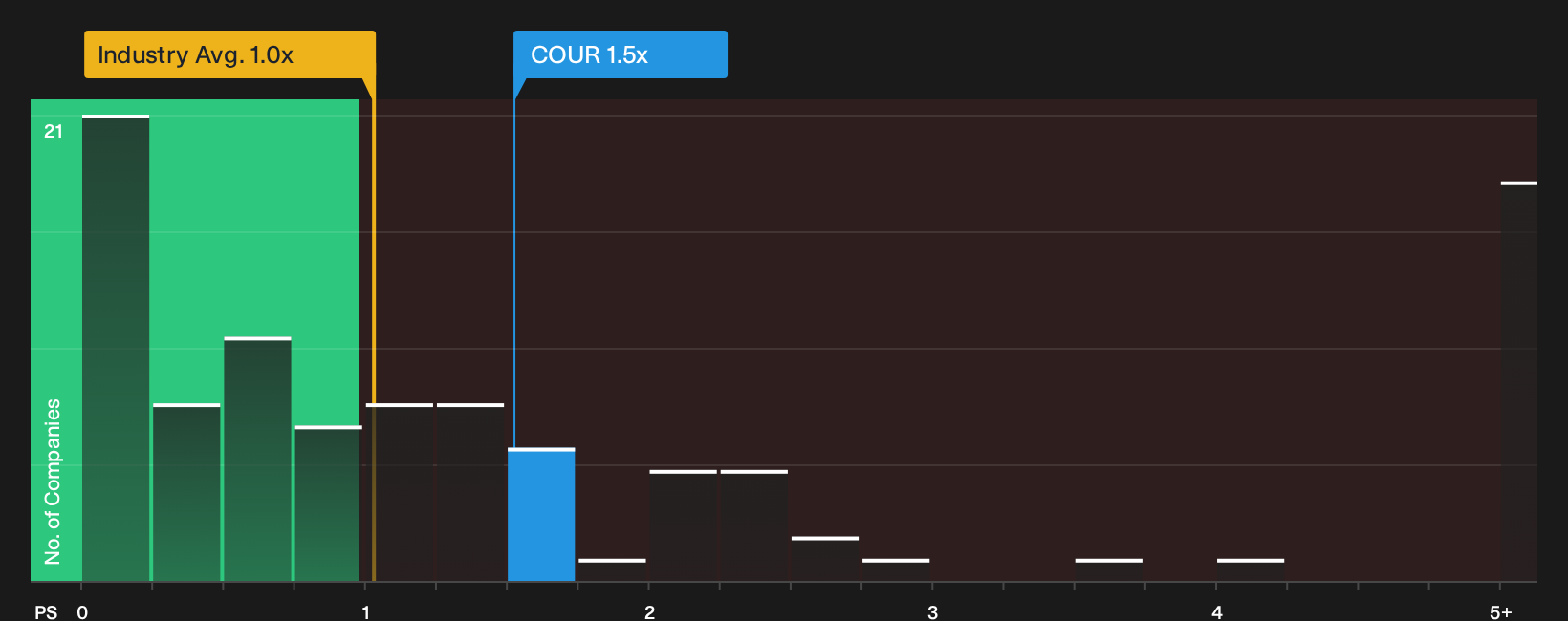
The SWS DCF model points to Coursera trading 86% below an estimated future cash flow value, which frames the stock as deeply undervalued. Yet on a simple P/S basis Coursera sits at 2.2x, richer than Consumer Services peers at 1.1x and its peer group at 1.6x, while the fair ratio sits higher at 5.4x. This raises the question of whether the risk lies in the market closing the gap or in expectations coming back to earth first.
Next Steps
With sentiment on Coursera divided between concern over risks and optimism around rewards, now is the time to look through the data yourself and decide how comfortable you are with the trade off. Then weigh both sides by checking the 3 key rewards and 2 important warning signs
Looking for more investment ideas beyond Coursera?
If Coursera’s story has sharpened your thinking, do not stop here. Broaden your watchlist now so you are not late to the next opportunity.
- Target resilient income by reviewing companies in the 7 dividend fortresses that focus on combining yield with more durable business models.
- Hunt for mispriced quality with the 44 high quality undervalued stocks to see stocks where fundamentals and current prices appear out of sync.
- Spot underfollowed potential by using the screener containing 18 high quality undiscovered gems that highlights lesser known companies with solid underlying metrics.
This article by Simply Wall St is general in nature. We provide commentary based on historical data and analyst forecasts only using an unbiased methodology and our articles are not intended to be financial advice. It does not constitute a recommendation to buy or sell any stock, and does not take account of your objectives, or your financial situation. We aim to bring you long-term focused analysis driven by fundamental data. Note that our analysis may not factor in the latest price-sensitive company announcements or qualitative material. Simply Wall St has no position in any stocks mentioned.