

CVS Exit From Horizon NJ Medicaid Puts Contract Discipline In Spotlight
CVS Health Corporation CVS | 0.00 |
- CVS Health pharmacies are set to leave the Horizon NJ Health Medicaid network, affecting close to 1 million New Jersey Medicaid customers.
- The move follows a dispute over pharmacy reimbursement terms between CVS Health and Horizon NJ Health.
- Once the change takes effect, Horizon NJ Health Medicaid members will no longer be able to use CVS pharmacies under their current plan.
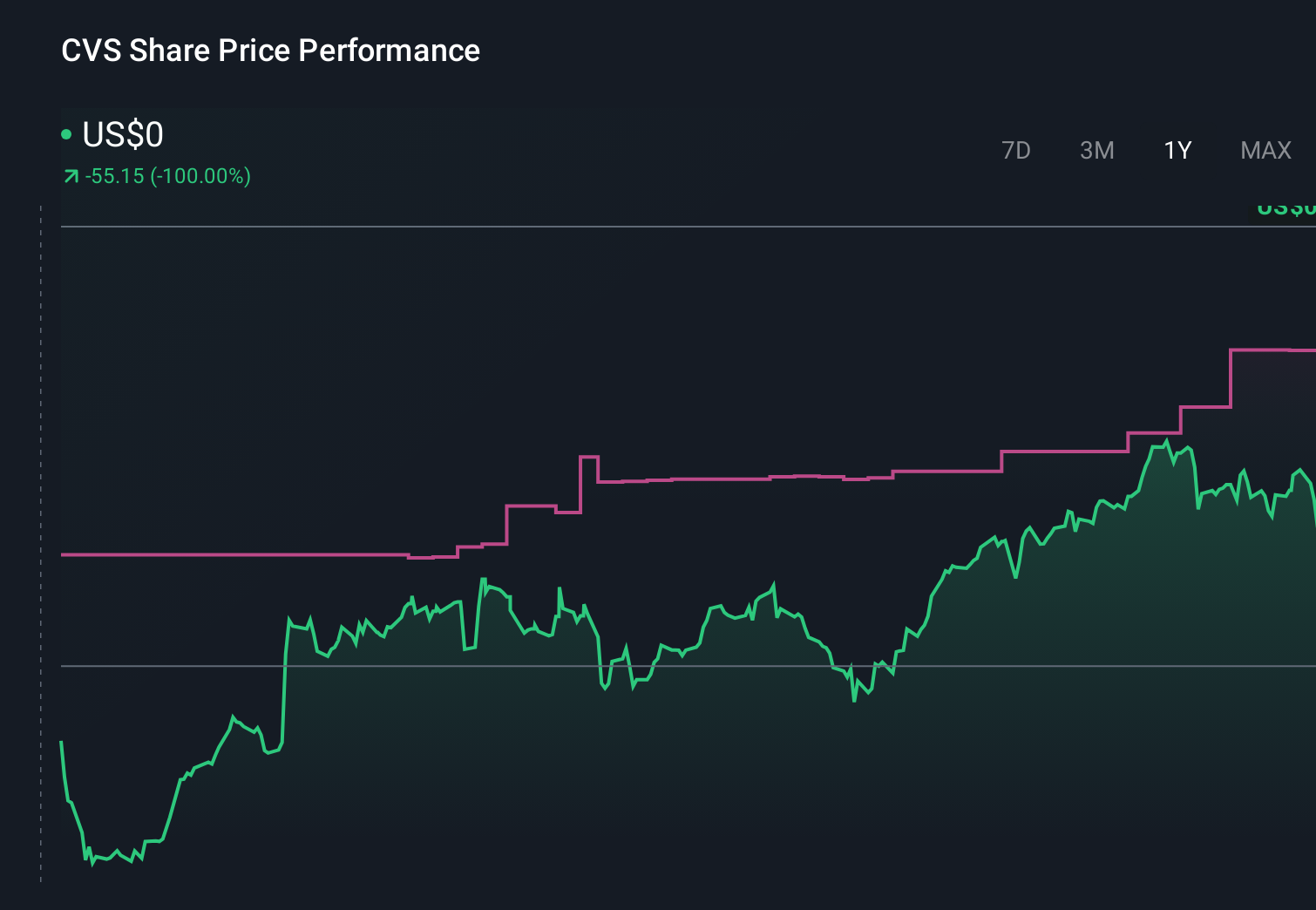
For investors tracking NYSE:CVS, this network exit comes alongside a share price of $76.83 and a mixed set of recent returns. The stock is up 6.7% over the past week, while the year to date and past 30 days both show a 4.1% decline. Over 1 year, the share price shows a 41.5% gain, with 3 year and 5 year returns of 0.3% and 23.1% respectively.
This development raises questions about how CVS Health balances reimbursement terms with maintaining access to Medicaid customers in a key state market. As the change rolls out, investors may monitor any updates on member volume shifts, negotiations with other payors, and management commentary on how the New Jersey exit fits into CVS Health's broader pharmacy and health services footprint.
Stay updated on the most important news stories for CVS Health by adding it to your watchlist or portfolio. Alternatively, explore our Community to discover new perspectives on CVS Health.
The Horizon NJ Health Medicaid exit highlights how sensitive CVS Health’s retail pharmacy economics are to contract-specific reimbursement terms, especially in government programs where margins are tight and rate structures are heavily negotiated. Losing access to nearly 1 million New Jersey Medicaid members and more than 340 locations in that network could reduce script volumes in that state, while also signaling to other payors that CVS is willing to walk away when pricing does not meet its requirements. Investors may watch this closely across competitors such as Walgreens Boots Alliance and Cigna’s Evernorth unit.
How This Fits Into The CVS Health Narrative
This dispute sits alongside a broader story in which CVS is reshaping itself from a store-first company into an integrated insurer, pharmacy benefit manager, and care provider. The willingness to exit a Medicaid network aligns with management’s focus on tightening returns in the Health Care Benefits and pharmacy businesses. For readers following prior commentary on restructuring, Medicare Advantage exposure, and Medicaid contract performance, this episode is another data point on how CVS is trying to reset reimbursement levels and contract quality while still depending heavily on government programs for membership and premium revenue.
CVS Health Risks and Rewards In Focus
- Contract disputes with Medicaid plans can weigh on near term prescription volumes and highlight pressure on already thin pharmacy margins.
- Analysts have flagged debt coverage and dividend sustainability as areas to watch, so any revenue headwind from network exits could draw added scrutiny.
- Holding a firm line on reimbursement may affect longer term returns if CVS is able to secure better contract terms across government and commercial books.
- The company is still viewed as good value relative to peers, so some investors may see execution on contract discipline as part of a broader turnaround effort.
What To Watch Next
From here, investors may focus on whether CVS discloses any measurable impact on prescription volumes in New Jersey, how quickly affected members shift to other pharmacies, and whether similar reimbursement disputes surface with other Medicaid or Medicare plans across the country. To see how different investors are framing these trade offs across contracts, margins, and long term growth, readers can review community narratives on CVS Health’s dedicated page for additional context and viewpoints.
This article by Simply Wall St is general in nature. We provide commentary based on historical data and analyst forecasts only using an unbiased methodology and our articles are not intended to be financial advice. It does not constitute a recommendation to buy or sell any stock, and does not take account of your objectives, or your financial situation. We aim to bring you long-term focused analysis driven by fundamental data. Note that our analysis may not factor in the latest price-sensitive company announcements or qualitative material. Simply Wall St has no position in any stocks mentioned.