

CVS Stock And Inflation Trends Investors Should Watch Right Now
Kroger Co. KR | 0.00 |
Inflation is no longer just about what you pay at the pump. With energy prices easing after the U.S. Iran ceasefire, attention is shifting to stickier costs like rent, medical care, and services, all while consumer inflation expectations climb and the Federal Reserve keeps markets guessing on rates. That mix can help some stocks and hurt others, depending on how closely their earnings are tied to these price trends. This article breaks down 3 stocks from our Inflation Momentum Stocks With Key Exposure to Shifting Price Trends screener, including 2 that may benefit from the latest news and 1 that could face pressure.
CVS Health (CVS)
Overview: CVS Health is an integrated U.S. healthcare company that combines insurance (Aetna), pharmacy benefit management, and nationwide retail and specialty pharmacies to deliver medical coverage, prescription services, and in-person care to individuals, employers, and government programs.
Operations: CVS Health generates most of its roughly US$405.6b in revenue from Health Services (US$195.2b), Health Care Benefits (US$142.7b), and Pharmacy & Consumer Wellness (US$139.4b), primarily in the United States.
Market Cap: US$130.2b
Investors watching inflation trends may find CVS Health worth a closer look because it sits directly in the path of rising medical costs, where higher pricing can support revenue even as it wrestles with elevated utilization and Medicare pressures. The company’s health benefits business is large and exposed to medical inflation, yet management is actively repricing contracts and cutting costs, including a US$2b restructuring program, while expanding GLP-1 and mental health offerings that aim to keep members engaged. At the same time, CVS carries meaningful leverage, faces weaker dividend coverage, and is working through earnings volatility from large one-off charges. The key question is whether its integrated model can convert that inflation exposure into durable, higher quality earnings over time.
CVS Health sits where medical inflation, contract repricing, and cost cuts collide. The real story is how that plays through its balance sheet and debt. Get the full picture in the CVS Health financial health report

Kroger (KR)
Overview: Kroger is a large U.S. supermarket operator that runs grocery, pharmacy, fuel and general merchandise stores under multiple formats, while also selling its own manufactured food products and offering online ordering and delivery.
Operations: Kroger generates about US$148.6b in revenue from its Retail Operations segment, all from within the United States.
Market Cap: US$35.7b
Investors watching inflation momentum may see Kroger as caught in the middle, with food and rent pressures squeezing customers just as the company leans into higher spending on digital, store remodels and the Giant Eagle acquisition. Earnings have recently come under pressure, profit margins are thin at 0.7%, and management is closing automated fulfillment centers while dealing with rising labor and input costs. This combination could keep profitability fragile even if e-commerce and private labels gain traction. The stock trades on a relatively rich P/E, carries meaningful debt and is absorbing a US$1.65b deal that adds integration and regulatory risk, so there is a lot that has to go right for Kroger to justify the optimism implied by its forecasts and analyst targets.
Kroger’s thin 0.7% margins, rising costs and a US$1.65b acquisition create a tightrope that many investors may be underestimating, and the real pressure point only shows up in the 3 warning signs.

AvalonBay Communities (AVB)
Overview: AvalonBay Communities is a U.S. residential REIT that owns, develops, and manages about 90,000 apartment homes, primarily in high-cost coastal markets such as Boston, New York/New Jersey, the Mid-Atlantic, Seattle, and California, with growing exposure to regions like North Carolina, Southeast Florida, Texas, and Colorado.
Operations: AvalonBay generates the bulk of its roughly US$3.06b in revenue from Same Store communities (about US$2.75b), with additional contributions from Other Stabilized properties (US$198.5m) and Development/Redevelopment (US$58.4m), all within the United States.
Market Cap: US$27.7b
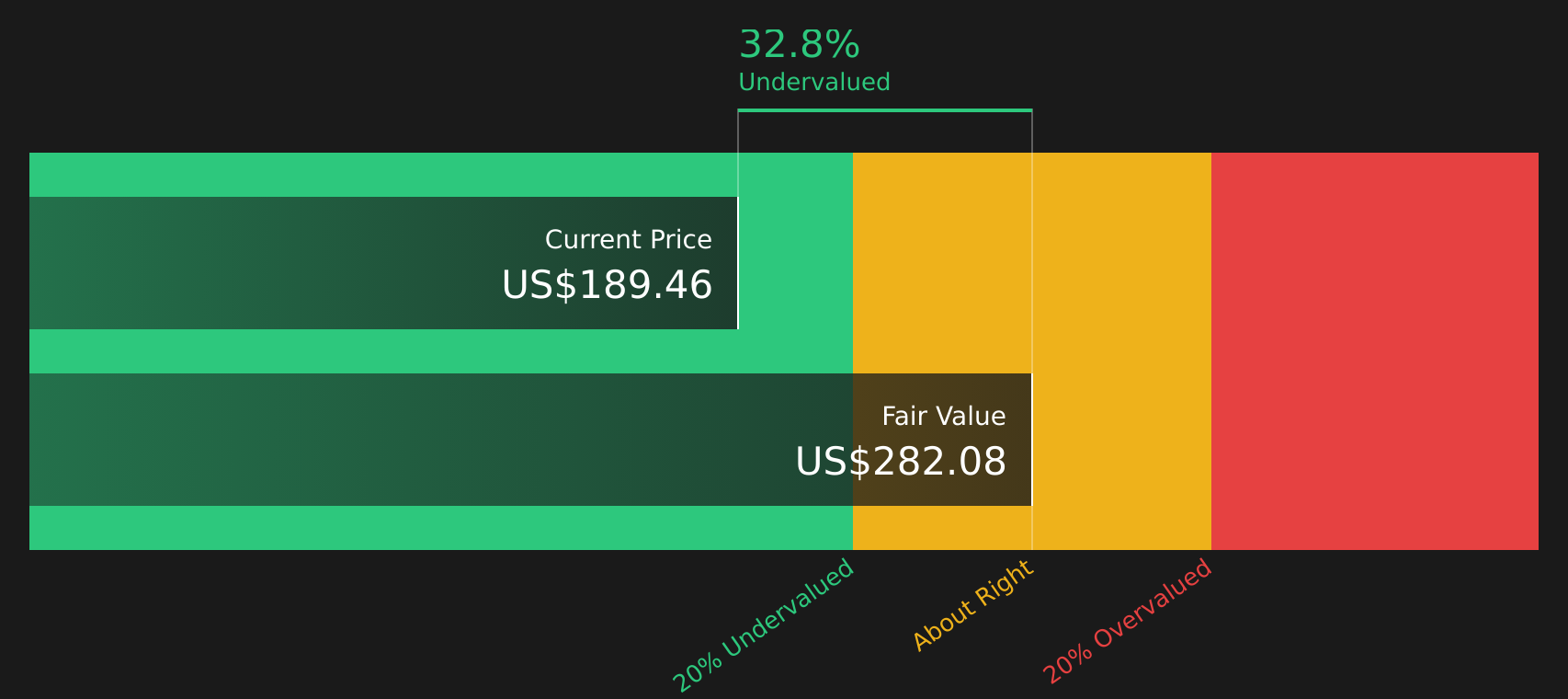
Investors watching rent driven inflation may find AvalonBay Communities interesting because its apartment portfolio is positioned in markets where housing supply is tight and rental costs are a major driver of core inflation. Rising rents can support revenue even as funding costs and regulation remain real headwinds. The stock offers a 3.64% dividend yield, trades below some fair value estimates, and could potentially benefit from merger scale with Equity Residential and AI supported development decisions. It also faces forecast earnings declines, weaker cash flow coverage of debt, and ongoing exposure to regulatory and funding risks. The balance of rent power, possible merger synergies, and balance sheet strain is an important consideration for investors.
AvalonBay Communities appears to face opposing forces between rent power and funding risk, and the key question is how future cash flows compare with obligations in the AvalonBay Communities financial health report
Take Control of Your Investment Journey
If Kroger or any of these companies have caught your attention, register for FREE with Simply Wall St and add your companies to a Watchlist to monitor the share price against the fair value and track any new developments as they happen. Once you've made your move, manage your holdings with our Portfolio Command Center that filters out the noise to deliver only the most critical, actionable updates. Throughout your journey, our Community allows you to filter the best ideas from thousands of investor perspectives. By uncovering hidden catalysts and risks early, you'll accelerate your decision-making and stay one step ahead of the market.
Seeking Alternatives Before The Crowd Moves?
Fresh stock ideas can move from quiet to breakout quickly. Once momentum is strong, ideal entry points can shrink fast. Use these curated screeners while it matters and act now.
- Spot resilient potential in uncertain conditions by scanning a curated group of stocks using the 74 resilient stocks with low risk scores that focus on durability, not just headline momentum.
- Explore structural growth themes by reviewing companies in the 36 power grid technology and infrastructure stocks positioned around grid upgrades, electrification, and infrastructure spending while these stories are still under the radar for now.
- Look for early movers in automation by checking the 29 robotics and automation stocks featuring businesses tied to robotics, smart factories, and next generation productivity gains before the crowd fully catches on.
This article by Simply Wall St is general in nature. We provide commentary based on historical data and analyst forecasts only using an unbiased methodology and our articles are not intended to be financial advice. It does not constitute a recommendation to buy or sell any stock, and does not take account of your objectives, or your financial situation. We aim to bring you long-term focused analysis driven by fundamental data. Note that our analysis may not factor in the latest price-sensitive company announcements or qualitative material. Simply Wall St has no position in any stocks mentioned.