

Denali Therapeutics (DNLI) Looks Fully Valued After $195 Million Voucher Sale
Denali Therapeutics Inc. DNLI | 0.00 |
Denali Therapeutics (DNLI) has agreed to sell its FDA Rare Pediatric Disease Priority Review Voucher for US$195 million in cash. This is a material non-operational move that could influence liquidity and investor focus.
The US$24.77 share price has been supported by strong recent momentum, with a 1-month share price return of 32.89% and a year-to-date share price return of 52.24%. However, the 5-year total shareholder return is down 67.78%, showing that longer-term holders have had a much tougher experience.
If this kind of move has your attention, it could be a good moment to broaden your watchlist with other biotech opportunities in healthcare AI, starting with the 38 healthcare AI stocks
So with Denali Therapeutics rallying hard in the short term but still sitting on a weak multi year shareholder record, is the recent cash infusion a genuine reset that leaves upside on the table, or is the market already pricing in future growth?
Preferred Price to Book of 4.2x: Is it justified?
At a last close of $24.77, Denali Therapeutics is being valued at a P/B of 4.2x, which screens as expensive relative to the broader US biotech industry but cheaper than its closer peer group.
The P/B ratio compares the stock price with the accounting value of net assets on the balance sheet. For a company like Denali Therapeutics, which is still loss making and reports no meaningful revenue, investors often lean on P/B because traditional earnings-based metrics do not yet apply.
Here, the P/B of 4.2x is described as expensive versus the US Biotechs industry average of 2.6x, so the market is paying a higher price for each dollar of book value than the sector overall. However, relative to a peer average P/B of 10.5x, the same 4.2x is flagged as good value, which highlights how differently investors can price similar companies within the same space when expectations for future revenue growth and eventual profitability vary.
Result: Price-to-book of 4.2x (ABOUT RIGHT)
However, investors still need to weigh Denali Therapeutics' continued net loss of US$508.017 million and the fact that reported revenue currently stands at zero.
Another view on Denali Therapeutics using our DCF model
While the P/B ratio suggests Denali Therapeutics is roughly in line with peer expectations, the SWS DCF model paints a different picture. At $24.77, the stock is trading above an estimated future cash flow value of $16.08, which points to an overvalued outcome on this metric. Which signal may be more relevant for your analysis?
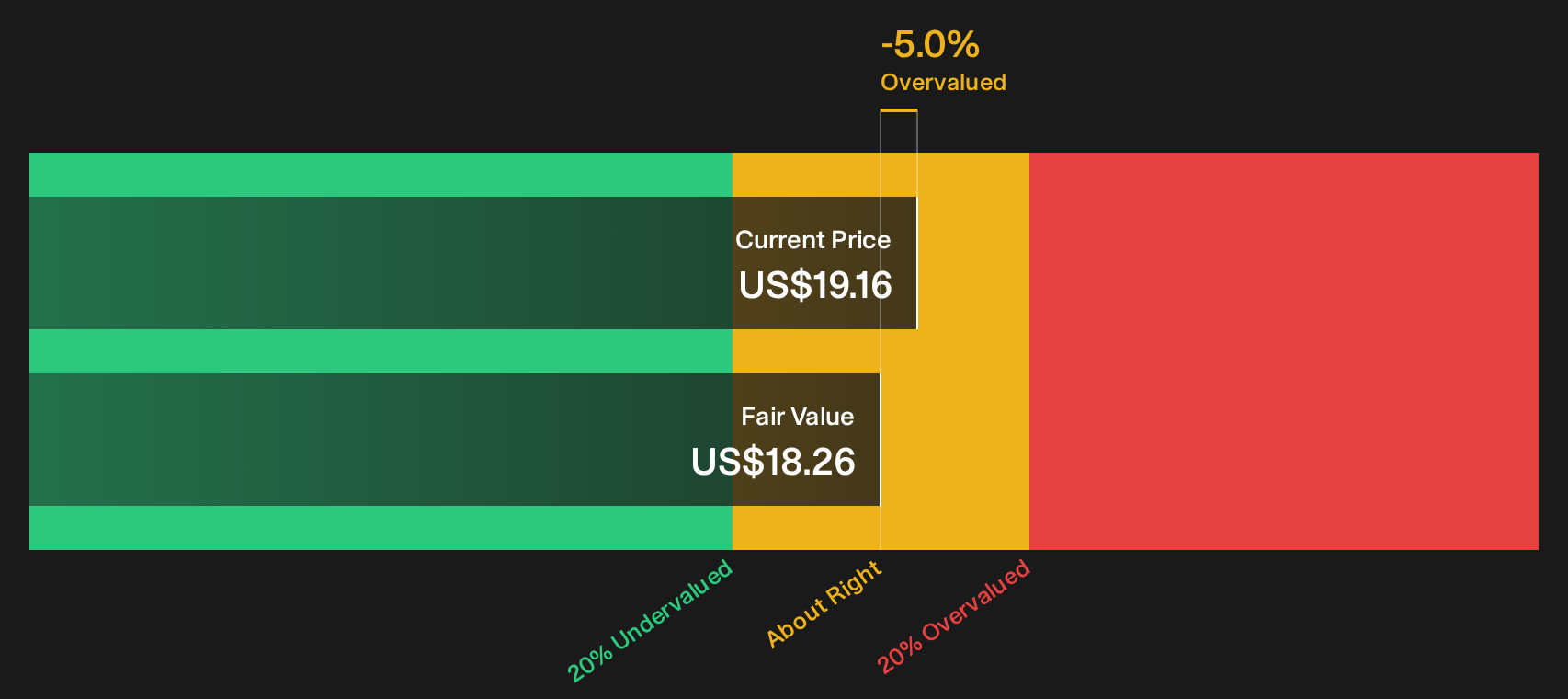
Simply Wall St performs a discounted cash flow (DCF) on every stock in the world every day (check out Denali Therapeutics for example). We show the entire calculation in full. You can track the result in your watchlist or portfolio and be alerted when this changes, or use our stock screener to discover 44 high quality undervalued stocks. If you save a screener we even alert you when new companies match - so you never miss a potential opportunity.
Next Steps
With Denali Therapeutics showing both pressure points and potential bright spots, it makes sense to review the underlying data yourself and move quickly to form your own view using the 1 key reward and 2 important warning signs
Looking for more investment ideas beyond Denali Therapeutics?
If Denali Therapeutics has sharpened your focus, do not stop here. Broaden your opportunity set by scanning other stocks with clear balance sheets, income profiles, and risk levels.
- Target stronger foundations by reviewing companies in the solid balance sheet and fundamentals stocks screener (48 results) to see which stocks pair financial resilience with room for growth.
- Hunt for mispriced opportunities using the 44 high quality undervalued stocks and see which stocks combine quality fundamentals with compressed multiples.
- Prioritise sleep at night holdings through the 67 resilient stocks with low risk scores and compare how different stocks stack up on stability and downside risk.
This article by Simply Wall St is general in nature. We provide commentary based on historical data and analyst forecasts only using an unbiased methodology and our articles are not intended to be financial advice. It does not constitute a recommendation to buy or sell any stock, and does not take account of your objectives, or your financial situation. We aim to bring you long-term focused analysis driven by fundamental data. Note that our analysis may not factor in the latest price-sensitive company announcements or qualitative material. Simply Wall St has no position in any stocks mentioned.