

Did Illinois Rideshare Union Bill Just Shift Lyft's (LYFT) Labor Model and Investment Narrative?
Lyft LYFT | 0.00 |
- In early June 2026, Illinois lawmakers passed the Transportation Network Driver Labor Relations Act, paving the way for nearly 100,000 Uber and Lyft drivers in the state to unionize and bargain collectively over pay, deactivation, and working conditions, with the bill now awaiting the governor’s signature.
- This move could reshape Lyft’s cost structure and labor model in a key U.S. market, and potentially influence how other states approach rideshare worker protections.
- We’ll now examine how the potential unionization of Illinois Lyft drivers may affect the company’s investment narrative and long-term profitability assumptions.
Find 46 companies with promising cash flow potential yet trading below their fair value.
Lyft Investment Narrative Recap
To own Lyft today, you need to believe its marketplace can keep attracting riders and drivers while controlling costs in a maturing, highly competitive industry. The Illinois bill enabling nearly 100,000 Uber and Lyft drivers to unionize underscores that labor and regulation, not demand, may be the most important near term swing factors. If enacted, it could raise uncertainty around Lyft’s cost base, but it does not yet change the core demand-driven thesis for the business.
Against that backdrop, recent analyst commentary around Lyft’s autonomous vehicle strategy is particularly relevant. Management has highlighted the potential benefits of a hybrid human and autonomous network and closer partnerships, which, if successful, could offset some labor cost pressures over time. However, with Illinois signaling stronger driver protections, the timing and scale of any cost relief from autonomy remains an open question.
Yet behind the improving profitability, the combination of rising labor activism and evolving regulation is something investors should be aware of, because...
Lyft's narrative projects $8.9 billion revenue and $458.9 million earnings by 2029.
Uncover how Lyft's forecasts yield a $18.79 fair value, a 33% upside to its current price.
Exploring Other Perspectives
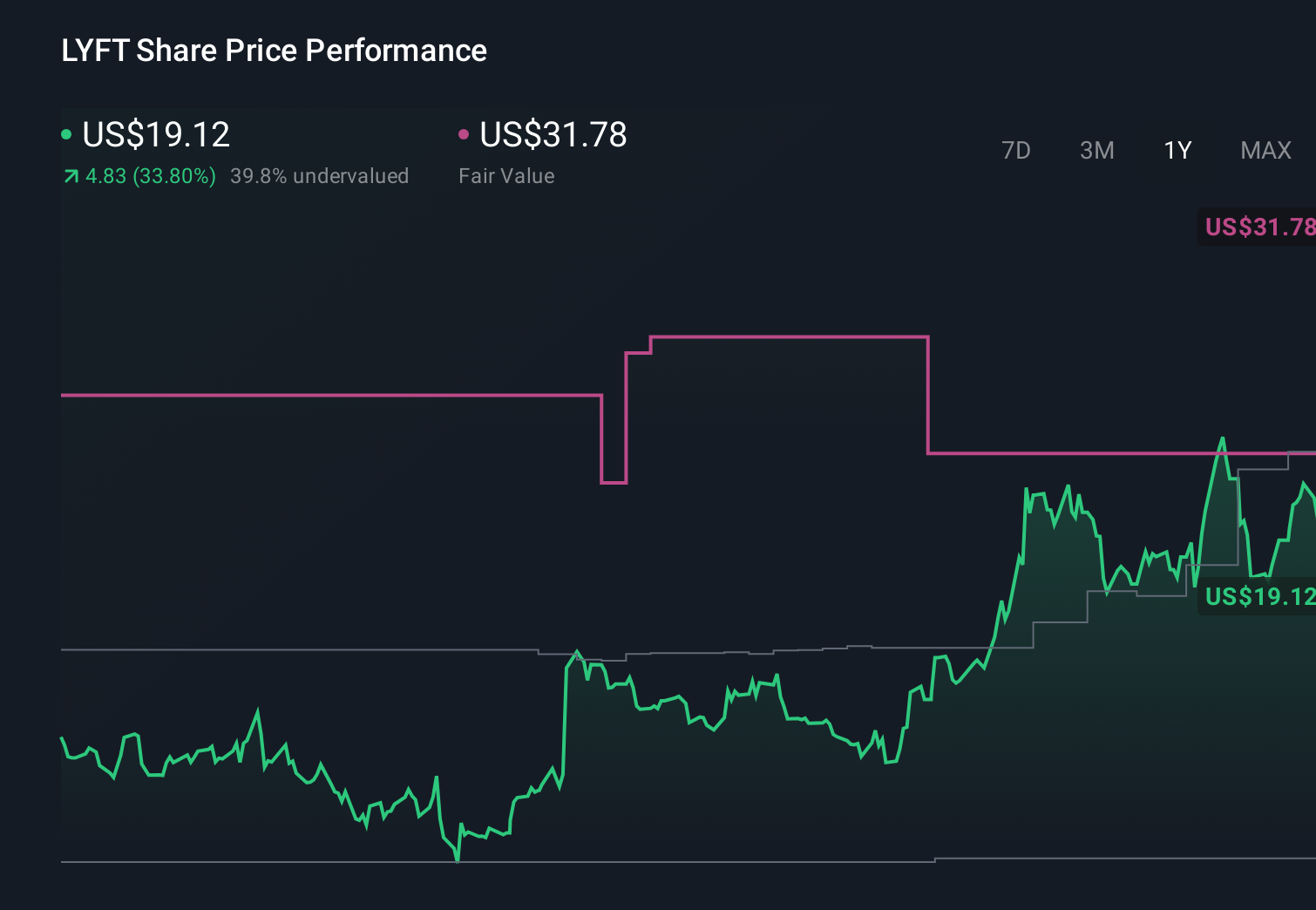
While consensus focuses on gradual growth and cost control, the most bearish analysts already saw rising regulation and labor activism as threats, with revenue at about US$7.7 billion and earnings near US$173.7 million by 2029, so the Illinois unionization push could make their more cautious view look less distant than it once did.
Explore 8 other fair value estimates on Lyft - why the stock might be worth just $18.79!
Reach Your Own Conclusion
Don't just follow the ticker - dig into the data and build a conviction that's truly your own.
- A great starting point for your Lyft research is our analysis highlighting 3 key rewards and 2 important warning signs that could impact your investment decision.
- Our free Lyft research report provides a comprehensive fundamental analysis summarized in a single visual - the Snowflake - making it easy to evaluate Lyft's overall financial health at a glance.
No Opportunity In Lyft?
Our daily scans reveal stocks with breakout potential. Don't miss this chance:
- We've uncovered the 10 dividend fortresses yielding 5%+ that don't just survive market storms, but thrive in them.
- This technology could replace computers: discover 30 stocks that are working to make quantum computing a reality.
- Rare earth metals are an input to most high-tech devices, military and defence systems and electric vehicles. The global race is on to secure supply of these critical minerals. Beat the pack to uncover the 29 best rare earth metal stocks of the very few that mine this essential strategic resource.
This article by Simply Wall St is general in nature. We provide commentary based on historical data and analyst forecasts only using an unbiased methodology and our articles are not intended to be financial advice. It does not constitute a recommendation to buy or sell any stock, and does not take account of your objectives, or your financial situation. We aim to bring you long-term focused analysis driven by fundamental data. Note that our analysis may not factor in the latest price-sensitive company announcements or qualitative material. Simply Wall St has no position in any stocks mentioned.