

Did Walmart’s Vibe.co Bet and Prime-Day Clash Just Shift (WMT) Toward Higher-Margin Digital Ads?
Walmart Inc. WMT | 0.00 |
- In recent days, Walmart has moved to acquire connected TV ad platform Vibe.co, signed its first long-term nuclear power purchase agreement with Constellation, and launched its Summer Deals event overlapping Amazon Prime Day to attract shoppers online and in stores. These actions highlight Walmart’s push to deepen higher-margin advertising, secure cleaner long-term energy, and compete aggressively during a key digital sales period.
- We’ll now explore how Walmart’s planned Vibe.co acquisition, in particular, could reshape the company’s investment narrative around digital advertising and profit mix.
- We’ll now examine how Walmart’s planned Vibe.co acquisition may influence the company’s investment narrative and long-term profit mix.
Capitalize on the AI infrastructure supercycle with our selection of the 49 best 'picks and shovels' of the AI gold rush converting record-breaking demand into massive cash flow.
Walmart Investment Narrative Recap
To own Walmart, you need to believe it can keep shifting its profit mix toward higher-margin areas like advertising and memberships, while managing thin retail margins and rising costs. The Vibe.co deal fits that story by expanding Walmart Connect, but near term, the more immediate swing factor remains whether Walmart can keep e-commerce and grocery delivery costs in check. Recent news around Summer Deals, nuclear power purchases, and legal and regulatory headlines does not materially change that core risk-reward balance.
Among the latest announcements, Walmart’s planned acquisition of Vibe.co stands out as most relevant. By adding a connected TV ad platform into Walmart Connect, the company is leaning further into its advertising and digital media ambitions, which investors already see as a key catalyst for improving the long-term profit mix relative to traditional retail.
Yet even as higher margin streams expand, investors should be aware that persistent delivery and logistics cost pressure on e-commerce and grocery could still...
Walmart's narrative projects $832.5 billion revenue and $29.3 billion earnings by 2029. This requires 4.7% yearly revenue growth and a $6.6 billion earnings increase from $22.7 billion.
Uncover how Walmart's forecasts yield a $138.37 fair value, a 16% upside to its current price.
Exploring Other Perspectives
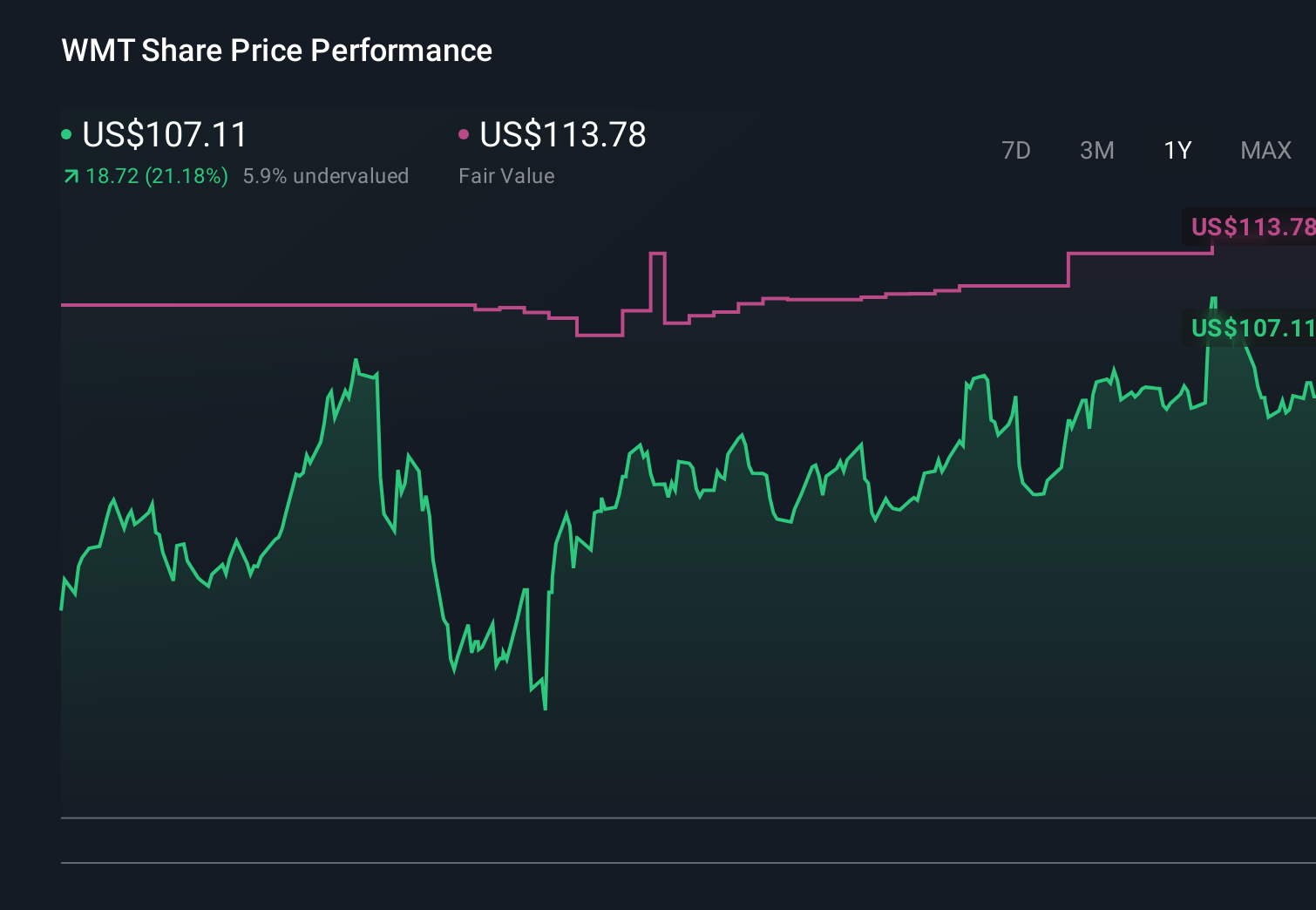
Sixteen members of the Simply Wall St Community value Walmart between US$92.86 and US$138.37, underlining how far opinions can spread. Against that backdrop, the push into higher margin advertising through Vibe.co sits alongside ongoing concern about whether Walmart can tame e-commerce and grocery delivery costs over time, so it is worth weighing several perspectives before deciding how this story fits in your portfolio.
Explore 16 other fair value estimates on Walmart - why the stock might be worth 22% less than the current price!
The Verdict Is Yours
Disagree with existing narratives? Extraordinary investment returns rarely come from following the herd, so go with your instincts.
- A great starting point for your Walmart research is our analysis highlighting 2 key rewards and 2 important warning signs that could impact your investment decision.
- Our free Walmart research report provides a comprehensive fundamental analysis summarized in a single visual - the Snowflake - making it easy to evaluate Walmart's overall financial health at a glance.
Ready To Venture Into Other Investment Styles?
Our top stock finds are flying under the radar-for now. Get in early:
- The future of work is here. Discover the 31 top robotics and automation stocks leading the charge in AI-driven automation and industrial transformation.
- Uncover the next big thing with 24 elite penny stocks that balance risk and reward.
- We've uncovered the 7 dividend fortresses yielding 5%+ that don't just survive market storms, but thrive in them.
This article by Simply Wall St is general in nature. We provide commentary based on historical data and analyst forecasts only using an unbiased methodology and our articles are not intended to be financial advice. It does not constitute a recommendation to buy or sell any stock, and does not take account of your objectives, or your financial situation. We aim to bring you long-term focused analysis driven by fundamental data. Note that our analysis may not factor in the latest price-sensitive company announcements or qualitative material. Simply Wall St has no position in any stocks mentioned.