
Did Walmart’s (WMT) Automation And Membership Push Just Redefine Its Higher-Margin Strategy?
Walmart Inc. WMT | 126.77 | -1.83% |
- In late March 2026, brands including Opopop, FHI Heat and Zep announced nationwide product launches at Walmart, while Sam’s Club revealed its first membership fee increase in four years and Walmart confirmed selected U.S. fulfillment center closures amid a broader automation push.
- These moves highlight Walmart’s effort to deepen higher-margin revenue through memberships and advertising-supported product discovery, while reshaping its supply chain cost base with increased automation.
- Next, we’ll examine how Sam’s Club’s higher membership fees and Walmart’s focus on richer-margin services could influence its existing investment narrative.
The future of work is here. Discover the 33 top robotics and automation stocks leading the charge in AI-driven automation and industrial transformation.
Walmart Investment Narrative Recap
To own Walmart today, you need to believe in its shift from a pure low-margin retailer to a broad platform that layers memberships, advertising and eCommerce on top of its store base. The latest brand launches, Sam’s Club fee hike and selective fulfillment center closures do not materially change that near term, but they do sit alongside the key short term catalyst of higher margin mix and the ongoing risk that logistics and delivery costs keep net margins under pressure.
The Sam’s Club membership increase, with base fees moving to US$60 and Plus to US$120, is the clearest link to that catalyst because membership income is far richer margin than core retail sales. It sits alongside rapid growth in Walmart’s global advertising revenue and Walmart+ membership, giving the company multiple levers to offset cost inflation and competitive intensity, particularly as it invests heavily in automation across its fulfillment and distribution network.
Yet while these shifts support the story, investors should also be aware that rising delivery and logistics costs on grocery could still...
Walmart's narrative projects $817.4 billion revenue and $28.4 billion earnings by 2029.
Uncover how Walmart's forecasts yield a $136.02 fair value, a 8% upside to its current price.
Exploring Other Perspectives
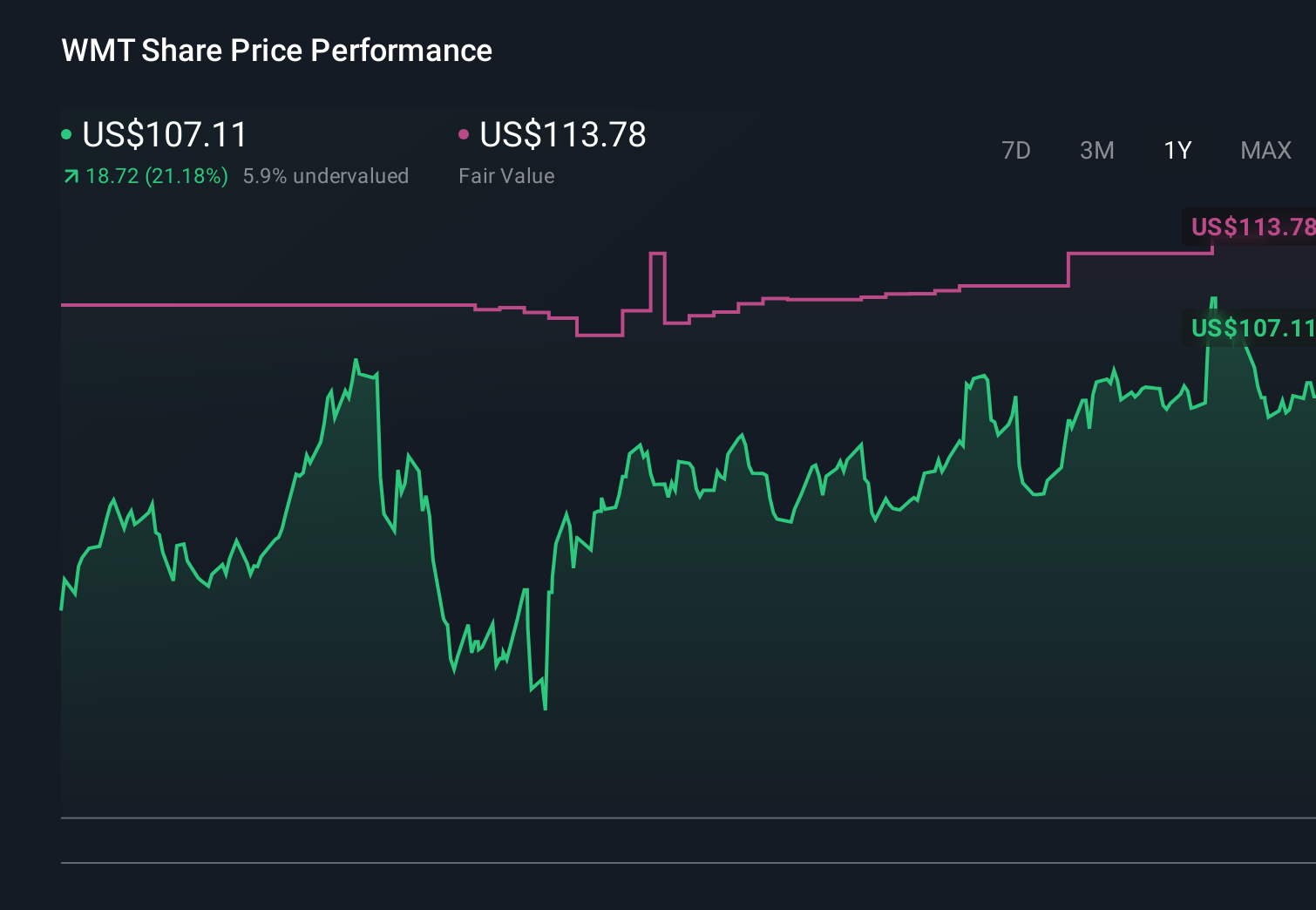
Twelve Simply Wall St Community fair value estimates for Walmart span roughly US$97 to US$136 per share, highlighting very different expectations among individual investors. Before you decide where you sit, remember that ongoing cost inflation in delivery and logistics could limit how much benefit Walmart ultimately captures from higher margin memberships and advertising, with clear implications for earnings resilience and valuation over time.
Explore 12 other fair value estimates on Walmart - why the stock might be worth as much as 8% more than the current price!
Decide For Yourself
Disagree with existing narratives? Extraordinary investment returns rarely come from following the herd, so go with your instincts.
- A great starting point for your Walmart research is our analysis highlighting 2 key rewards and 1 important warning sign that could impact your investment decision.
- Our free Walmart research report provides a comprehensive fundamental analysis summarized in a single visual - the Snowflake - making it easy to evaluate Walmart's overall financial health at a glance.
No Opportunity In Walmart?
Our daily scans reveal stocks with breakout potential. Don't miss this chance:
- This technology could replace computers: discover 23 stocks that are working to make quantum computing a reality.
- Uncover the next big thing with 33 elite penny stocks that balance risk and reward.
- AI is about to change healthcare. These 36 stocks are working on everything from early diagnostics to drug discovery. The best part - they are all under $10b in market cap - there's still time to get in early.
This article by Simply Wall St is general in nature. We provide commentary based on historical data and analyst forecasts only using an unbiased methodology and our articles are not intended to be financial advice. It does not constitute a recommendation to buy or sell any stock, and does not take account of your objectives, or your financial situation. We aim to bring you long-term focused analysis driven by fundamental data. Note that our analysis may not factor in the latest price-sensitive company announcements or qualitative material. Simply Wall St has no position in any stocks mentioned.