

Does Denali Therapeutics (DNLI) Parkinson’s Setback Reveal a Deeper Shift in Its Neuroscience Strategy?
Denali DNLI | 0.00 |
- Biogen Inc. and Denali Therapeutics Inc. recently reported that their Phase 2b LUMA study of BIIB122 in early-stage Parkinson’s disease failed to meet its primary and secondary efficacy endpoints, leading them to discontinue development of the drug for idiopathic Parkinson’s disease while continuing a separate Phase 2a study in LRRK2 variant carriers.
- Despite missing clinical endpoints, the trial confirmed strong target engagement with high peripheral LRRK2 kinase inhibition and CSF biomarker changes, offering valuable scientific insight into LRRK2 biology for future Parkinson’s research.
- With the recent returns as context, we’ll examine how discontinuing BIIB122 in idiopathic Parkinson’s disease reshapes Denali’s investment narrative.
The best AI stocks today may lie beyond giants like Nvidia and Microsoft. Find the next big opportunity with these 12 smaller AI-focused companies with strong growth potential through early-stage innovation in machine learning, automation, and data intelligence that could fund your retirement.
What Is Denali Therapeutics' Investment Narrative?
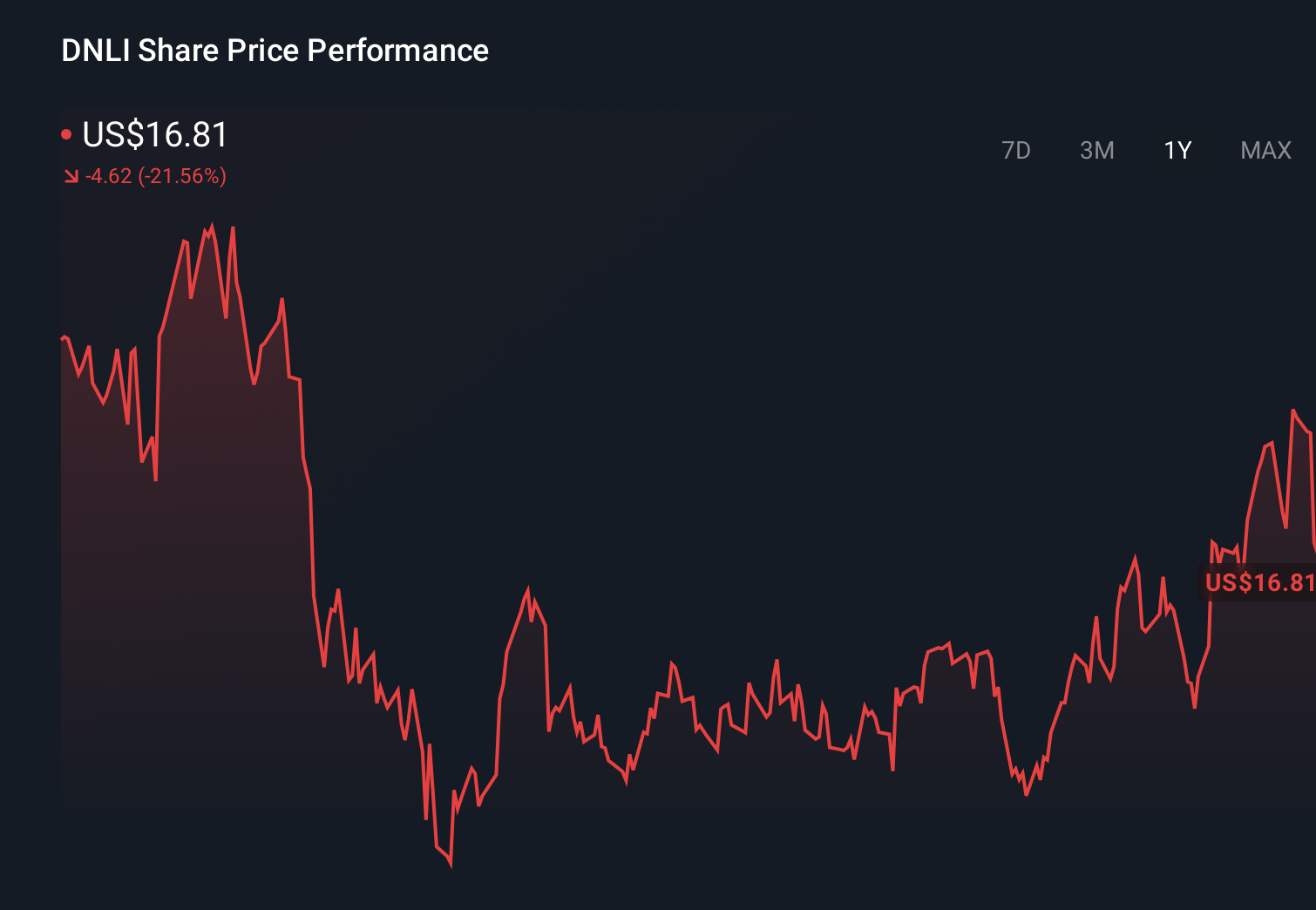
To own Denali Therapeutics, you need to believe in its blood–brain barrier platform, a rare-disease commercial foothold with AVLAYAH, and a pipeline that can justify persistent losses while revenue is still minimal. The LUMA setback on BIIB122 removes a potential broad Parkinson’s catalyst and heightens near-term dependence on AVLAYAH uptake and progress in Hunter and Sanfilippo programs, while pushing LRRK2-PD hopes onto the narrower BEACON study. With Takeda stepping away from DNL593 but rights reverting to Denali, the FTD-GRN readout later in 2026 remains important for validating the TransportVehicle approach beyond Hunter syndrome. Given the stock’s strong 1-year run against a backdrop of ongoing heavy cash burn and no profitability in sight, execution and capital needs feel like the most immediate swing factors for shareholders.
However, investors should be aware of the company’s ongoing heavy losses and funding requirements. Denali Therapeutics' shares are on the way up, but they could be overextended by 29%. Uncover the fair value now.Exploring Other Perspectives
Explore 2 other fair value estimates on Denali Therapeutics - why the stock might be worth as much as 61% more than the current price!
Form Your Own Verdict
Don't just follow the ticker - dig into the data and build a conviction that's truly your own.
- A great starting point for your Denali Therapeutics research is our analysis highlighting 1 key reward and 2 important warning signs that could impact your investment decision.
- Our free Denali Therapeutics research report provides a comprehensive fundamental analysis summarized in a single visual - the Snowflake - making it easy to evaluate Denali Therapeutics' overall financial health at a glance.
Ready For A Different Approach?
Early movers are already taking notice. See the stocks they're targeting before they've flown the coop:
- Capitalize on the AI infrastructure supercycle with our selection of the 47 best 'picks and shovels' of the AI gold rush converting record-breaking demand into massive cash flow.
- Uncover the next big thing with 23 elite penny stocks that balance risk and reward.
- AI is about to change healthcare. These 39 stocks are working on everything from early diagnostics to drug discovery. The best part - they are all under $10b in market cap - there's still time to get in early.
This article by Simply Wall St is general in nature. We provide commentary based on historical data and analyst forecasts only using an unbiased methodology and our articles are not intended to be financial advice. It does not constitute a recommendation to buy or sell any stock, and does not take account of your objectives, or your financial situation. We aim to bring you long-term focused analysis driven by fundamental data. Note that our analysis may not factor in the latest price-sensitive company announcements or qualitative material. Simply Wall St has no position in any stocks mentioned.