

Does Medtronic's (MDT) Software Recall Reframe the Risk-Reward Balance in Its Neuromodulation Strategy?
Medtronic Plc MDT | 0.00 |
- In April 2026, Medtronic voluntarily initiated a Class II FDA recall of its SynchroMed Flex Infusion Mode clinician programmer software, after discovering a scheduling bug that could cause infusion steps to run out of order and disrupt therapy delivery across more than 10,000 units worldwide.
- This software issue highlights how even incremental digital components in implanted therapies can create meaningful clinical and operational risk when they malfunction, especially at global scale.
- We’ll now examine how this software-related recall, and its implications for product reliability and neuromodulation growth, affects Medtronic’s investment narrative.
The best AI stocks today may lie beyond giants like Nvidia and Microsoft. Find the next big opportunity with these 12 smaller AI-focused companies with strong growth potential through early-stage innovation in machine learning, automation, and data intelligence that could fund your retirement.
Medtronic Investment Narrative Recap
To own Medtronic, I think you need to believe its diversified device portfolio and ongoing innovation can outweigh execution risks in underperforming segments and major product ramp ups. The SynchroMed software recall appears operationally manageable, but it keeps product quality and neuromodulation reliability firmly in focus, at a time when execution on new platforms and margin stabilization are front of mind for near term sentiment. At this stage, the recall does not look material to the headline earnings catalyst.
The recall also lands shortly after Medtronic’s intent to acquire SPR Therapeutics, which aims to expand its presence in pain and neuromodulation therapies. Taken together, the recall and this planned acquisition put a spotlight on how well Medtronic can integrate more sophisticated digital and software elements into its neuromodulation ecosystem without adding new execution issues, a key consideration for investors watching product ramps and margin mix.
Yet despite Medtronic’s breadth, investors should be aware that continued recalls and product quality issues could...
Medtronic's narrative projects $40.8 billion revenue and $6.5 billion earnings by 2029. This requires 4.8% yearly revenue growth and about a $1.9 billion earnings increase from $4.6 billion today.
Uncover how Medtronic's forecasts yield a $108.00 fair value, a 46% upside to its current price.
Exploring Other Perspectives
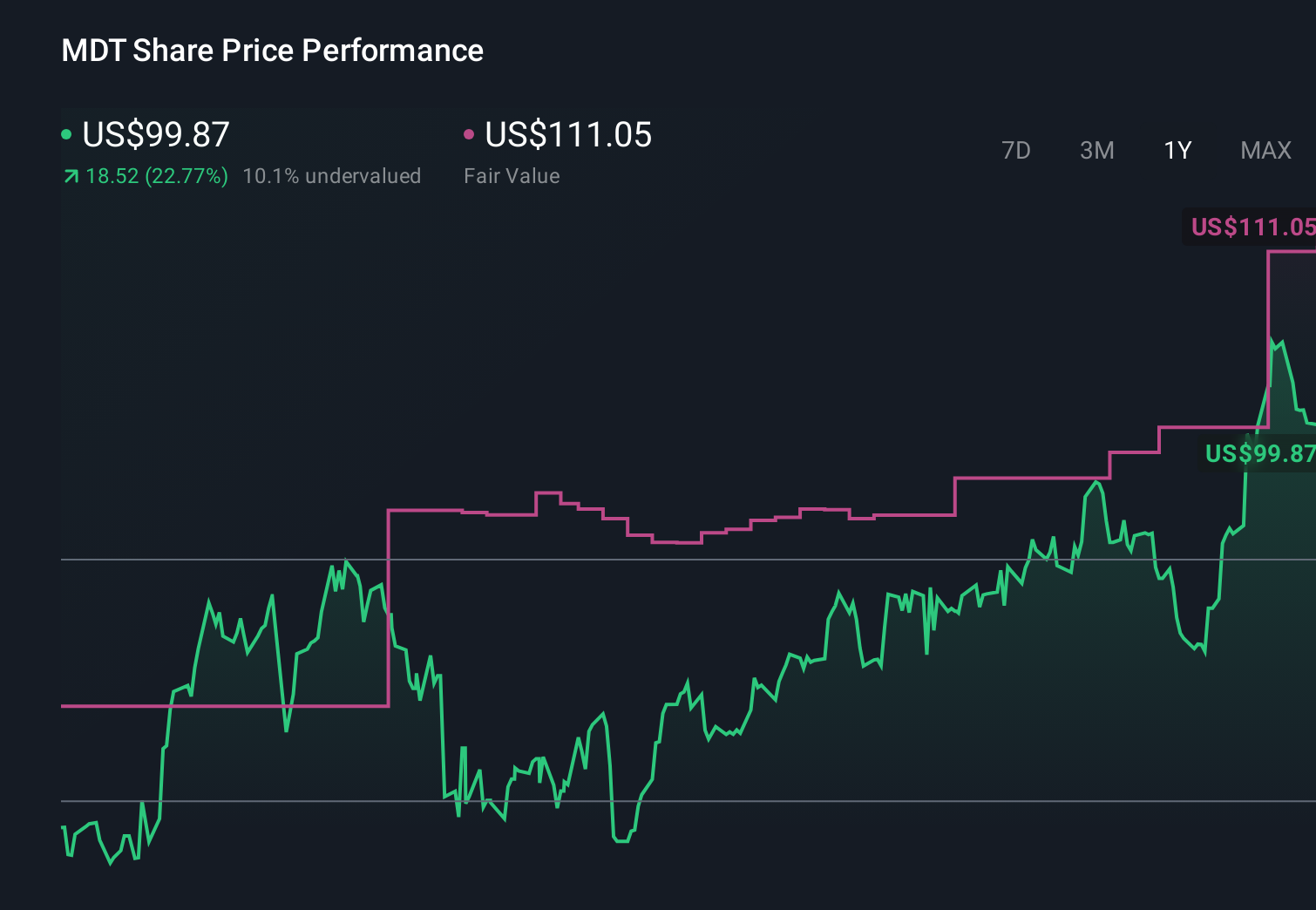
Eight members of the Simply Wall St Community currently see Medtronic’s fair value between US$94.01 and US$108, reflecting a fairly tight cluster of expectations. Against that backdrop, the recent SynchroMed software recall underlines product execution risk that could influence how comfortably future growth and margin improvement assumptions play out, so it is worth comparing several of these viewpoints before deciding how to weigh the stock’s prospects.
Explore 8 other fair value estimates on Medtronic - why the stock might be worth just $94.01!
Decide For Yourself
Disagree with existing narratives? Extraordinary investment returns rarely come from following the herd, so go with your instincts.
- A great starting point for your Medtronic research is our analysis highlighting 6 key rewards that could impact your investment decision.
- Our free Medtronic research report provides a comprehensive fundamental analysis summarized in a single visual - the Snowflake - making it easy to evaluate Medtronic's overall financial health at a glance.
Ready To Venture Into Other Investment Styles?
Our daily scans reveal stocks with breakout potential. Don't miss this chance:
- Find 47 companies with promising cash flow potential yet trading below their fair value.
- Invest in the nuclear renaissance through our list of 88 elite nuclear energy infrastructure plays powering the global AI revolution.
- Rare earth metals are the new gold rush. Find out which 31 stocks are leading the charge.
This article by Simply Wall St is general in nature. We provide commentary based on historical data and analyst forecasts only using an unbiased methodology and our articles are not intended to be financial advice. It does not constitute a recommendation to buy or sell any stock, and does not take account of your objectives, or your financial situation. We aim to bring you long-term focused analysis driven by fundamental data. Note that our analysis may not factor in the latest price-sensitive company announcements or qualitative material. Simply Wall St has no position in any stocks mentioned.