

Does New GLP‑1 Data And HYMPAVZI Expansion Reshape The Bull Case For Pfizer (PFE)?
Pfizer Inc. PFE | 0.00 |
- In early June 2026, Pfizer reported new Phase 2b data for its monthly GLP-1 obesity candidate berobenatide and secured an expanded U.S. FDA approval for HYMPAVZI to cover a broader range of adults and children with hemophilia A or B, with or without inhibitors.
- These developments strengthen Pfizer’s positioning in two high-value areas, obesity and rare-disease hemophilia care, by pairing potentially more convenient dosing with access to younger, hard-to-treat patient populations.
- We’ll now examine how HYMPAVZI’s expanded pediatric reach reshapes Pfizer’s investment narrative built around its obesity and oncology pipelines.
Capitalize on the AI infrastructure supercycle with our selection of the 48 best 'picks and shovels' of the AI gold rush converting record-breaking demand into massive cash flow.
Pfizer Investment Narrative Recap
To own Pfizer today, you need to believe it can replace fading COVID and patent cliff revenues with new earnings from obesity, oncology and rare diseases while supporting a large dividend and debt load. The key near term catalyst is its late stage oncology readouts, with the biggest risk still execution on replacing expiring blockbusters under pricing pressure. HYMPAVZI’s expanded hemophilia label and the new berobenatide data help the narrative but do not materially change that core risk reward balance.
Among recent updates, the Phase 2b results for berobenatide, Pfizer’s potential first in class monthly GLP 1 for obesity, look most relevant. If the Phase 3 VESPER program confirms competitive weight loss with less frequent injections, that could meaningfully support the longer term shift of Pfizer’s earnings base toward obesity and related comorbidities, complementing the HYMPAVZI expansion and its growing oncology franchise as investors watch for mid 2026 cancer and obesity catalysts.
Yet even with these positives, investors should be aware that patent expirations and policy driven pricing pressure could still...
Pfizer's narrative projects $54.9 billion revenue and $9.2 billion earnings by 2029. This requires a 4.6% yearly revenue decline and an earnings increase of about $1.7 billion from $7.5 billion today.
Uncover how Pfizer's forecasts yield a $29.19 fair value, a 12% upside to its current price.
Exploring Other Perspectives
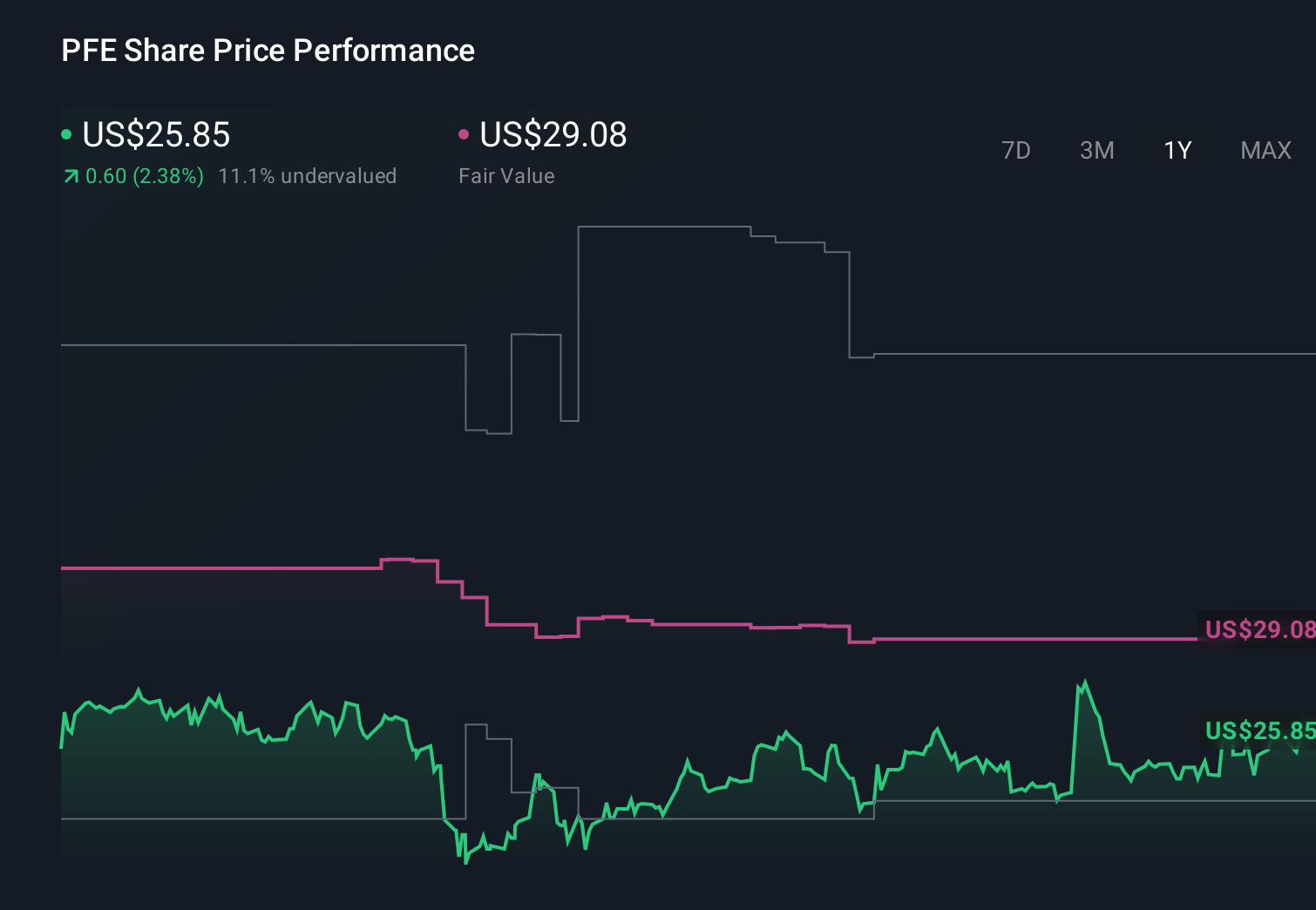
Some of the most optimistic analysts already expected revenues near US$59.6 billion and earnings of about US$11.3 billion by 2029, so fresh HYMPAVZI and berobenatide news could push those bullish views even further while more cautious investors weigh how much regulatory pricing risks might still cap the upside.
Explore 21 other fair value estimates on Pfizer - why the stock might be worth over 2x more than the current price!
Reach Your Own Conclusion
Disagree with existing narratives? Extraordinary investment returns rarely come from following the herd, so go with your instincts.
- A great starting point for your Pfizer research is our analysis highlighting 1 key reward and 4 important warning signs that could impact your investment decision.
- Our free Pfizer research report provides a comprehensive fundamental analysis summarized in a single visual - the Snowflake - making it easy to evaluate Pfizer's overall financial health at a glance.
Searching For A Fresh Perspective?
Early movers are already taking notice. See the stocks they're targeting before they've flown the coop:
- Invest in the nuclear renaissance through our list of 88 elite nuclear energy infrastructure plays powering the global AI revolution.
- Find 46 companies with promising cash flow potential yet trading below their fair value.
- The best AI stocks today may lie beyond giants like Nvidia and Microsoft. Find the next big opportunity with these 14 smaller AI-focused companies with strong growth potential through early-stage innovation in machine learning, automation, and data intelligence that could fund your retirement.
This article by Simply Wall St is general in nature. We provide commentary based on historical data and analyst forecasts only using an unbiased methodology and our articles are not intended to be financial advice. It does not constitute a recommendation to buy or sell any stock, and does not take account of your objectives, or your financial situation. We aim to bring you long-term focused analysis driven by fundamental data. Note that our analysis may not factor in the latest price-sensitive company announcements or qualitative material. Simply Wall St has no position in any stocks mentioned.