

Does Pull-Ups’ New Learning Layer Technology Change The Bull Case For Kimberly-Clark (KMB)?
Kimberly-Clark KMB | 0.00 |
- In May 2026, Kimberly-Clark’s Pull-Ups brand introduced new Learning Layer technology in its training pants, briefly creating a wet sensation before drying to help toddlers distinguish between wet and dry while remaining safe for sensitive skin.
- This upgrade, combined with existing features like re-fastenable sides and Disney graphics plus expanded use of animated characters Terd and Yureen, signals a push to deepen parent engagement at a critical early childhood stage.
- We’ll now examine how this Learning Layer innovation, aimed at improving potty training outcomes, may influence Kimberly-Clark’s broader investment narrative.
Capitalize on the AI infrastructure supercycle with our selection of the 47 best 'picks and shovels' of the AI gold rush converting record-breaking demand into massive cash flow.
Kimberly-Clark Investment Narrative Recap
To own Kimberly-Clark, you need to believe its core personal care brands can keep earning a premium even as competition and consumer budgets stay tight. The Pull-Ups Learning Layer launch supports that story by reinforcing the company’s emphasis on innovation in diapers and training pants, but on its own it does not materially change the near term focus on defending margins against private label and promotional pressure or the risk that innovation slows.
The most relevant recent announcement here is the Q1 2026 update, where management highlighted an expected ~50 bps sales headwind from exiting U.S. private label diapers. Against that backdrop, Pull-Ups Learning Layer fits into a broader shift toward branded, higher value offerings, which may matter for how Kimberly-Clark balances volume and pricing as it leans more heavily on North America and Personal Care after the IFP divestiture.
Yet behind these product wins, investors should still be watching the risk that concentrated exposure to North American personal care leaves Kimberly-Clark more vulnerable if...
Kimberly-Clark's narrative projects $18.3 billion revenue and $6.1 billion earnings by 2029. This requires 3.6% yearly revenue growth and a roughly $4.5 billion earnings increase from $1.6 billion today.
Uncover how Kimberly-Clark's forecasts yield a $114.86 fair value, a 18% upside to its current price.
Exploring Other Perspectives
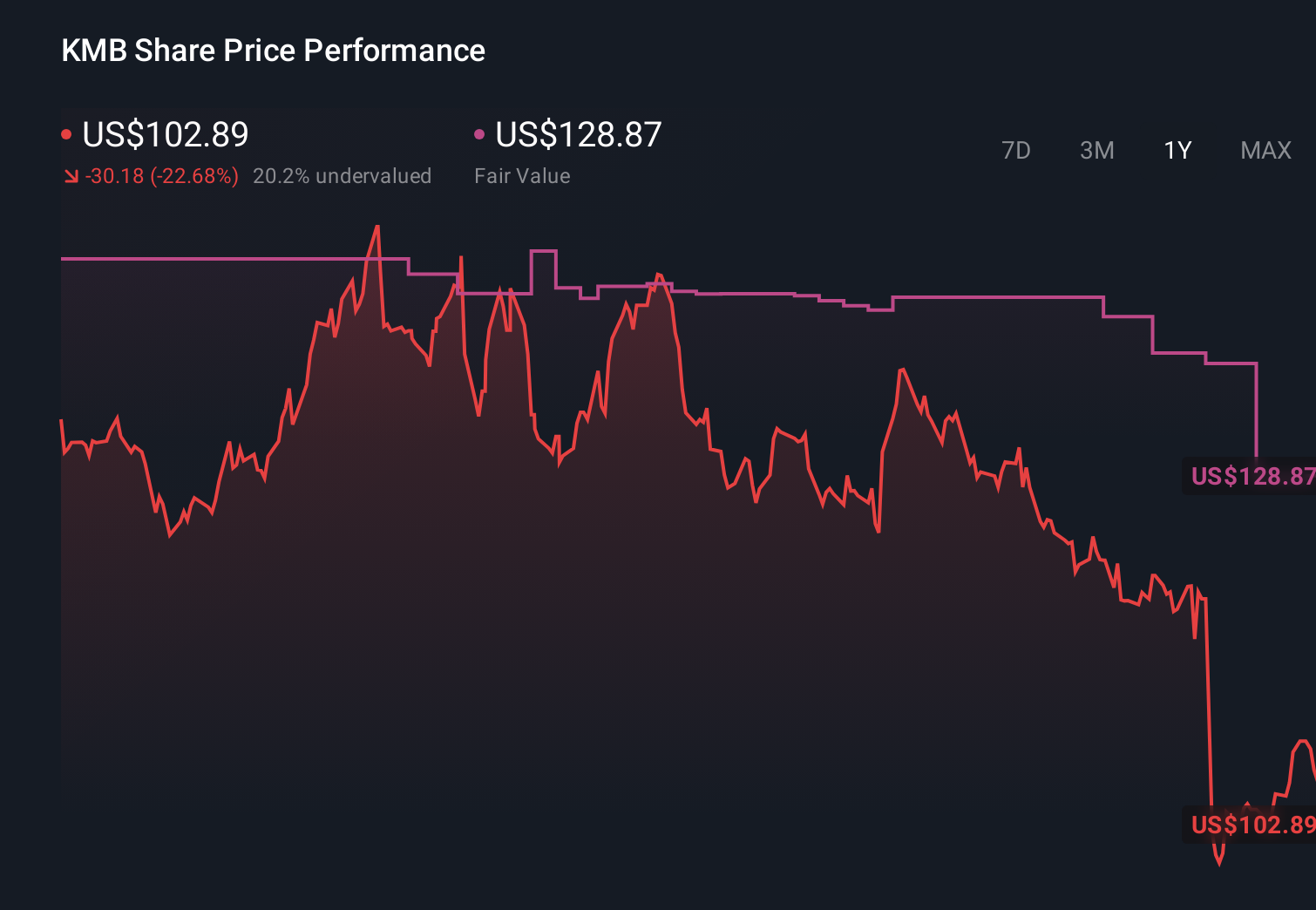
While Pull-Ups Learning Layer could support the idea that innovation-led premiumization might eventually lift margins, the most pessimistic analysts were still modeling revenues drifting to about US$18.1 billion and earnings of roughly US$2.8 billion by 2028, so your view on this launch and the potential for stronger growth can reasonably differ from theirs.
Explore 5 other fair value estimates on Kimberly-Clark - why the stock might be worth as much as 61% more than the current price!
Form Your Own Verdict
Don't just follow the ticker - dig into the data and build a conviction that's truly your own.
- A great starting point for your Kimberly-Clark research is our analysis highlighting 2 key rewards and 2 important warning signs that could impact your investment decision.
- Our free Kimberly-Clark research report provides a comprehensive fundamental analysis summarized in a single visual - the Snowflake - making it easy to evaluate Kimberly-Clark's overall financial health at a glance.
Seeking Other Investments?
Right now could be the best entry point. These picks are fresh from our daily scans. Don't delay:
- Invest in the nuclear renaissance through our list of 88 elite nuclear energy infrastructure plays powering the global AI revolution.
- The future of work is here. Discover the 33 top robotics and automation stocks leading the charge in AI-driven automation and industrial transformation.
- This technology could replace computers: discover 29 stocks that are working to make quantum computing a reality.
This article by Simply Wall St is general in nature. We provide commentary based on historical data and analyst forecasts only using an unbiased methodology and our articles are not intended to be financial advice. It does not constitute a recommendation to buy or sell any stock, and does not take account of your objectives, or your financial situation. We aim to bring you long-term focused analysis driven by fundamental data. Note that our analysis may not factor in the latest price-sensitive company announcements or qualitative material. Simply Wall St has no position in any stocks mentioned.