

Does Slowing U.S. Sales And Inventory Discounting Threaten Walmart’s (WMT) AI-Driven Omnichannel Margin Story?
Walmart Inc. WMT | 0.00 |
- In late June 2026, Cleveland Research reported that Walmart’s U.S. comparable sales were slowing, with the retailer cutting prices to clear excess inventory amid tariff uncertainty and higher oil costs that could pressure both expenses and demand.
- This combination of softer store trends, inventory-driven discounting, and potential new tariffs introduces fresh questions about Walmart’s near-term margins and earnings resilience.
- We’ll now examine how concerns about slowing U.S. comps and inventory-related price cuts interact with Walmart’s AI- and omnichannel-focused investment narrative.
The future of work is here. Discover the 30 top robotics and automation stocks leading the charge in AI-driven automation and industrial transformation.
Walmart Investment Narrative Recap
To own Walmart after the recent pullback, you need to believe its high-margin ecosystem in advertising, marketplace, and memberships can offset pressure from softer U.S. comps and inventory-driven price cuts. Cleveland Research’s note directly challenges the near term earnings resilience that many shareholders focus on, but does not yet alter the longer term thesis around profit mix improvement. The biggest immediate risk remains further margin strain if tariffs and higher oil costs collide with ongoing discounting.
Against that backdrop, the Shapermint rollout into 1,600 more U.S. stores and Walmart.com is a useful reminder of how merchandising and assortment still matter for traffic and share of wallet. It also ties into the omnichannel and advertising story, as more differentiated, value-focused brands can deepen customer engagement that later feeds into Walmart’s marketplace, membership and AI tools. Put together, the near term sales wobble is arriving just as Walmart is trying to prove the earnings power of these newer engines.
Yet while the long term ecosystem story is appealing, investors should also be aware of how persistent tariff and cost inflation could...
Walmart's narrative projects $832.5 billion revenue and $29.3 billion earnings by 2029. This requires 4.7% yearly revenue growth and about a $6.6 billion earnings increase from $22.7 billion today.
Uncover how Walmart's forecasts yield a $138.37 fair value, a 24% upside to its current price.
Exploring Other Perspectives
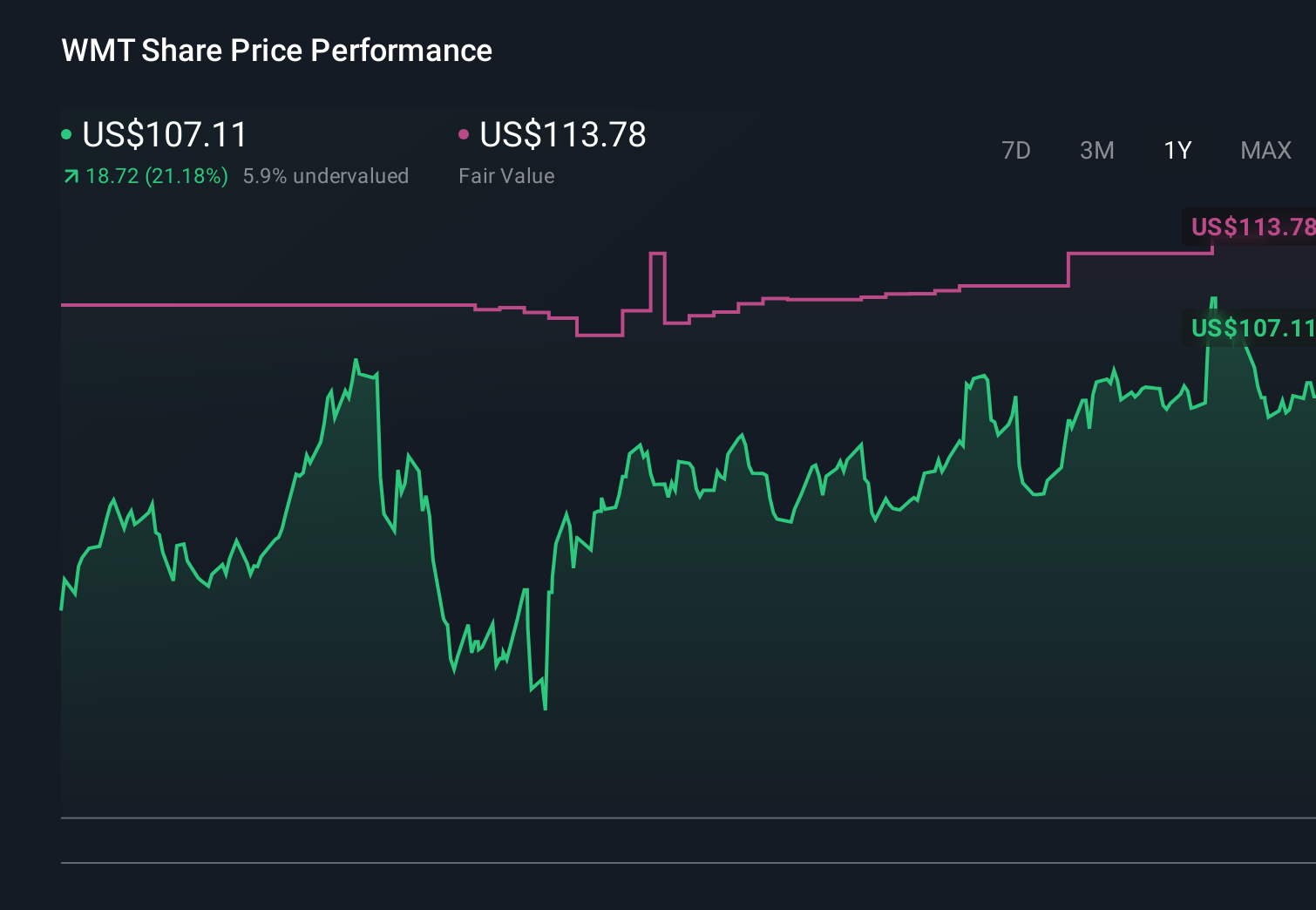
Thirteen fair value estimates from the Simply Wall St Community span roughly US$98.74 to US$138.59 per share, underlining how far apart individual views can be. Before you rely on any single number, weigh it against concerns that ongoing tariff pressures and higher delivery costs could constrain margins and ultimately limit how much of Walmart’s digital and AI investments reach the bottom line.
Explore 13 other fair value estimates on Walmart - why the stock might be worth 12% less than the current price!
Reach Your Own Conclusion
Disagree with existing narratives? Extraordinary investment returns rarely come from following the herd, so go with your instincts.
- A great starting point for your Walmart research is our analysis highlighting 3 key rewards and 2 important warning signs that could impact your investment decision.
- Our free Walmart research report provides a comprehensive fundamental analysis summarized in a single visual - the Snowflake - making it easy to evaluate Walmart's overall financial health at a glance.
Contemplating Other Strategies?
Markets shift fast. These stocks won't stay hidden for long. Get the list while it matters:
- We've uncovered the 7 dividend fortresses yielding 5%+ that don't just survive market storms, but thrive in them.
- Rare earth metals are an input to most high-tech devices, military and defence systems and electric vehicles. The global race is on to secure supply of these critical minerals. Beat the pack to uncover the 31 best rare earth metal stocks of the very few that mine this essential strategic resource.
- Invest in the nuclear renaissance through our list of 89 elite nuclear energy infrastructure plays powering the global AI revolution.
This article by Simply Wall St is general in nature. We provide commentary based on historical data and analyst forecasts only using an unbiased methodology and our articles are not intended to be financial advice. It does not constitute a recommendation to buy or sell any stock, and does not take account of your objectives, or your financial situation. We aim to bring you long-term focused analysis driven by fundamental data. Note that our analysis may not factor in the latest price-sensitive company announcements or qualitative material. Simply Wall St has no position in any stocks mentioned.