

Drax Mill Disputes Put Southern’s Community And Sustainability Approach In Focus
Southern Company SO | 94.90 94.85 | +0.27% -0.05% Post |
- British power company Drax is facing scrutiny over wood pellet mills in Southern towns, where residents report pollution concerns and limited local job creation.
- Community groups question whether the facilities, supported by tax breaks and government subsidies, deliver meaningful economic benefits to nearby neighborhoods.
- The debate highlights growing attention on how industrial projects across the southern U.S. balance environmental impact, public health, and long term local development.
For investors following Southern (NYSE:SO), this controversy around Drax sits in the broader conversation about how energy related businesses operate in Southern communities. Utilities and energy adjacent companies are under closer watch on issues such as air quality, siting of facilities, and the real economic value they bring to rural and small town markets.
As these debates continue, you may see more questions raised about how companies disclose community impact, manage environmental risks, and work with local governments on subsidies and incentives. For anyone tracking NYSE:SO, it can be useful to watch how peers handle these issues, as public expectations and regulatory attention on sustainability and community relations remain high.
Stay updated on the most important news stories for Southern by adding it to your watchlist or portfolio. Alternatively, explore our Community to discover new perspectives on Southern.
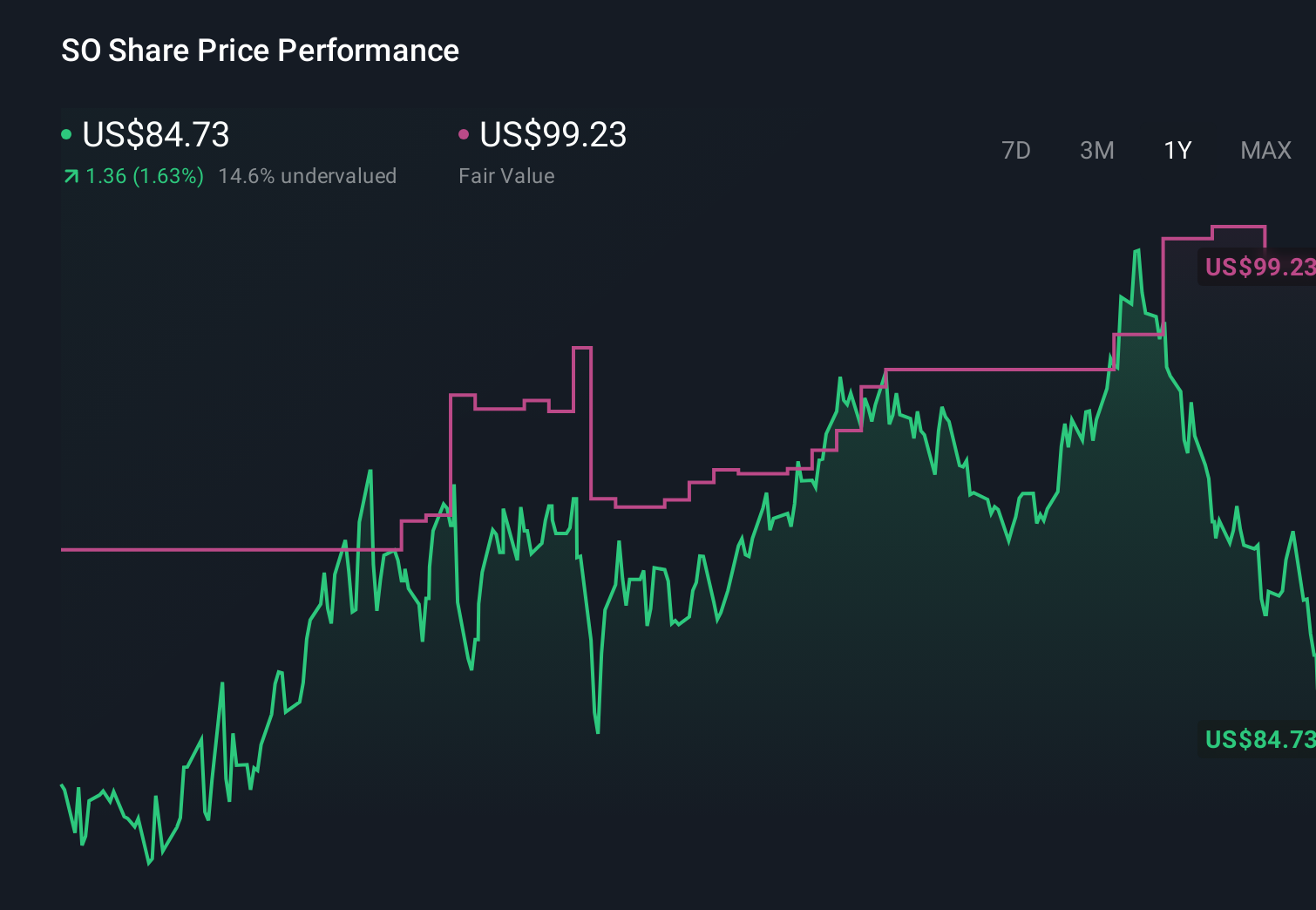
The issues around Drax's wood pellet mills highlight how fast-growing energy projects in the U.S. South can trigger closer regulatory and community scrutiny on pollution, subsidies, and local benefits. That is directly relevant for a large regulated utility like Southern. Even though Southern's core business is different from Drax's biomass operations, investors may look at how Southern handles siting decisions, community engagement, and disclosure of environmental impacts compared with other utilities such as Duke Energy and NextEra Energy.
How This Fits Into the Southern Narrative
The Drax controversy sits alongside the view of Southern as a steady, income-focused utility, with a regular quarterly dividend such as the recently affirmed US$0.74 per share. For investors who see Southern as a long-term, regulated infrastructure story, this kind of news can be a reminder to check how the company balances growth projects in the Southeast with local stakeholder expectations around health, air quality, and economic development.
Risks and Rewards Around This News
- ⚠️ Heightened attention on Drax's mills could encourage regulators to tighten oversight of energy-related facilities in the region. This may increase compliance and reporting costs for Southern over time.
- ⚠️ If community concerns about pollution and subsidies grow, Southern could face more pushback or delays on future gas or generation projects that rely on regulatory approval.
- 🎁 By showing clear community benefits and transparent environmental practices, Southern may differentiate itself from peers and maintain support for its large capital program.
- 🎁 Consistent dividends and regulated cash flows may appeal to investors who want exposure to Southern markets without direct exposure to the specific controversies around biomass operators like Drax.
What To Watch Next
From here, it is worth tracking whether Southern comments on community impact and environmental standards in more detail, especially as it funds new projects and continues its capital spending plans. If you want to see how other investors are thinking about these trade offs for Southern, check community narratives through this dedicated page and compare the qualitative views with your own assessment of the risks and income profile.
This article by Simply Wall St is general in nature. We provide commentary based on historical data and analyst forecasts only using an unbiased methodology and our articles are not intended to be financial advice. It does not constitute a recommendation to buy or sell any stock, and does not take account of your objectives, or your financial situation. We aim to bring you long-term focused analysis driven by fundamental data. Note that our analysis may not factor in the latest price-sensitive company announcements or qualitative material. Simply Wall St has no position in any stocks mentioned.