

Eurozone Sentiment Rebounds As Middle East Tensions Ease And Oil Prices Fall
Economic sentiment in the Eurozone rose for the first time in four months as concerns about the war in the Middle East and higher energy prices eased.
The ZEW Eurozone Economic Sentiment Indicator climbed to 9.5 points in June, an increase of 18.6 points from the previous month. Germany's ZEW Indicator of Economic Sentiment also rose 20.7 points to 10.5 in June, its first positive reading since the war in the Middle East shook confidence. It beat market expectations of -6.0.
"The ZEW Indicator returns to positive territory as financial market experts expect the Iran conflict to be nearing an end," ZEW President Professor Achim Wambach said on Tuesday. "This is likely to ease the massive pressure on energy prices and inflation, which would benefit energy-intensive industries and private households and would strengthen domestic demand."
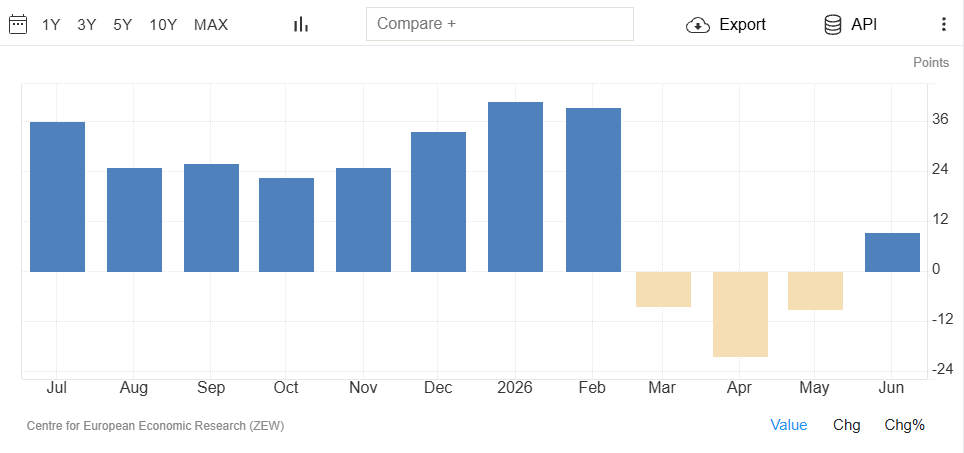
The latest reading ends a three‑month drop in Eurozone sentiment, fueled by US and Israeli military operations against Iran beginning on February 28. Confidence in the region fell to –20.4 points in May from +39.4 points at the end of February.
Oil Prices Fall on Peace Deal
Inflation in the Eurozone climbed for five straight months from 1.7% in January, reaching 3.2% in May, the highest since September 2023, as Brent crude rose above $110 a barrel.
On Sunday, Trump announced an agreement with Iran to bring the conflict to a cease. Brent crude oil prices fell 3.93% to below $80 per barrel on the news.
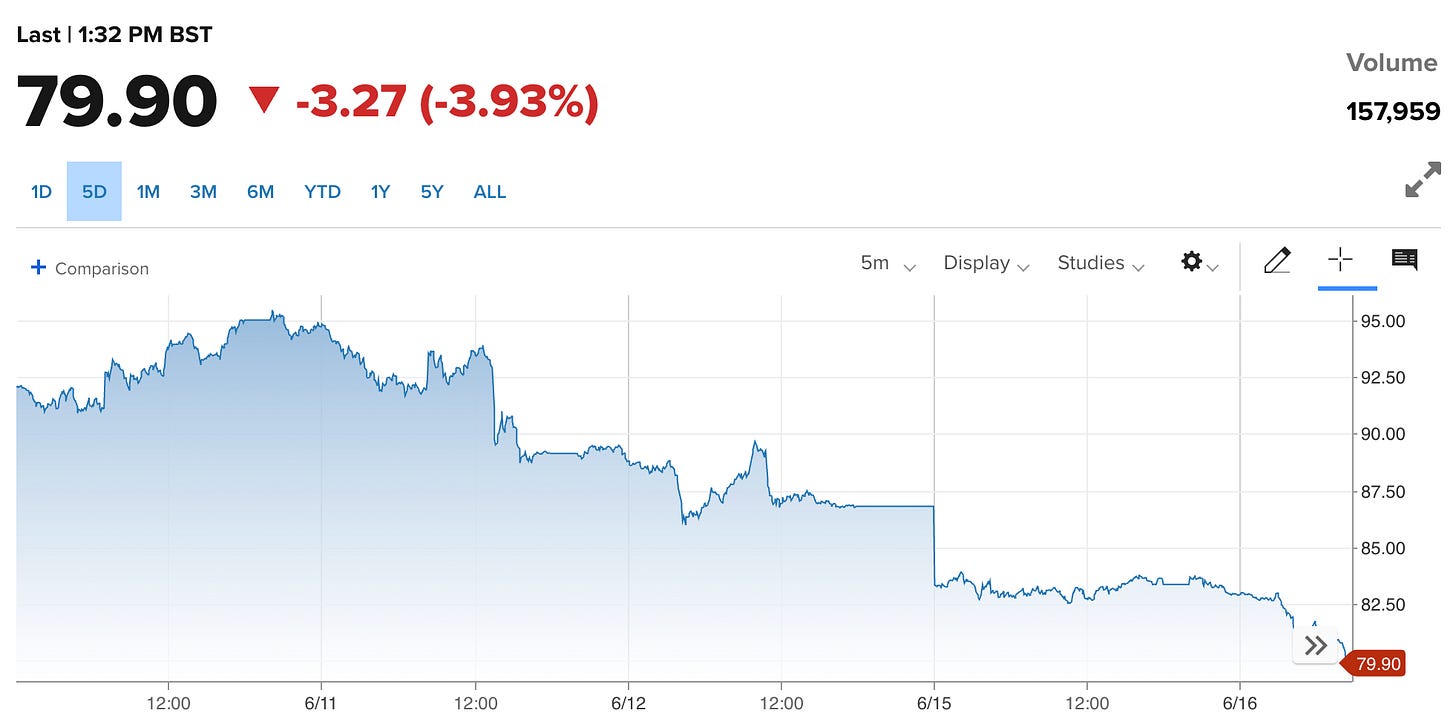
"The more substantial point here, however, is that there is now every chance of avoiding a prolonged energy shock," Faisal Islam, economics editor at the BBC, said.
This comes as a relief to Eurozone policy makers confronted with rising inflation, with all eyes on the G7 Leaders' Summit that began on Monday in Évian-les-Bains, France. The agenda will be largely dominated by the Ukraine war and the peace process with Iran, alongside trade and economic growth.
ECB Reacted to Rising Inflation
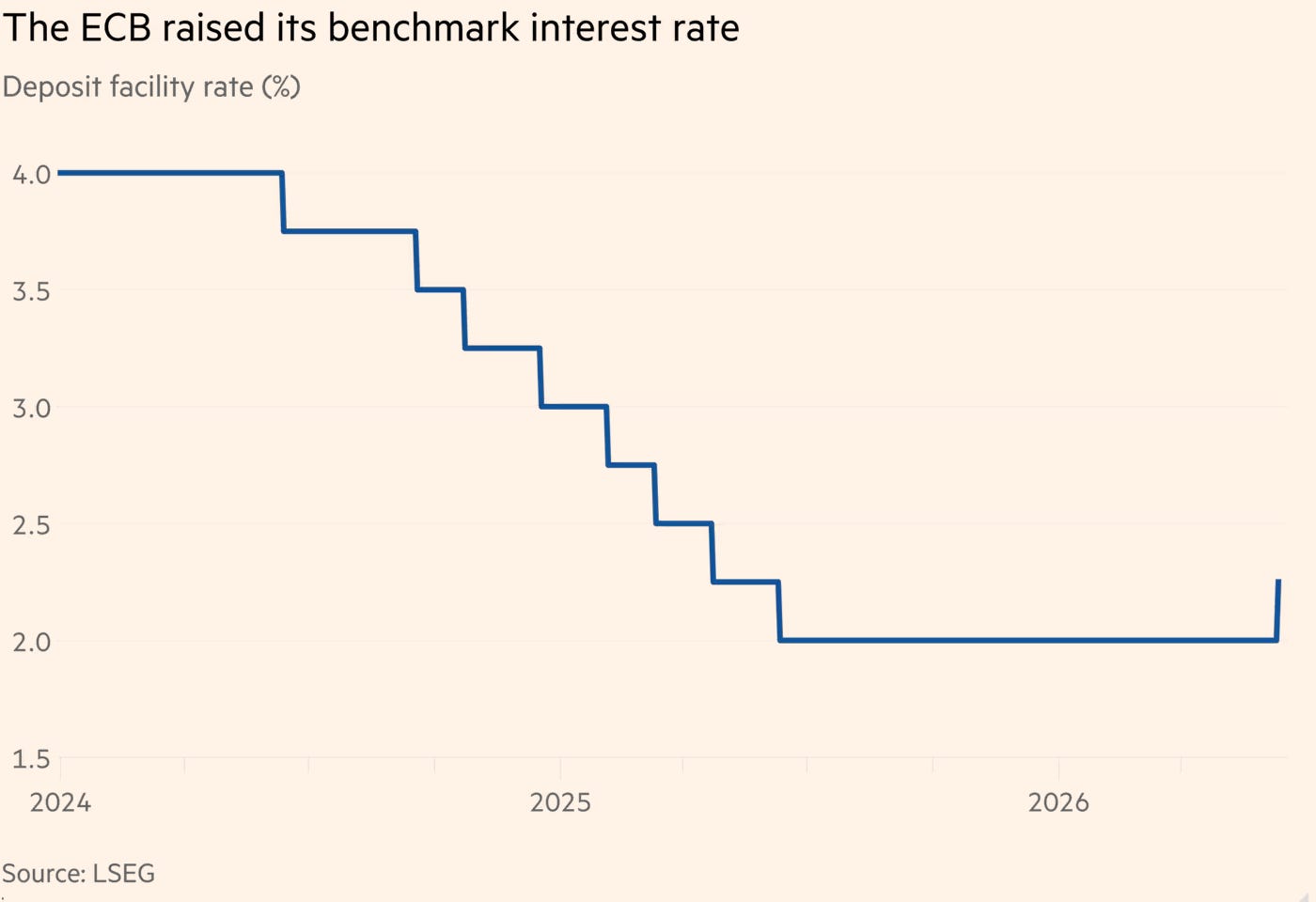
The acceleration in inflation above the European Central Bank's (ECB) 2% target prompted a shift in policy. The ECB on June 11 raised rates to 2.25%, the first increase since 2023.
"The risks to the growth outlook are to the downside, mainly owing to the war in the Middle East, which has added to the volatile global policy environment," ECB President Christine Lagarde said on June 11. "The outlook remains uncertain, with upside risks for inflation and downside risks for economic growth."
The decision makes the ECB the first among G7 central banks to raise rates. The Bank of Japan raised its main interest rate to 1% – a level not seen since 1995. The Federal Reserve and Bank of England have kept rates steady. The Bank of Canada has held off on a rate move amid tariff-driven uncertainty.
"We are not precommitting to a particular rate path," Lagarde said. "We will be deciding meeting-by -meeting, we will be data-dependent, we will have no preset, predetermined rate path going forward, and that's the way we will be operating"
Hike Could Hit Eurozone Growth
Robert Dishner at Neuberger Berman doubted this would be a one-off. Bloomberg has projected two further ECB hikes by September.
"While it would be nice to conclude this is one and done," Dishner said. "The ECB can't say that even if it were true. But given the current stance of data (employment, wages, bank lending conditions) it's likely the ECB may be hard-pressed to hike again absent an improvement in data".
Holger Schmieding at Berenberg Bank called it "a policy mistake," warning that it would deliver "a new blow" to Eurozone growth. "The ECB should look through the adverse supply shock," Schmieding wrote. "Weakening the eurozone economy further would be an error."
The ECB lowered its GDP forecasts. It now expects growth of 0.8% in 2026 and 1.2% in 2027. It also revised its inflation forecasts sharply upward, with headline inflation projected at 3.0% for 2026, up from 2.6% in April.
Eurozone at Risk of Recession
Private sector business activity in the eurozone fell at the sharpest pace in 18 months in May, according to the latest S&P Global PMI® data. This marked back-to-back months of contraction for the first time since the end of 2024.
"With business activity in the eurozone falling for a second successive month in May, it is looking increasingly likely that the economy will slip into contraction in the second quarter, Chris Williamson, Chief Business Economist at S&P Global Market Intelligence said on June 3. "Price pressures have meanwhile intensified to their most worrying for over three years, hinting at inflation potentially running close to 4% in the coming months."
Williamson warned, before the ECB rate hike, that policymakers would also be clearly concerned about hiking rates into a downturn, thereby adding to recession risks.
With these concerns, the ZEW assessment of the Eurozone economic situation remained negative at -43.4 points, despite the improvement in the economic sentiment indicator.
Disclaimer: Any opinions expressed in this article are not to be considered investment advice and are solely those of the authors. European Capital Insights is not responsible for any financial decisions made based on the contents of this article. Readers may use this article for information and educational purposes only.
Benzinga Disclaimer: This article is from an unpaid external contributor. It does not represent Benzinga's reporting and has not been edited for content or accuracy