

Figma (FIG) Is Down 14.6% After AI Moat Concerns Emerge Despite Strong FY25 Growth - Has The Bull Case Changed?
Figma FIG | 18.92 18.70 | -6.89% -1.17% Pre |
- Figma recently reported full-year 2025 revenue growth of 41% with solid free cash flow, while guiding 2026 growth to around 30% and remaining unprofitable.
- At the same time, investors are increasingly focused on how generative AI and intensified competition from Adobe could weaken Figma’s competitive position, even as user adoption remains strong.
- We’ll now examine how investor concerns about AI eroding Figma’s moat may influence the company’s existing investment narrative and risk profile.
The best AI stocks today may lie beyond giants like Nvidia and Microsoft. Find the next big opportunity with these 21 smaller AI-focused companies with strong growth potential through early-stage innovation in machine learning, automation, and data intelligence that could fund your retirement.
Figma Investment Narrative Recap
To own Figma today, you need to believe its collaborative design platform can stay central to how digital products are built, even as generative AI reshapes workflows and big rivals like Adobe push harder into the same territory. The latest results show strong revenue growth but continued losses, so the key near term catalyst is how quickly AI features translate into paid adoption, while the biggest risk is that AI tools and competitor offerings narrow Figma’s differentiation faster than expected.
The most relevant recent announcement here is Figma’s 2026 revenue guidance of US$1.366–1.374 billion, which implies slower growth than 2025 but still well above many software peers. That outlook, combined with the stock’s sharp pullback and concerns around AI driven disruption, puts extra weight on upcoming product updates and customer adoption metrics to show whether Figma’s newer AI products like Make and Buzz can deepen usage and support the premium valuation investors have paid so far.
But while revenue is still growing quickly, the concern that AI and Adobe could steadily chip away at Figma’s moat is something investors should be aware of...
Figma’s narrative projects $1.7 billion revenue and $214.1 million earnings by 2028. This requires 21.2% yearly revenue growth and about a $1.14 billion earnings increase from -$926.1 million today.
Uncover how Figma's forecasts yield a $65.25 fair value, a 259% upside to its current price.
Exploring Other Perspectives
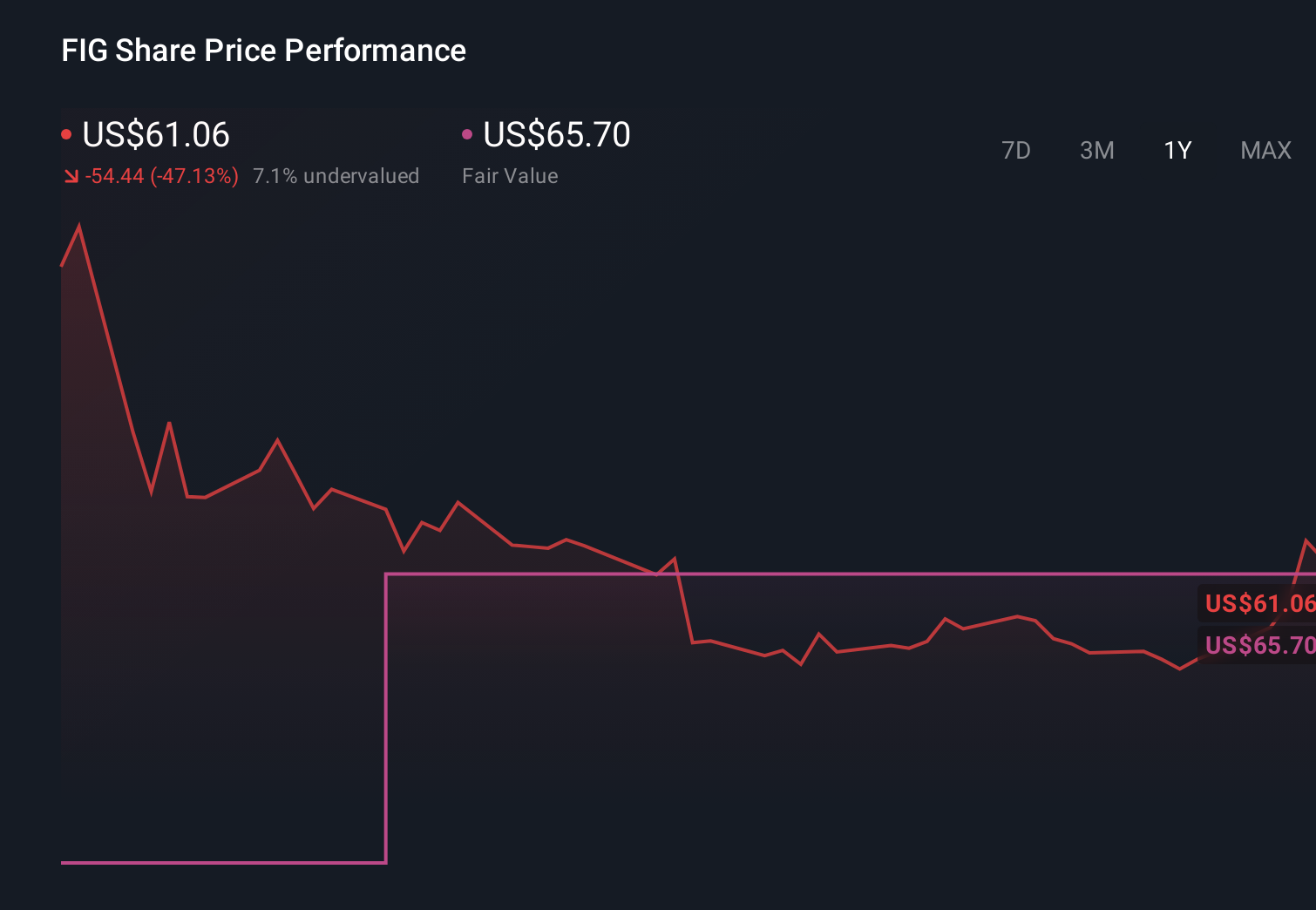
Some analysts were far more optimistic before this selloff, assuming around 24.2 percent annual revenue growth and a sharp improvement in margins, yet the same AI investments that could pull more teams into Figma also introduce higher costs and competitive risks, so you should weigh those bullish expectations against how this new AI pressure might reshape both the upside case and the downside risk.
Explore 28 other fair value estimates on Figma - why the stock might be worth just $17.33!
Form Your Own Verdict
Disagree with existing narratives? Extraordinary investment returns rarely come from following the herd, so go with your instincts.
- A great starting point for your Figma research is our analysis highlighting 3 key rewards and 3 important warning signs that could impact your investment decision.
- Our free Figma research report provides a comprehensive fundamental analysis summarized in a single visual - the Snowflake - making it easy to evaluate Figma's overall financial health at a glance.
Want Some Alternatives?
The market won't wait. These fast-moving stocks are hot now. Grab the list before they run:
- Find 58 companies with promising cash flow potential yet trading below their fair value.
- We've uncovered the 11 dividend fortresses yielding 5%+ that don't just survive market storms, but thrive in them.
- Invest in the nuclear renaissance through our list of 93 elite nuclear energy infrastructure plays powering the global AI revolution.
This article by Simply Wall St is general in nature. We provide commentary based on historical data and analyst forecasts only using an unbiased methodology and our articles are not intended to be financial advice. It does not constitute a recommendation to buy or sell any stock, and does not take account of your objectives, or your financial situation. We aim to bring you long-term focused analysis driven by fundamental data. Note that our analysis may not factor in the latest price-sensitive company announcements or qualitative material. Simply Wall St has no position in any stocks mentioned.