

From a 70% Loss to a 155% Annual Gain! Inside the Million-Dollar TQQQ Trading Strategy of a Female Trader
Microsoft Corporation MSFT | 0.00 | |
Affirm AFRM | 0.00 | |
The Trade Desk TTD | 0.00 | |
Ultrapro QQQ Proshares TQQQ | 0.00 | |
SAUDI ARAMCO 2222.SA | 0.00 |
Vibha Jha's remarkable journey from a 70% loss to becoming an investment champion highlights the power of discipline and learning. She shares four core secrets: identifying your style, systematic learning, continuous review, and strategy validation. Her TOOO swing trading tactics and risk management underpin her 155% annual return, offering practical wisdom for any trader.
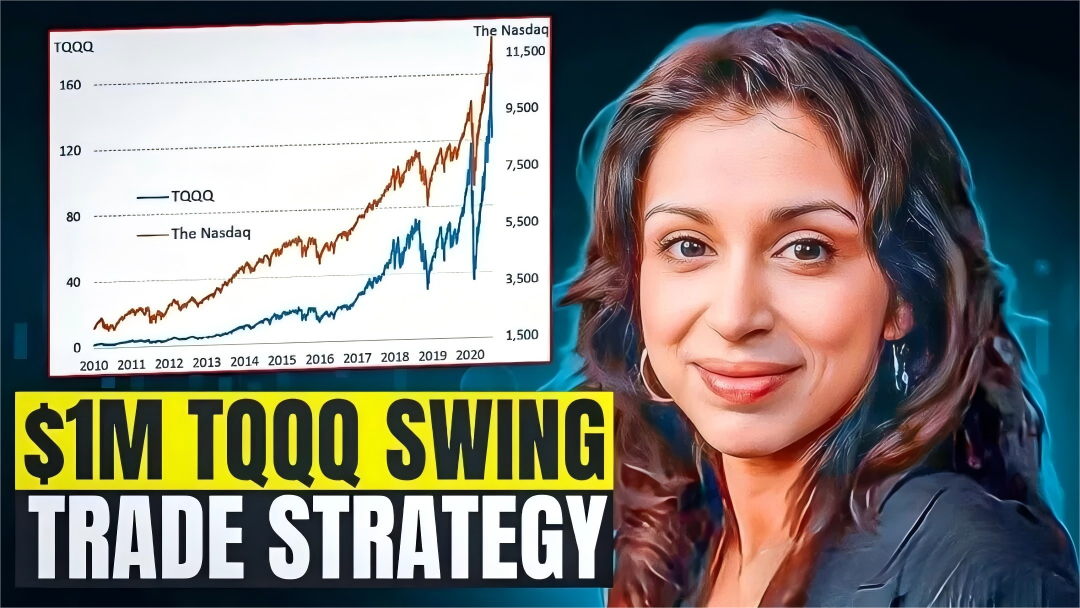
Vibha Jha is a seasoned American investment champion who honed her trading and investment skills through dedicated practice over the years. A retired health insurance executive, Jha pursues investing and trading with passion.
Her interest in stocks began in the mid-1990s while working at Aetna as a financial underwriter, when she bought a car with cash. Her brother, an engineer at Goldman Sachs, advised her to invest in stocks like Microsoft Corporation(MSFT.US) instead of spending on a car.
"Of course, I didn't listen," says Jha, now 55, recalling her upbringing in a debt-averse family.
By 1999, Microsoft's share price had soared from about $5 in 1995 to over $57, a 1000% increase.
Realizing her missed opportunity, she entered the market at Microsoft's peak before the dot-com bubble burst, losing about 70% of her investment within three months.
"I was initially attracted by stock gains but didn't realize how quickly prices could plummet," Jha reflects.
Her key takeaway: strong company fundamentals aren't the only consideration. Buying at the wrong time can lead to significant losses.
How did Jha improve?
She began reading extensively on trading and investing. From 2005, she regularly read Investors' Business Daily and books like "How to Make Money in Stocks" by William O'Neil. She expanded her knowledge by tracking quarterly reports of companies she was interested in and invested in every quarter.
Her strategy involves picking stocks for long-term holding but staying flexible to exit if fundamentals weaken or stocks fall below weekly moving averages. In 2021, her biggest winner was Affirm(AFRM.US), which surged in the fourth quarter. In 2020, her top single-stock winner was The Trade Desk(TTD.US).
She entered the U.S. Investing Championship in 2020, trading within her Roth IRA, and again in 2021 with her Traditional IRA, allowing her to trade without tax implications.
She ended 2020 with a 155.2% return and 2021 with a 100.4% return, outperforming many top professionals, while the S&P 500 rose about 16% and 27%, respectively. In 2023, Jha participated again, achieving a remarkable 70% return, solidifying her reputation as a disciplined, high-caliber trader who excels in both favorable and volatile markets.
Four Top Tips:
◕ Understand Your Trading Style: Are you inclined to buy and hold, or prefer quicker trades? It depends on your tolerance for volatility. If fluctuations make you anxious, swing or day trading might suit you better than attempting to capture small price movements. Regardless of your fundamental research or technical strategies, you can't control market movements—only your reactions.
"Overreacting or underreacting is a common mistake," says Jha. "Not knowing your style can lead to overtrading."
With limited time, Jha prefers long-term trades or holding positions for months to a year, but she occasionally holds short-term if fundamentals weaken or stocks are overbought.
◕ Learn from One Source, Not Many: Find a mentor whose style matches yours. If you can hold stocks for months, learning from a day trader isn't ideal. Following a strategy that doesn't suit your style can hinder execution and yield different results.
In the 90s, with limited online resources, Jha read extensively. She resonated with U.S. Investing Champion Mark Minervini's teachings, particularly "Think and Trade Like a Champion," and followed investing legend William O'Neil's "How to Make Money in Stocks."

◕ Continuous Improvement: For Jha, this means reviewing trades post-exit to identify improvements. Most observations relate to technical aspects—better entry points or longer holds. If a trade loses, she evaluates her fundamental research for gaps.
For instance, on November 22, 2021, she invested in Rivian (RIVN) post-IPO. As the stock fell, she quickly sold half, losing $3,470, and held the rest to see if it would rebound, which it didn't. She later realized IPOs aren't always ideal entry points, particularly when she lacked time for a thorough review.
◕ Give Strategies Time to Prove Themselves: Before switching strategies, ensure you're not losing too much money. A good strategy might suffer in a poor market. Your strategy might suit volatile or bull markets better.
"If I lose on several trades, it might be my approach, but it could also be market conditions," says Jha. "You don't need to be fully invested all the time. Sometimes I hold cash."
To let your strategy work, you need good risk management, including stop-loss settings and position sizing. For instance, her small position in Rivian minimized portfolio impact.
Jha’s TQQQ Swing Trading Strategy:
Her Ultrapro QQQ Proshares(TQQQ.US) trading involves comprehensive market analysis, precise entry points, and disciplined selling.
Entry Signals:
- Buy when TQQQ returns to key moving averages (e.g., 50-day or 10-week).
- Track higher lows to confirm trend reversals.
- Enter when Nasdaq shows new rally signs post-correction.
Selling High:
- Use technical signals for phased exits to lock gains:
- New 52-week highs with declining volume.
- Nasdaq experiences four to five distribution days.
- Pullbacks after multiple failed resistance tests.
Jha monitors TQQQ's low-to-high swings, noting annual 20%–30% opportunities. Beyond TQQQ, she focuses on growth stocks with potential for doubling or tripling, following William O'Neil's CANSLIM principles.

Fundamental Analysis:
- Quarterly earnings and sales growth: target 25%–35% or higher.
- Annual earnings forecasts: ensure sustained growth.
- Institutional ownership: prefer stocks with increasing fund holdings.
Technical Analysis:
- Early patterns like "cup with handle" or "double bottom."
- Breaks above 50-day and 10-week moving averages.
- Relative strength (RS) line at new highs.
Long-term Success Risk Management:
Risk management is central to Vibha’s trading:
- Stop-loss Rules: Exit when stocks fall below the 10-week or 50-day moving averages.
- Position Management: Start with 10% positions, cautiously add during pullbacks or consolidations.
- Avoid Overconcentration: Maintain a diversified portfolio of 6–8 core holdings.
"Controlling losses is my most important lesson. I use technical stop-losses to determine position sizes, allowing me to hold onto well-performing trades."
Advice for Aspiring Traders:
Reflecting on her journey, Jha shares key insights for traders seeking improvement:
- Know Your Style: Whether a swing trader or trend holder, understanding strengths and weaknesses is crucial.
- Start Small: Begin with small positions to reduce risk while learning.
- Develop a Comprehensive Plan: Include buy, sell, position management, and risk management rules.
- Commit to Continuous Learning: Jha refined her process through years of experience, reading, and error analysis.
"You can only learn by doing. Start small, optimize your system, and most importantly, stick to your rules."
Vibha Jha's impressive achievements—155.2% in 2020, 100% in 2021, and 70% in 2023—demonstrate the power of disciplined strategies. Her story proves that with persistence, clear rules, and continuous learning, it's possible to achieve exceptional returns while effectively managing risk.