

Higher For Longer Rates Are Putting These U.S. Bank Stocks Back In Focus
HomeTrust Bancshares, Inc. HTB | 0.00 |
Sticky inflation, a more hawkish sounding Federal Reserve, and higher market yields are pushing investors to rethink how they are positioned for a longer stretch of elevated rates. That mix can hurt some corners of the market, yet it can also create interesting openings where stronger balance sheets and solid profitability meet more generous interest income. This article explores three U.S. financial stocks exposed to that story and how the latest data could matter for each one.
These three stocks are just a starting sample, and the full screen surfaced 19 more U.S. financial companies with similar balance sheet strength, profitability filters, and rate exposure angles that are not covered here.
To explore this higher for longer theme in greater depth, go directly to the U.S. Financials Benefiting From Higher-for-Longer Interest Rates screener to identify, filter, and analyze the ideas that best fit your own conviction and risk tolerance.
Investar Holding (ISTR)
Overview: Investar Holding is a regional commercial bank based in Baton Rouge that focuses on lending and deposit services for individuals and small to medium-sized businesses across south Louisiana, southeast Texas, and Alabama. Its core earnings come from traditional banking activities where loan and deposit spreads can benefit if interest rates and yields stay elevated for longer.
Operations: Investar Holding generates all of its approximately US$121 million of revenue from banking activities in the United States.
Market Cap: US$417 million
Investar Holding provides exposure to a focused commercial bank that already meets the screener’s filters on profitability and balance sheet quality. It is directly tied to loan and deposit spread income that can be helped by higher-for-longer rates. The company currently reports profit margins around 25.9% and trades at a discount to a DCF estimate of fair value. At the same time, return on equity is only around the 8% hurdle and past dilution means shareholders need earnings growth to work hard for them. Recent gains in net interest income and a modest but consistent dividend indicate that the story is still developing for patient investors.
Investar Holding’s solid margins and higher rate exposure suggest that the current valuation gap may be masking something important. Review the DCF valuation analysis for Investar Holding to see what the market might be missing.
HomeTrust Bancshares (HTB)
Overview: HomeTrust Bancshares is a regional retail and commercial bank headquartered in Asheville, North Carolina, offering a full suite of deposits and loans to households, businesses, and nonprofits. Its earnings are closely tied to net interest margin and are therefore sensitive to sustained higher policy and deposit rates. It also provides specialized services such as healthcare banking and small business administration lending, which deepen customer relationships while still keeping interest income at the center of the story.
Operations: HomeTrust Bancshares generates about US$210 million of revenue entirely from its banking operations in the United States.
Market Cap: US$771 million
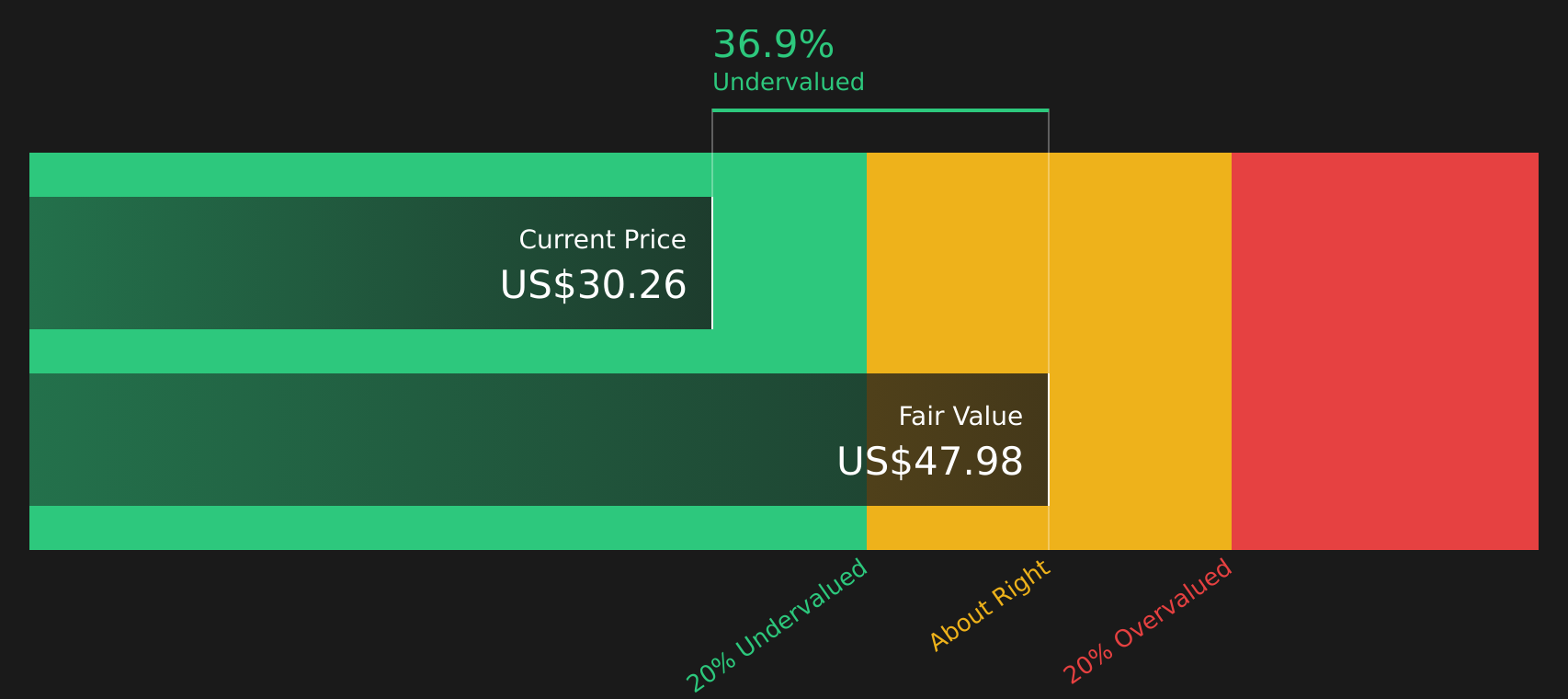
HomeTrust Bancshares provides exposure to traditional banking income at a time when higher market yields and a more hawkish Federal Reserve keep net interest margin in focus. Earnings quality is described as solid, with net profit margins around 30.6% and a P/E near 12x characterized as cheap relative to both peers and one estimate of fair value, while recent buyback and dividend activity point to a shareholder friendly capital approach. The trade off is a modest 10.8% ROE and relatively low loan loss coverage, which could matter if credit costs rise or rate support fades. For investors who want rate exposure through a growing Southeast franchise, the details behind that balance of value and risk are where the story starts to emerge.
HomeTrust Bancshares pairs a P/E near 12x with solid margins and capital returns that could be masking an underappreciated story. Review the full 3 key rewards and 1 important warning sign before the real swing factor becomes obvious.

Bank First (BFC)
Overview: Bank First is a Wisconsin based regional bank that offers traditional deposit accounts and a wide range of consumer and commercial loans, which tie its earnings closely to net interest margin in a higher-for-longer rate setting. The company also provides supporting services such as credit cards, insurance, treasury management, and digital banking, but interest income from core lending and banking activities remains the key driver.
Operations: Bank First generates about US$217 million of revenue from its banking operations in the United States.
Market Cap: US$1.70b
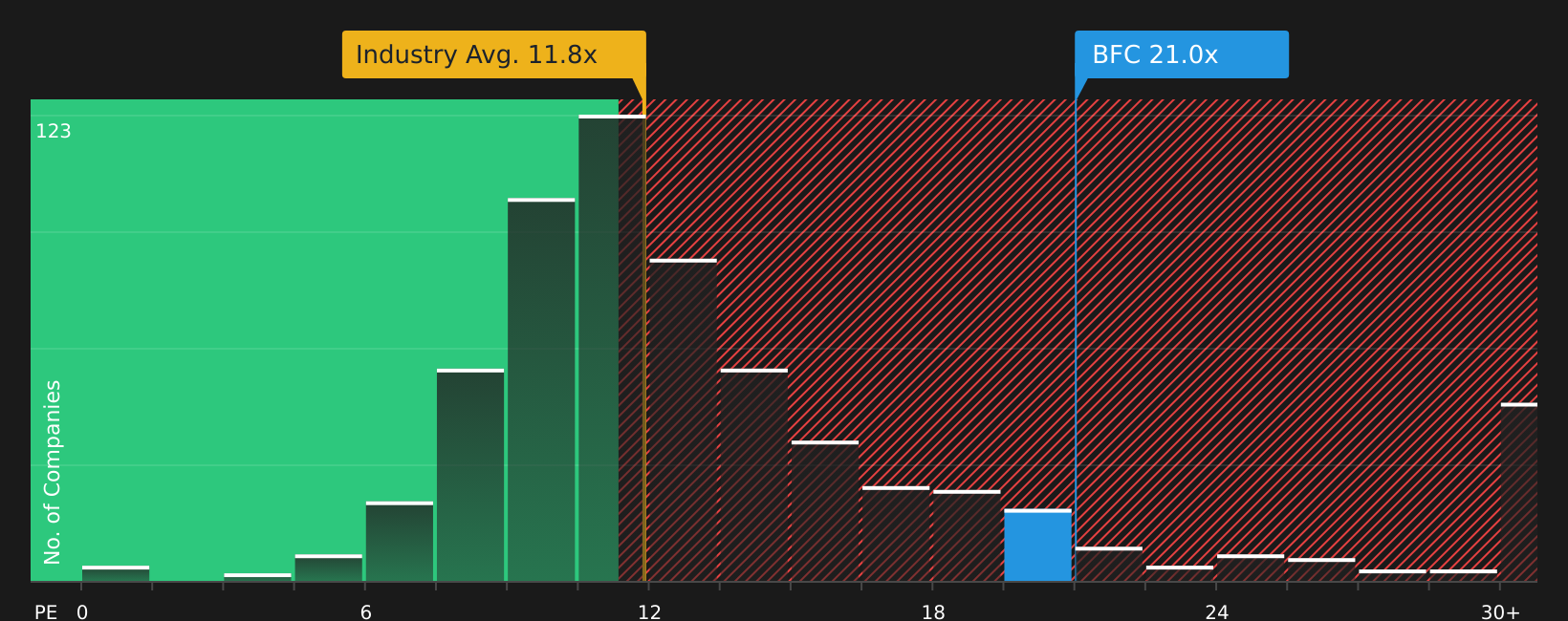
Bank First gives you focused exposure to a traditional lender that already meets the screener’s filters for profitability and balance sheet quality. It also leans into a higher-for-longer rate story through its net interest margin. Earnings forecasts cited by analysts indicate expectations for growth in both revenue and profit, and recent results show strong net interest income and EPS with support from buybacks and a steady 1.56% dividend yield. The trade off is a premium P/E relative to many U.S. banks and a mid single digit board tenure that raises governance questions even as management experience looks solid. With the Fed sounding more hawkish after sticky PCE data, Bank First is a bank where the rate story, valuation premium, and margin resilience all deserve a closer look.
Bank First’s premium P/E and solid net interest income suggest the story may be more about earnings resilience than many investors assume. See what the analysis report for Bank First reveals about the key pressure point that could shift sentiment.
Seeking Fresh Alternatives Beyond These Banks
Fresh stock ideas can move from quiet accumulation to breakout momentum before most investors notice. Use this window while it matters and before attention flies elsewhere. Get in early.
- Target resilient compounders with lower risk profiles by scanning the 75 resilient stocks with low risk scores before the crowd catches on and pricing power gets fully reflected.
- Ride the structural shift toward automation by sorting through the curated 38 robotics and automation stocks while many of these opportunities remain under the radar for now.
- Position ahead of potential commodity momentum by reviewing the hand picked 32 elite gold producer stocks before sentiment swings and valuations start running away.
This article by Simply Wall St is general in nature. We provide commentary based on historical data and analyst forecasts only using an unbiased methodology and our articles are not intended to be financial advice. It does not constitute a recommendation to buy or sell any stock, and does not take account of your objectives, or your financial situation. We aim to bring you long-term focused analysis driven by fundamental data. Note that our analysis may not factor in the latest price-sensitive company announcements or qualitative material. Simply Wall St has no position in any stocks mentioned.