

Higher Treasury Yields Are Reshaping U.S. Life Insurance Stocks
Brookfield Wealth Solutions Ltd. Class A BNT | 0.00 |
Long term US Treasury yields are back in the spotlight, with 30 year bonds near 5.2% and 10 year notes near 4.7%. That reshapes how money is priced across the economy and can punish some stocks while opening the door for others whose business models lean on higher long dated returns. This article walks through three U.S. life insurance and annuity stocks closely exposed to this rate shock and discusses why they may warrant closer examination now.
The three stocks in this article are just a starting sample, while the full screen on Simply Wall St surfaced 13 more U.S. life insurers and annuity providers with equally compelling rate exposure stories that are not covered here. To identify and analyze the highest conviction candidates for your watchlist, head straight to the U.S. Life Insurers and Annuity Providers Benefiting from Higher Long-Term Yields screener.
Brookfield Wealth Solutions (BNT)
Overview: Brookfield Wealth Solutions provides retirement services and wealth protection products built around annuities and life insurance. Its business is closely tied to long duration liabilities that can be reinvested into higher long term yields. Through its annuities, life insurance and P&C operations, the company serves both individuals and institutions looking to secure income and protect capital over multi decade timeframes.
Operations: Brookfield Wealth Solutions generates most of its revenue from the Annuities segment at about US$9.4b, with P&C contributing roughly US$2.6b and the remainder from corporate and other activities.
Market Cap: US$14.8b
Brookfield Wealth Solutions is tightly linked to the theme of higher long term yields because its US$9.4b annuity business and life insurance operations are built on long dated promises that are constantly reinvested into bond portfolios. This creates a clear interest rate story for you to track, but it comes with real tension. Profit margins have compressed to just 1.1% and earnings fell sharply year on year, while the stock trades on a very high P/E multiple and relies entirely on external borrowing rather than customer deposits to fund liabilities. At the same time, revenue in recent quarters held up and the company is still returning capital to shareholders. This raises the question of whether current weakness is a rough patch or a pricing of longer term structural risk.
Brookfield Wealth Solutions looks like a classic rate beneficiary on the surface, yet thin 1.1% margins and a high P/E hint at a more complicated story. Before assuming higher yields fix everything, read the 2 warning signs

Build your own long-term yield shortlist
Brookfield Wealth Solutions and the other two insurers in this piece all came from a single Simply Wall St screener, but the real value is in creating filters that match how you think about risk and return. Use our customisable Screener to mix valuation, growth, balance sheet and dividend criteria into your own watchlist, or start with any of our curated Investing Ideas.
Kansas City Life Insurance (KCLI)
Overview: Kansas City Life Insurance is a long established U.S. life insurer that writes individual and group life policies, as well as final expense coverage. Its business is closely tied to long duration insurance promises that are typically backed by bond portfolios sensitive to long term reinvestment yields.
Operations: Kansas City Life Insurance generates most of its revenue from Individual Insurance at about US$326 million, with Old American contributing roughly US$92 million, Group Insurance about US$71 million, and a small intersegment elimination.
Market Cap: US$344 million
Investors looking at the impact of higher long term Treasury yields on insurers may find Kansas City Life Insurance worth a closer look. As a traditional life carrier with long duration liabilities, its bond reinvestment decisions are central to value creation, and recent results show the company has moved from prior losses to profit in 2026. At the same time, the dividend yield of 2.02% is not well covered by free cash flow, and earnings have declined on average over the past 5 years. This raises questions about how durable any improvement might be. The stock also trades at a P/E premium to many insurance peers, so understanding whether the return on equity and cash generation can catch up is important to the overall investment case.
Kansas City Life Insurance has shifted from losses to profit, yet its premium P/E and uncovered 2.02% dividend hint at a story investors may not fully appreciate. Read the 2 key rewards and 3 important warning signs (2 are major!)

UTG (UTGN)
Overview: UTG, Inc. is a U.S. life insurance holding company that focuses on individual life policies, a long duration liability business that can be sensitive to higher long dated yields through its investment portfolio. The company also services existing life insurance in force, acquires other insurers, provides administration services for third parties, and has additional exposure through reinsurance and a real estate portfolio that includes oil and gas royalties.
Operations: UTG generates essentially all of its US$67 million revenue from Life Insurance in the United States.
Market Cap: US$185 million
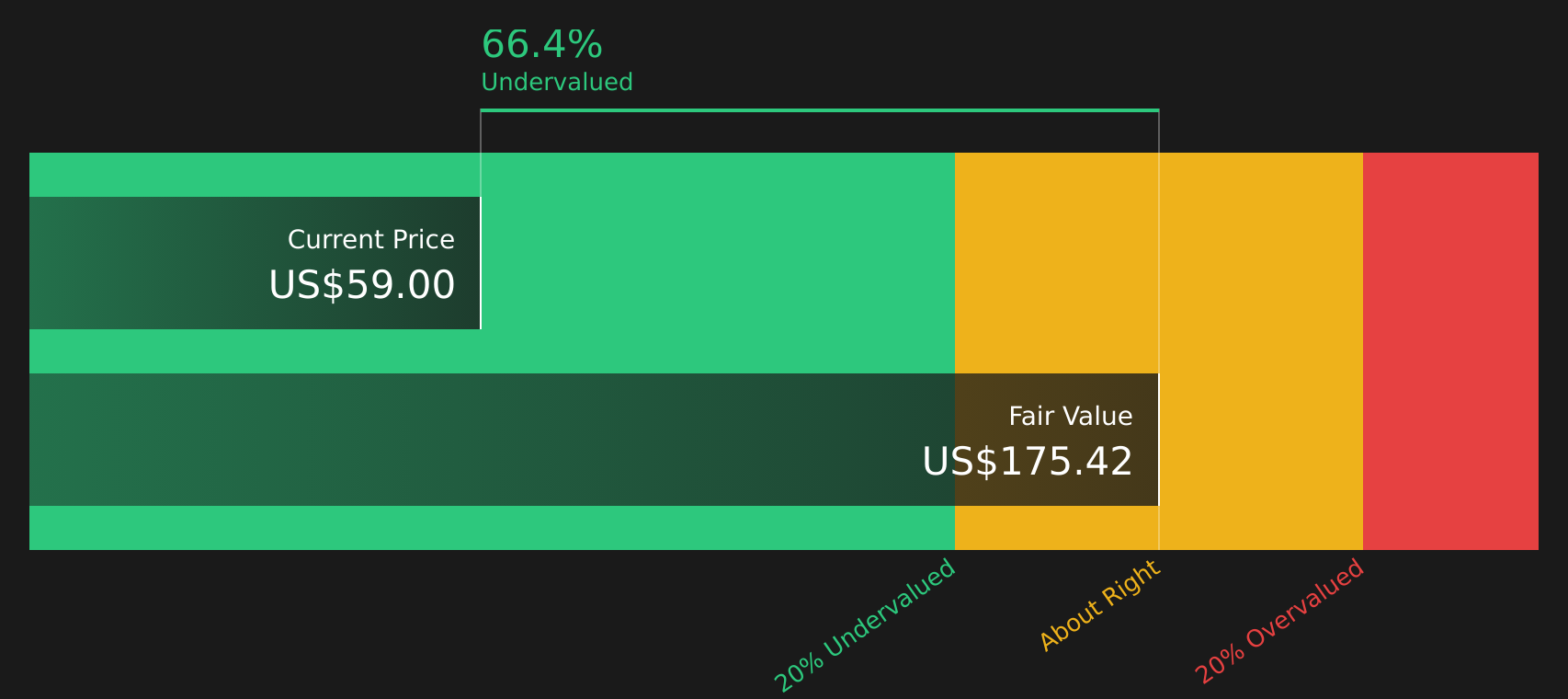
UTG provides exposure to the long term yield story through a focused individual life insurance franchise. It also trades at a valuation that the market currently prices well below some estimates of fair value. Profit margins of 52.6% and a 13.5% return on equity sit alongside a recent swing from loss to profit in 2026. However, earnings over the past year declined 24.1% and rely heavily on non cash items, which makes true cash earning power harder to assess. In addition, the shares trade with limited liquidity, and the liability base is funded entirely through higher risk external sources rather than deposits. Taken together, UTG presents a compact but complex case study in how higher long term yields may affect a small life insurer.
UTG’s high 52.6% profit margin and 13.5% return on equity sit awkwardly beside falling earnings and thin liquidity. To see what the market might be missing, go through the analysis report for UTG.
Seeking Fresh Alternatives Beyond Insurers
Market momentum can shift quickly and the most interesting stock ideas often move from quiet to crowded fast. Before potential entry points attract broader attention, scan fresh lists while it matters and consider acting early.
- Focus on early price strength in companies where cash flow and balance sheets already support the story. Start with the curated 48 high quality undervalued stocks before they stop looking inexpensive.
- Explore the growing demand for computing capacity by concentrating on infrastructure suppliers connected to AI build outs. Use the focused 55 AI infrastructure stocks before that theme draws more attention.
- Prepare for potential shifts in precious metals by filtering for quality producers with scale. Review the hand picked 32 elite gold producer stocks while many investors still overlook them.
This article by Simply Wall St is general in nature. We provide commentary based on historical data and analyst forecasts only using an unbiased methodology and our articles are not intended to be financial advice. It does not constitute a recommendation to buy or sell any stock, and does not take account of your objectives, or your financial situation. We aim to bring you long-term focused analysis driven by fundamental data. Note that our analysis may not factor in the latest price-sensitive company announcements or qualitative material. Simply Wall St has no position in any stocks mentioned.