

How Halliburton’s (HAL) Deep Borehole Nuclear Waste Trial Has Changed Its Investment Story
Halliburton Company HAL | 0.00 |
- Deep Isolation Nuclear, Inc. announced a multi-year deep borehole demonstration program with Halliburton and other partners at Halliburton’s Cameron, Texas facility, aiming to test non-radioactive directional drilling technology for permanent nuclear waste disposal and build regulatory confidence in the approach.
- The collaboration highlights how Halliburton’s well-established drilling expertise is being applied beyond oil and gas, opening potential pathways into nuclear waste management and broader energy-transition services.
- We’ll now look at how this move into nuclear waste disposal, alongside recent results, could shape Halliburton’s longer-term investment narrative.
These 14 companies survived and thrived after COVID and have the right ingredients to survive Trump's tariffs. Discover why before your portfolio feels the trade war pinch.
What Is Halliburton's Investment Narrative?
For Halliburton, the core investment case still rests on being a major oilfield services player with meaningful operating leverage to global drilling and completions activity, supported by active buybacks and regular dividends. Recent Q4 numbers showed modest revenue growth but weaker margins and a large one-off charge, so most near term catalysts still come from activity levels, pricing discipline and capital returns rather than new ventures. The deep borehole nuclear waste program fits into management’s push to apply its drilling technology in adjacent energy-transition areas, but it is unlikely to move the financial needle in the short term. Instead, it currently looks more like an option on longer-term diversification, while the bigger near term swing factors remain execution, debt levels and the quality of future earnings.
However, Halliburton’s high debt and recently compressed margins are not trivial issues for investors. Despite retreating, Halliburton's shares might still be trading above their fair value and there could be some more downside. Discover how much.Exploring Other Perspectives
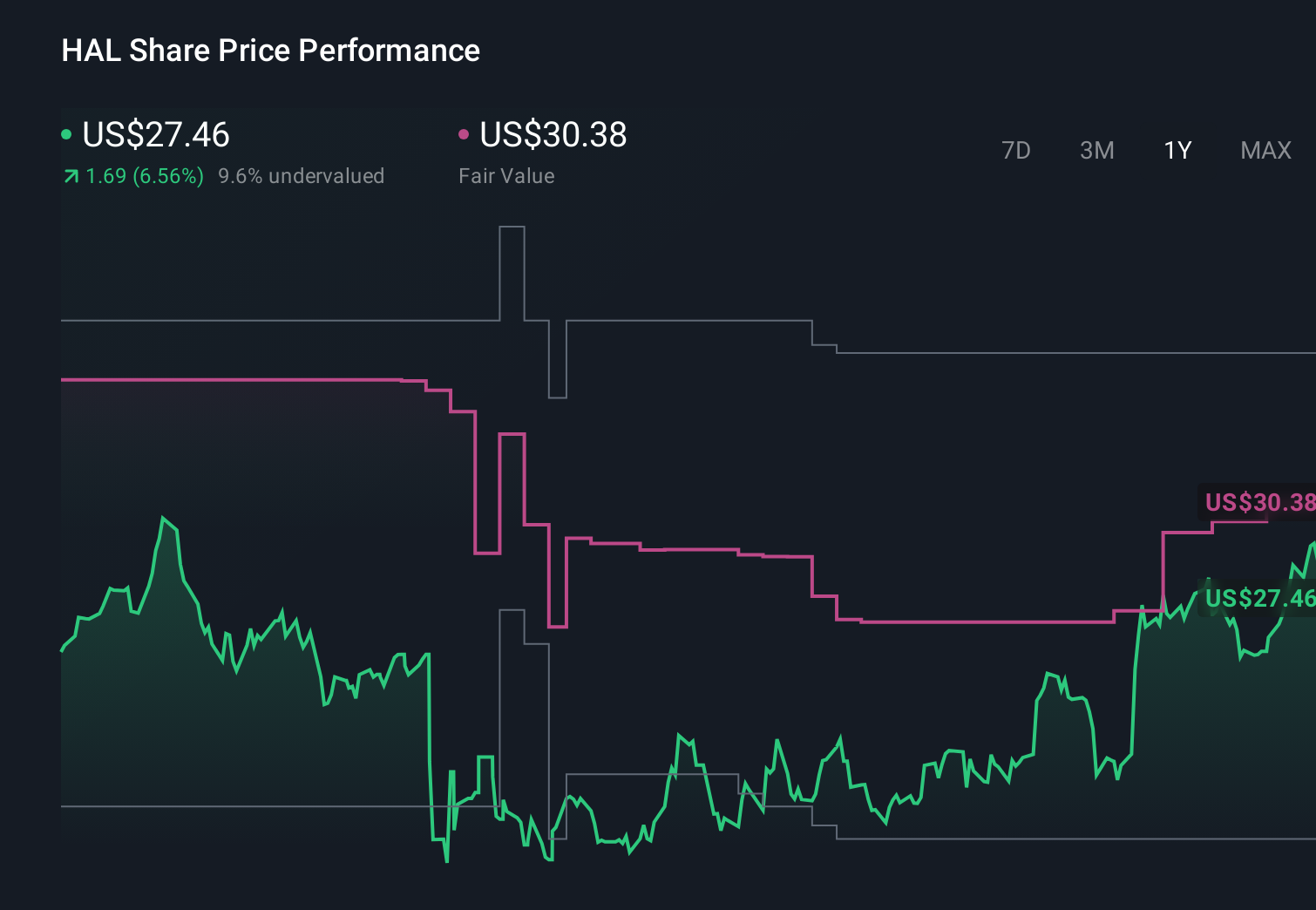
Eleven Simply Wall St Community fair values for Halliburton range from US$20.00 to about US$75.72, showing wide disagreement on upside. Set that against the current focus on capital returns and margin repair, and you can see why different investors may weigh the nuclear waste and other technology partnerships very differently in their expectations for Halliburton’s future performance.
Explore 11 other fair value estimates on Halliburton - why the stock might be worth 41% less than the current price!
Build Your Own Halliburton Narrative
Disagree with this assessment? Create your own narrative in under 3 minutes - extraordinary investment returns rarely come from following the herd.
- A great starting point for your Halliburton research is our analysis highlighting 2 key rewards and 4 important warning signs that could impact your investment decision.
- Our free Halliburton research report provides a comprehensive fundamental analysis summarized in a single visual - the Snowflake - making it easy to evaluate Halliburton's overall financial health at a glance.
Want Some Alternatives?
The market won't wait. These fast-moving stocks are hot now. Grab the list before they run:
- We've found 13 US stocks that are forecast to pay a dividend yield of over 6% next year. See the full list for free.
- Find companies with promising cash flow potential yet trading below their fair value.
- Uncover the next big thing with financially sound penny stocks that balance risk and reward.
This article by Simply Wall St is general in nature. We provide commentary based on historical data and analyst forecasts only using an unbiased methodology and our articles are not intended to be financial advice. It does not constitute a recommendation to buy or sell any stock, and does not take account of your objectives, or your financial situation. We aim to bring you long-term focused analysis driven by fundamental data. Note that our analysis may not factor in the latest price-sensitive company announcements or qualitative material. Simply Wall St has no position in any stocks mentioned.