

How Improved Profits, New Board Insight, and Tax Relief At Lyft (LYFT) Has Changed Its Investment Story
Lyft LYFT | 0.00 |
- In the past quarter, Lyft, Inc. reported second‑quarter 2026 sales of US$1,843.54 million and net income of US$50.29 million, both higher than a year earlier, while also adding airline executive Ben Minicucci to its board and avoiding a proposed 10% rideshare tax in Anaheim’s tourism district.
- Together, stronger profitability, fresh board-level operating experience from the airline sector, and relief from a potential local tax highlight how Lyft is tightening its operations while benefiting from a more favorable regulatory backdrop in at least one key market.
- We’ll now examine how Lyft’s improved quarterly profitability and regulatory relief in Anaheim may influence its existing investment narrative and long-term thesis.
Uncover the next big thing with 20 elite penny stocks that balance risk and reward.
Lyft Investment Narrative Recap
To own Lyft, you need to believe its ride hailing platform can stay relevant against Uber and new mobility options while managing regulation and costs. The latest quarter’s higher sales and net income, plus Anaheim’s decision not to impose a 10% tourism district tax, support near term profitability. However, regulatory and competitive pressures on pricing and driver economics still look like the key catalyst and the biggest risk for the story right now.
Among the recent developments, the addition of Alaska Air Group CEO Ben Minicucci to Lyft’s board stands out. His background running a large, operationally complex transportation business could be helpful as Lyft focuses on efficiency, network reliability and partnerships like the United Airlines mileage tie up. For investors watching how Lyft executes on scale and cost discipline, this type of board level operating experience sits directly alongside improving quarterly earnings as part of the near term thesis.
Yet even with improving profits and tax relief, investors should be aware of how quickly regulatory costs or new mobility options could change Lyft’s economics...
Lyft's narrative projects $8.9 billion revenue and $456.5 million earnings by 2029.
Uncover how Lyft's forecasts yield a $18.64 fair value, a 14% upside to its current price.
Exploring Other Perspectives
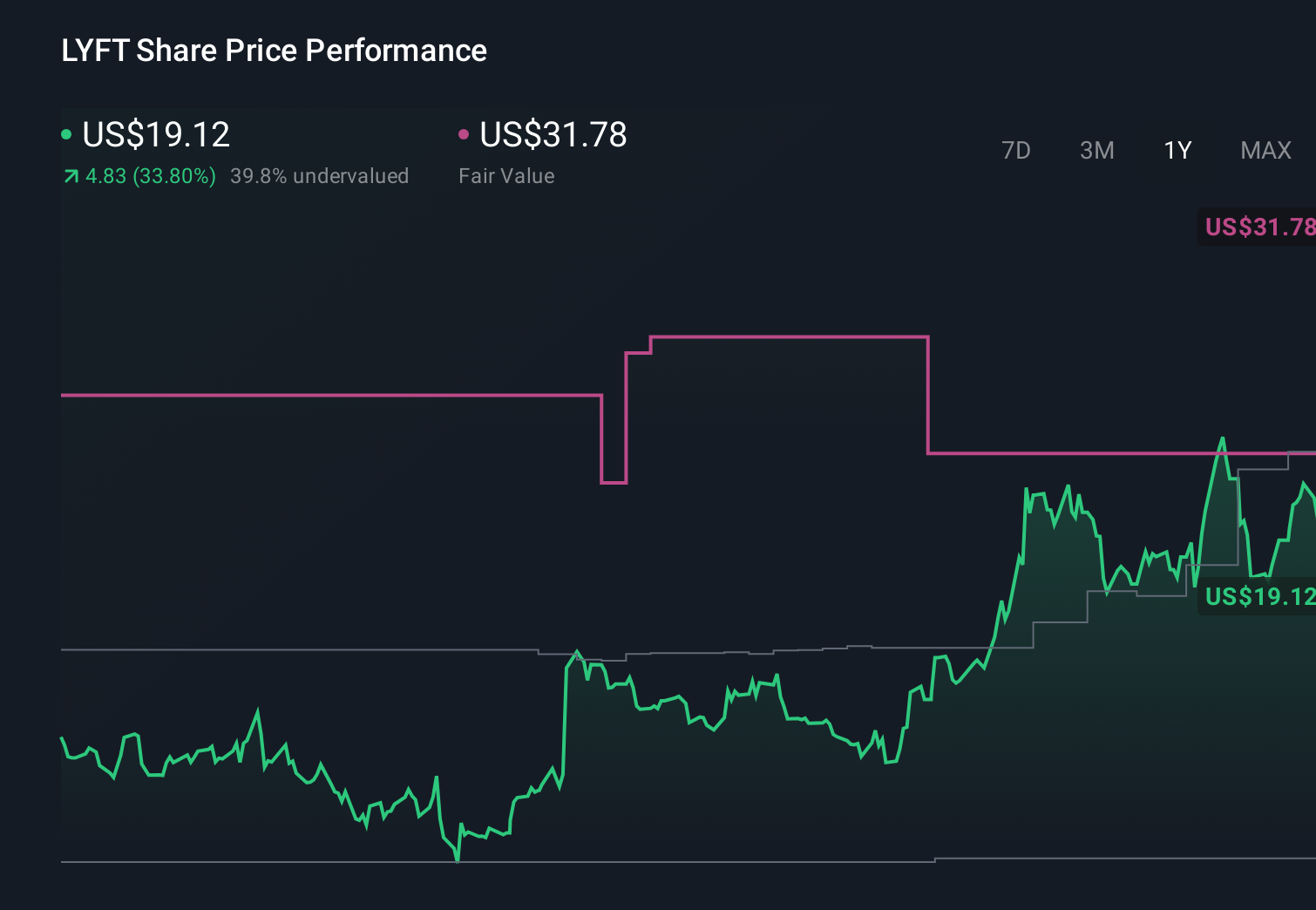
Before this news, the most cautious analysts were assuming earnings could fall toward about US$181.5 million by 2029, so compared with today’s profitability and regulatory relief, you can see how different your view might be depending on how much weight you put on risks like tougher labor rules or public transit investment versus potential upside from Lyft’s partnerships and operational tweaks.
Explore 8 other fair value estimates on Lyft - why the stock might be worth just $18.64!
The Verdict Is Yours
Don't just follow the ticker - dig into the data and build a conviction that's truly your own.
- A great starting point for your Lyft research is our analysis highlighting 3 key rewards and 2 important warning signs that could impact your investment decision.
- Our free Lyft research report provides a comprehensive fundamental analysis summarized in a single visual - the Snowflake - making it easy to evaluate Lyft's overall financial health at a glance.
Searching For A Fresh Perspective?
The market won't wait. These fast-moving stocks are hot now. Grab the list before they run:
- AI is about to change healthcare. These 42 stocks are working on everything from early diagnostics to drug discovery. The best part - they are all under $10b in market cap - there's still time to get in early.
- Invest in the nuclear renaissance through our list of 89 elite nuclear energy infrastructure plays powering the global AI revolution.
- We've uncovered the 9 dividend fortresses yielding 5%+ that don't just survive market storms, but thrive in them.
This article by Simply Wall St is general in nature. We provide commentary based on historical data and analyst forecasts only using an unbiased methodology and our articles are not intended to be financial advice. It does not constitute a recommendation to buy or sell any stock, and does not take account of your objectives, or your financial situation. We aim to bring you long-term focused analysis driven by fundamental data. Note that our analysis may not factor in the latest price-sensitive company announcements or qualitative material. Simply Wall St has no position in any stocks mentioned.