
How Investment Masters Respond When the Market Falls?
PowerShares QQQ Trust,Series 1 QQQ | 587.58 | +1.80% |
Apple Inc. AAPL | 255.02 | +0.48% |
Tesla Motors, Inc. TSLA | 381.38 | +2.59% |
SAUDI ARAMCO 2222.SA | 27.56 | +0.58% |
Tadawul All Shares Index TASI.SA | 11275.90 | +0.23% |
When facing the fast-changing stock market, some master investors on Wall Street have made names for themselves overnight by boldly bottom-fishing, amassing huge fortunes, while others have bought too early during downturns, suffering painful losses.
Today, let’s explore the lessons and experiences of these masters—perhaps we can draw inspiration from them.
1. Warren Buffett

Famous Quotes
Resist greed and exit the market early during rallies; overcome fear and seize opportunities to bottom-fish for bargains during crashes. Buy heavily when the market drops, and keep buying as it falls further—don’t cut losses and exit.
Classic Campaign
Buffett has lived through four stock market crashes: 1973, 1987, 2000, and 2008.
Two years before each crash, he would exit the market in advance, avoiding the final rally and watching coolly as others engaged in speculative frenzy. When the market fully bottomed out, he would calmly re-enter on a large scale to pick up previously favored stocks one by one.
Take the 1987 crash: From August to October, the market plummeted 36%. This crash was quick, and the rebound was equally swift—leaving Buffett to lament he’d had no time to “let things play out.”
Facing fleeting opportunities born of sudden crashes and rebounds, Buffett remained unflustered, trusting that the next chance would come with patience.
The lesson here: Sometimes crashes come and go too quickly to catch bottom-fishing opportunities. Stay calm—don’t blame yourself or lose control of your investments trying to seize every chance.
The following year, an opportunity arose. Buffett began buying Coca-Cola heavily. By 1989, he’d invested 1 billion over two years; by 1994, after further purchases, his total investment reached 1.3 billion.
By late 1997, the market value of Buffett’s Coca-Cola holdings had risen to $13.3 billion—a 10-fold return over a decade.
Lessons Learned
Buffett’s approach during market crashes boils down to three principles:
1. Select investment sectors carefully: Buy if the net asset value far exceeds the stock price.
2. Trade based on value: Calculate a stock’s intrinsic value from the company’s overall worth, compare it to the market price, and buy if the intrinsic value is significantly higher. Sell when prices peak.
3. Invest only idle funds: Even for stocks expected to rise 100x in a decade, Buffett insists on using spare money—accepting losses and waiting for better times.
2. Peter Lynch

Famous Quotes
Historical patterns of market fluctuations tell us all major crashes pass; the market will always rise higher. History also shows crashes release risk and create golden opportunities to buy outstanding companies at rock-bottom prices.
But bottom-fishing isn’t simple. Rather than repeatedly trying to catch “the bottom” and getting trapped, it’s better to wait for the trough to emerge before stepping in.
Classic Campaign
During the 1987 U.S. stock market collapse, many millionaires were plunged into poverty, suffering mental breakdowns or even suicide. At the time, Peter Lynch—then managing the 10+ billion Magellan Fund—witnessed his fund’s net asset value plunge 18% in a single day, a 2 billion loss.
Like all open-end fund managers, Lynch had one choice: sell stocks. To meet massive redemptions, he had to liquidate holdings.
Over a year later, Lynch still shuddered recalling it: “In that moment, I couldn’t tell if it was the end of the world, the start of a severe depression, or just Wall Street about to collapse.”
Lynch went on to experience many more crashes but maintained stellar performance.
Lessons Learned
1. Don’t dump stocks cheaply out of panic: Selling in despair during a crash often means selling at rock-bottom prices. The October 1987 plunge was terrifying, but there was no need to sell that day or the next. By November, the market began climbing steadily. By June 1988, it had rallied over 400 points—a 23% gain.
2. Hold good stocks with conviction.
3. Dare to buy great companies at low prices: Crashes are prime opportunities to make big money—vast fortunes are often built in such downturns.
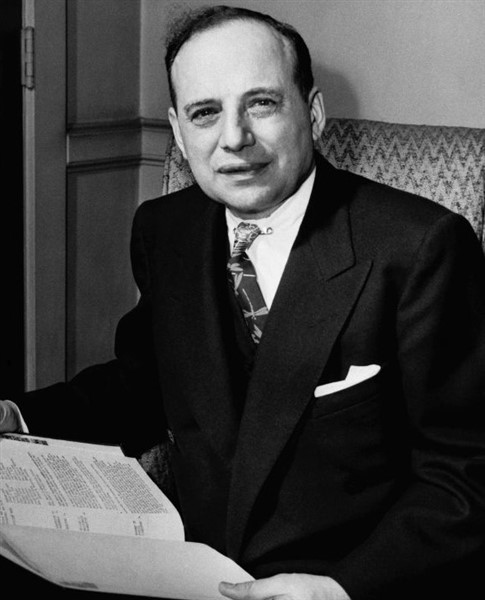
3. Benjamin Graham: The Father of Wall Street
Famous Quotes
1. Never lose money.
2. Never forget rule number one.
Classic Campaign
Graham, Buffett’s mentor, the “father of securities analysis,” and pioneer of value investing, witnessed the 1929 crash. In September 1929, the Dow Jones peaked at 381, then began falling.
On October 29, it plummeted 12%—dubbed “the worst day in the NYSE’s 112-year history,” now known as “Black Tuesday.”
By November 1929, the Dow bottomed at 198, then stabilized and rebounded. By March 1930, it had climbed to 286—a 43% recovery.
Many investors thought the worst was over; Graham agreed and started bottom-fishing. He bought undervalued stocks and used margin for leverage to boost returns.
But the rally fizzled by April, and the Dow fell 33% in 1930. Graham’s fund lost 50.5%. By July 1932, the Dow hit 41—a 89% drop from its peak. Graham’s fund lost 78%—nearly wiping him out.
Graham later made a comeback, writing investment bibles Security Analysis and The Intelligent Investor, and distilled a timeless value investing principle: margin of safety.
Lessons Learned
Safety first, profit second.
4. Bill Miller: The Contrarian Genius
Famous Quotes
I often remind my analysts: 100% of your information about a company reflects its past, while 100% of a stock’s valuation depends on its future.
Classic Campaign
From 1991 to 2005, Miller’s Legg Mason Value Trust outperformed the S&P 500 for 15 consecutive years—a record-breaking track record, hailing him as the most successful fund manager of his era. Yet in one short year, he squandered this legacy.
During the subprime crisis, many once-great companies saw their stocks plummet. Miller, thinking investors overreacted, bought contrarian. He believed it was a golden opportunity—but the crisis became the worst bear market since the Great Depression.
Though his contrarian bets had proven right for 15 years, this time he failed catastrophically. His stock picks read like a “roll of fallen giants”: AIG, Bear Stearns, Freddie Mac, Citigroup, Washington Mutual, and more.
In a 2008 interview at 58, Miller admitted: “From the start, I failed to properly assess the severity of this liquidity crisis.”
Though Miller had often profited from market panic, he said he never imagined the crisis would be so severe, with fundamentals so broken that even market-leading blue-chips collapsed.
“I still lack experience,” Miller said. “Every buy decision was wrong—it was terrifying.”
Lessons Learned
“Any outperforming portfolio succeeds temporarily because it’s insured against mispricing. The market’s forecast for future earnings is wrong. By comparing the market’s valuation, the company’s valuation, and our own, we use a mix of factors to spot mispricing.”
5. Philip Fisher: The Father of Growth Stock Investing
Famous Quotes
Learn to spend significant time researching—don’t rush to buy. In a continuously falling market, don’t buy unfamiliar stocks too quickly.
Classic Campaign
In 1929, as the U.S. stock market neared its pre-crash frenzy, Fisher saw unstable industry prospects and a severe bubble. In August 1929, he submitted a report to bank executives warning, “The worst bear market in 25 years is coming.”
This was Fisher’s most impressive market prediction—but tragically, he “predicted a crash but bought stocks.”
He admitted: “I was seduced by the market’s allure. I scoured for relatively cheap stocks, thinking they hadn’t risen to their potential.” When the market crashed in October 1929, Fisher wasn’t spared—he suffered heavy losses, wiping out his fortune.
Lessons Learned
Fisher realized the primary driver of stock prices isn’t current P/E ratios, but expected P/E ratios over the next few years.
He said: If you develop the ability to gauge a stock’s potential performance within a reasonable range, you’ll find a key to avoiding losses and earning substantial profits.