

How Investors Are Reacting To PACCAR (PCAR) Mixed Q1 Results And Ongoing Automation Investment
Paccar PCAR | 0.00 |
- PACCAR recently reported a mixed first quarter, with revenue falling 8.9% year-on-year and slightly missing analyst expectations, while EBITDA exceeded forecasts as the company and its heavy transportation peers continued to invest in automated, connected, and electric vehicle technologies.
- At the same time, research houses including Bank of America Securities and Evercore ISI reaffirmed positive analyst coverage, underscoring how PACCAR’s push into automation and cleaner powertrains is influencing perceptions of its long-term role in the heavy truck industry.
- We’ll now examine how PACCAR’s mixed first-quarter performance, particularly the revenue decline alongside stronger EBITDA, may influence its investment narrative.
Capitalize on the AI infrastructure supercycle with our selection of the 43 best 'picks and shovels' of the AI gold rush converting record-breaking demand into massive cash flow.
PACCAR Investment Narrative Recap
To own PACCAR, you need to believe heavy truck demand and aftermarket parts can support solid earnings even when the cycle softens, and that its investments in cleaner, connected, and automated vehicles keep it relevant as regulations and fleets evolve. The mixed first quarter, with revenue down but EBITDA ahead of expectations, does not materially change the near term focus on pre 2027 emissions related demand as a key catalyst, or the risk from weaker truck orders in a soft freight market.
Among recent updates, PACCAR’s April 2026 dividend increase to US$0.35 per share stands out alongside the latest earnings. It shows the board’s willingness to return more cash at a time when revenue is under pressure but profitability and cash generation remain supportive. For investors, that sits directly against the backdrop of softer sales and sector uncertainty, and will likely factor into how you weigh the earnings and truck demand catalysts ahead of 2027 emission standards.
But while the dividend and EBITDA beat are encouraging, investors should be aware of how prolonged weakness in truck orders could still...
PACCAR's narrative projects $32.5 billion revenue and $4.0 billion earnings by 2029. This requires 4.6% yearly revenue growth and a $1.6 billion earnings increase from $2.4 billion today.
Uncover how PACCAR's forecasts yield a $127.96 fair value, a 17% upside to its current price.
Exploring Other Perspectives
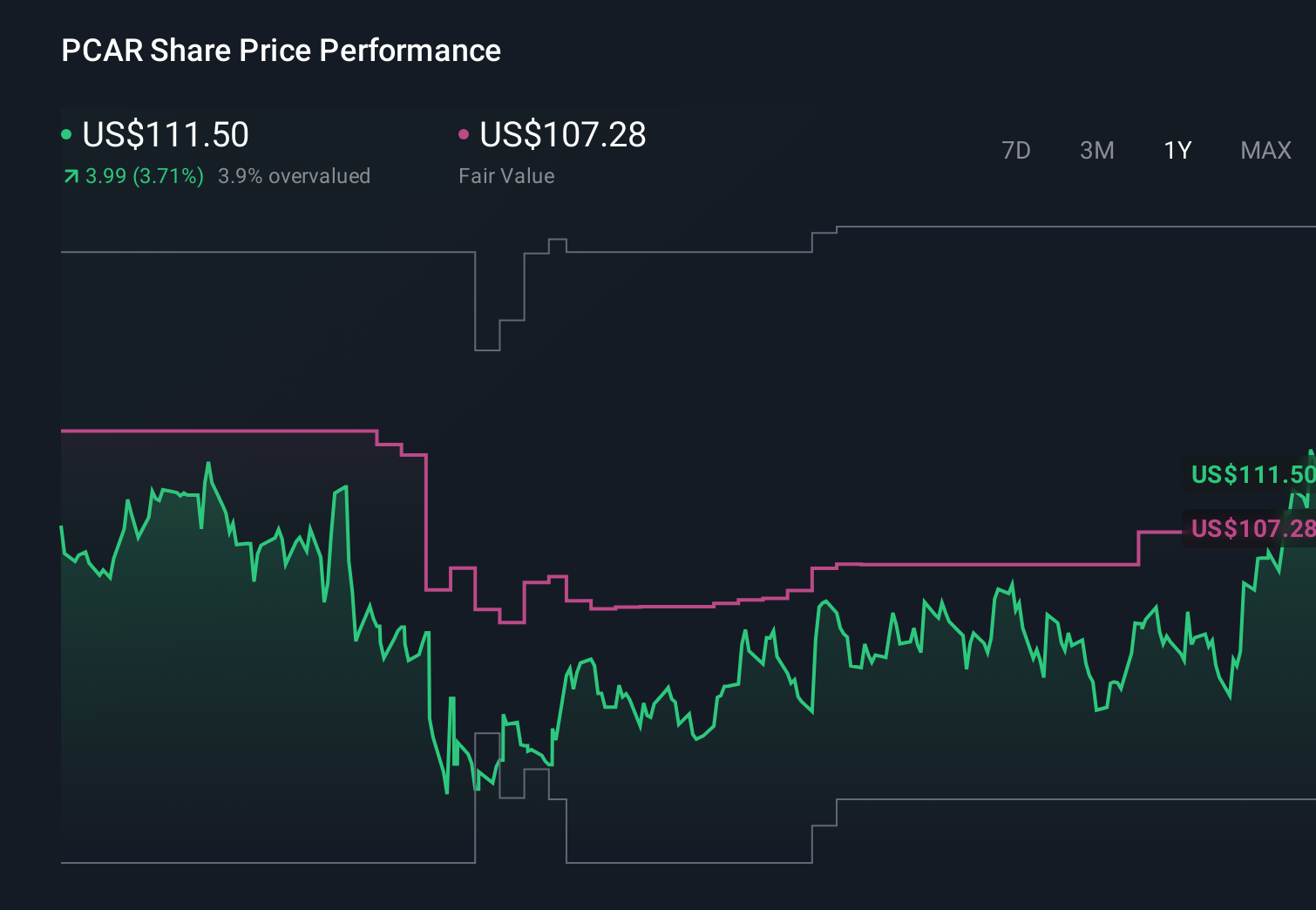
Some lower ranked analysts paint a tougher picture, assuming only about 3.8% annual revenue growth to roughly US$31.1 billion by 2029, so if you are worried about PACCAR’s pace in electric and autonomous trucks, this latest quarter could push expectations further apart.
Explore 4 other fair value estimates on PACCAR - why the stock might be worth as much as 38% more than the current price!
Decide For Yourself
Disagree with existing narratives? Extraordinary investment returns rarely come from following the herd, so go with your instincts.
- A great starting point for your PACCAR research is our analysis highlighting 3 key rewards and 1 important warning sign that could impact your investment decision.
- Our free PACCAR research report provides a comprehensive fundamental analysis summarized in a single visual - the Snowflake - making it easy to evaluate PACCAR's overall financial health at a glance.
Searching For A Fresh Perspective?
Opportunities like this don't last. These are today's most promising picks. Check them out now:
- Invest in the nuclear renaissance through our list of 88 elite nuclear energy infrastructure plays powering the global AI revolution.
- The future of work is here. Discover the 32 top robotics and automation stocks leading the charge in AI-driven automation and industrial transformation.
- Find 54 companies with promising cash flow potential yet trading below their fair value.
This article by Simply Wall St is general in nature. We provide commentary based on historical data and analyst forecasts only using an unbiased methodology and our articles are not intended to be financial advice. It does not constitute a recommendation to buy or sell any stock, and does not take account of your objectives, or your financial situation. We aim to bring you long-term focused analysis driven by fundamental data. Note that our analysis may not factor in the latest price-sensitive company announcements or qualitative material. Simply Wall St has no position in any stocks mentioned.