

How Investors May Respond To Figma (FIG) Director Mike Krieger’s Exit Amid Emerging Anthropic AI Competition
Figma FIG | 0.00 |
- Figma, Inc. reported that Mike Krieger resigned from its Board of Directors on April 14, 2026, stating his departure was unrelated to any disagreement over the company’s operations, policies or practices.
- The timing of Krieger’s exit, as Anthropic reportedly prepares AI-powered design tools that could compete with Figma’s core offering, highlights rising concerns about large AI labs encroaching on established SaaS design platforms.
- We’ll now examine how Krieger’s resignation amid potential Anthropic competition could influence Figma’s investment narrative and long-term positioning.
Explore 25 top quantum computing companies leading the revolution in next-gen technology and shaping the future with breakthroughs in quantum algorithms, superconducting qubits, and cutting-edge research.
Figma Investment Narrative Recap
To own Figma, you need to believe its collaborative, AI infused design platform can stay central to how digital products are created, even as foundational AI models move closer to design work itself. Mike Krieger’s resignation, alongside reports of Anthropic’s upcoming AI design tools, sharpens the near term risk that large AI labs could compress Figma’s differentiation, but it does not appear to change the immediate catalyst around deepening enterprise adoption of AI features and governance capabilities in a material way.
The recent expansion of Figma’s collaboration with Google Cloud around Gemini based AI image generation and editing is especially relevant here, because it shows Figma leaning into partnerships with large model providers rather than trying to outbuild them on core AI infrastructure. For investors focused on catalysts, this kind of integration can be a test case for whether Figma can turn third party AI advances into stickier workflows and broader seat expansion, even as competition from AI native design tools increases.
Yet, investors should also be aware that if AI platforms start to capture more of the design workflow directly...
Figma's narrative projects $1.7 billion revenue and $214.1 million earnings by 2028. This requires 21.2% yearly revenue growth and a $1,140.2 million earnings increase from $-926.1 million today.
Uncover how Figma's forecasts yield a $65.25 fair value, a 245% upside to its current price.
Exploring Other Perspectives
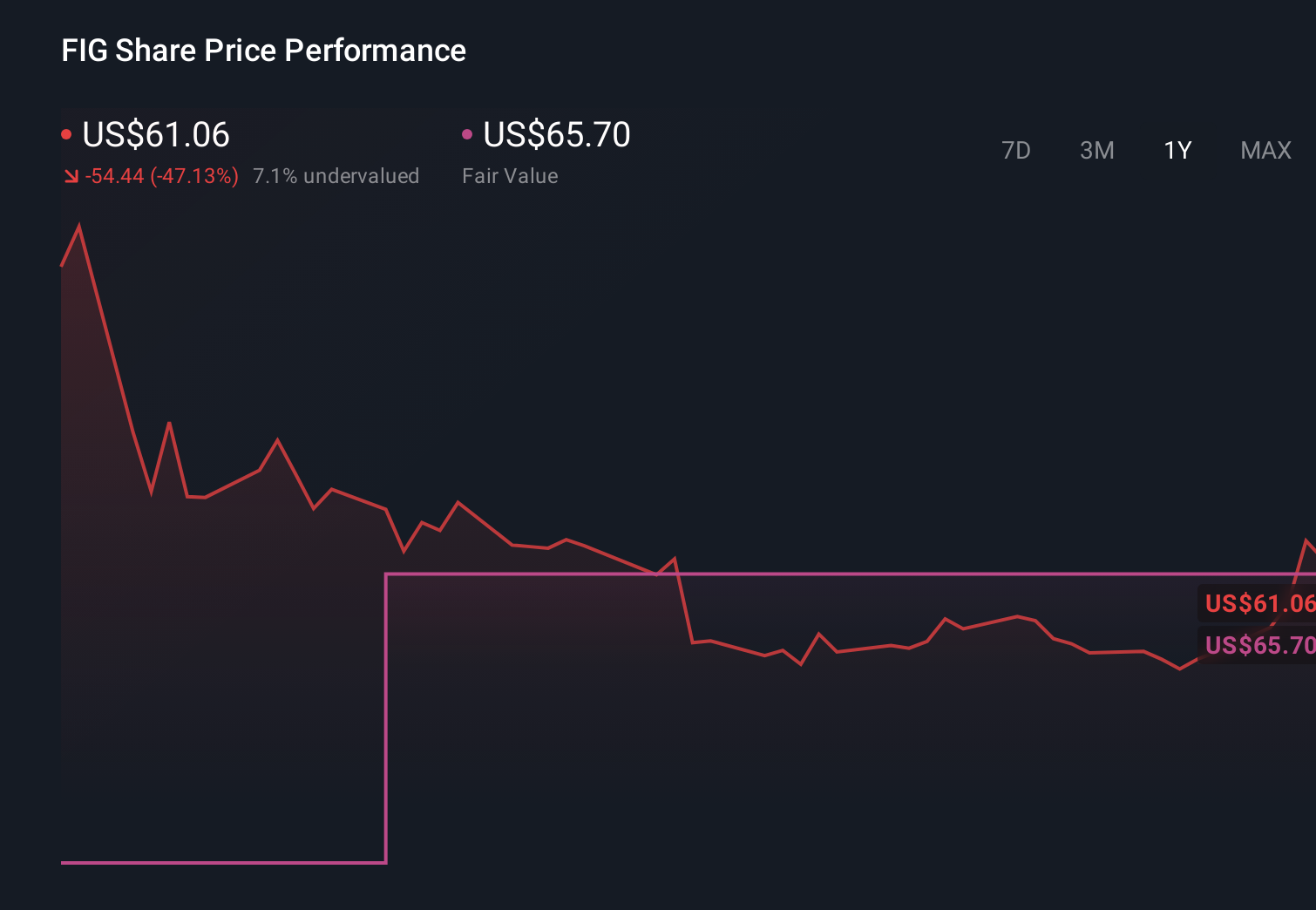
Some of the lowest estimate analysts were already assuming about 21.5 percent annual revenue growth with no profits by 2028, and they worry that rising AI infrastructure costs plus slower monetization of new AI heavy cohorts could leave Figma structurally less profitable than consensus expects, especially if Anthropic style tools intensify pricing and retention pressure.
Explore 28 other fair value estimates on Figma - why the stock might be worth 8% less than the current price!
Reach Your Own Conclusion
Don't just follow the ticker - dig into the data and build a conviction that's truly your own.
- A great starting point for your Figma research is our analysis highlighting 3 key rewards and 3 important warning signs that could impact your investment decision.
- Our free Figma research report provides a comprehensive fundamental analysis summarized in a single visual - the Snowflake - making it easy to evaluate Figma's overall financial health at a glance.
Seeking Other Investments?
Early movers are already taking notice. See the stocks they're targeting before they've flown the coop:
- Capitalize on the AI infrastructure supercycle with our selection of the 38 best 'picks and shovels' of the AI gold rush converting record-breaking demand into massive cash flow.
- The best AI stocks today may lie beyond giants like Nvidia and Microsoft. Find the next big opportunity with these 19 smaller AI-focused companies with strong growth potential through early-stage innovation in machine learning, automation, and data intelligence that could fund your retirement.
- Invest in the nuclear renaissance through our list of 93 elite nuclear energy infrastructure plays powering the global AI revolution.
This article by Simply Wall St is general in nature. We provide commentary based on historical data and analyst forecasts only using an unbiased methodology and our articles are not intended to be financial advice. It does not constitute a recommendation to buy or sell any stock, and does not take account of your objectives, or your financial situation. We aim to bring you long-term focused analysis driven by fundamental data. Note that our analysis may not factor in the latest price-sensitive company announcements or qualitative material. Simply Wall St has no position in any stocks mentioned.