

How New Lung Cancer Data for Pumitamig Could Reshape BioNTech’s (BNTX) Post-Vaccine Investment Story
BioNTech BNTX | 0.00 |
- In recent days, BioNTech SE and Bristol Myers Squibb reported interim Phase 2 results from the ROSETTA Lung-02 trial, showing encouraging anti-tumor activity for pumitamig plus chemotherapy in advanced non-small cell lung cancer across multiple subtypes and PD-L1 expression levels.
- This early readout highlights pumitamig as a potentially important contributor to BioNTech’s oncology pipeline, broadening its reach beyond infectious disease vaccines.
- We’ll now examine how these interim lung cancer data, especially the broad anti-tumor activity across NSCLC subtypes, reshape BioNTech’s investment narrative.
The best AI stocks today may lie beyond giants like Nvidia and Microsoft. Find the next big opportunity with these 14 smaller AI-focused companies with strong growth potential through early-stage innovation in machine learning, automation, and data intelligence that could fund your retirement.
BioNTech Investment Narrative Recap
To own BioNTech today, you need to believe its heavy investment in oncology can eventually offset declining COVID-19 revenues and current losses. The new pumitamig lung cancer data support that pivot by reinforcing the case for a broader cancer franchise, but they do not immediately change the biggest near term swing factor: whether late stage oncology trials can translate into approved, revenue-generating products fast enough to justify continued elevated R&D spending.
The recent authorization of a US$1,000,000,000 share buyback is the company announcement that feels most relevant here. It underlines management’s confidence in BioNTech’s balance sheet and pipeline, even as the stock has fallen about 19% over the past year. In the context of pumitamig’s interim results, this capital return plan may influence how investors weigh near term valuation risk against the long and costly path to potential oncology revenues.
Yet behind these promising data, investors should be aware that BioNTech’s ongoing heavy R&D spend could become far more problematic if...
BioNTech’s narrative projects €2.5 billion revenue and €374.1 million earnings by 2029. This requires a 4.0% yearly revenue decline and an earnings increase of about €1.5 billion from -€1.1 billion today.
Uncover how BioNTech's forecasts yield a $131.39 fair value, a 52% upside to its current price.
Exploring Other Perspectives
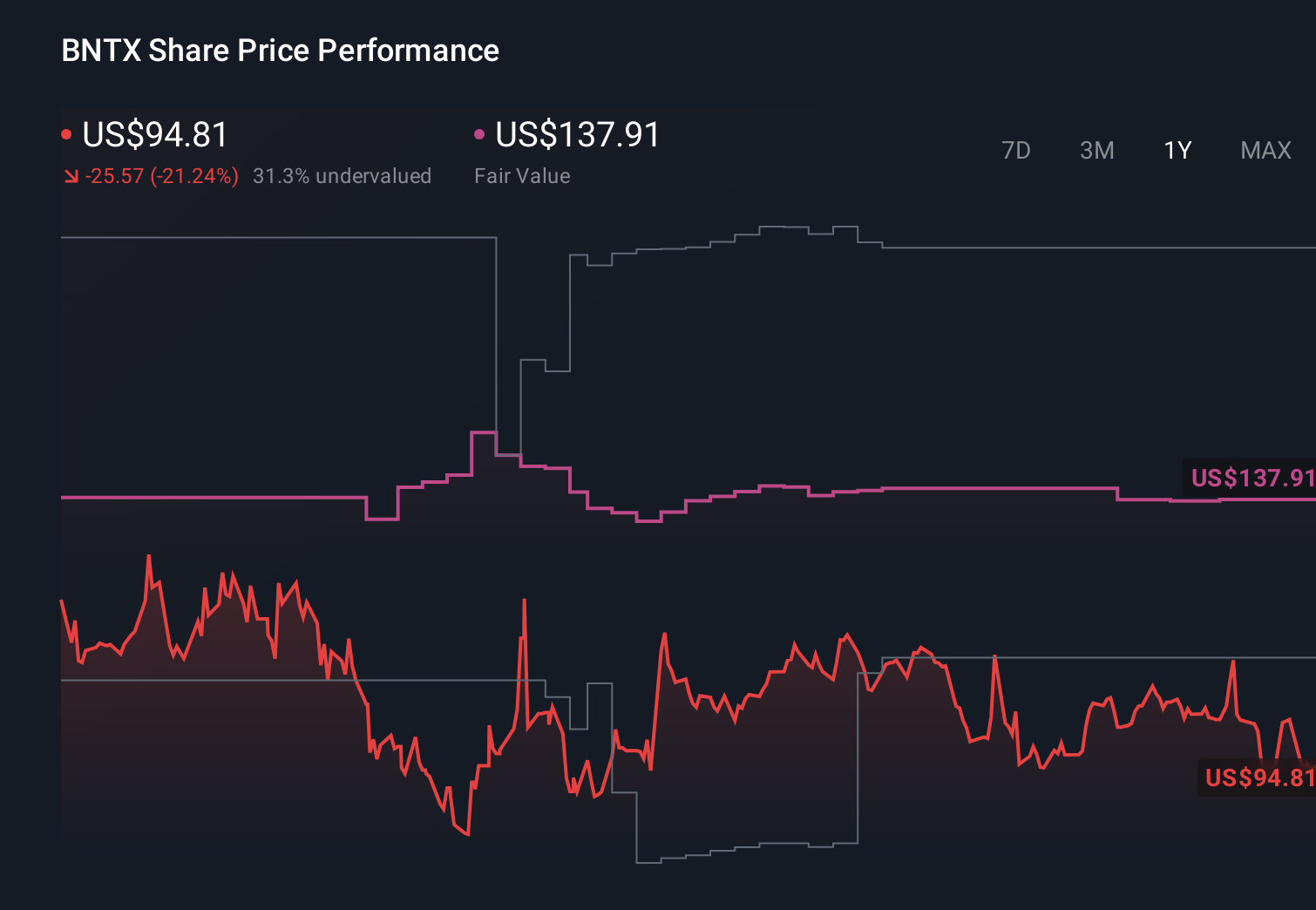
While consensus focuses on near term losses and valuation risk, the most optimistic analysts were already assuming revenue of about €3.1 billion and earnings near €587.7 million by 2029, so this kind of lung cancer data may eventually push you to reconsider whether those bullish expectations or the more cautious view feel closer to your own.
Explore 6 other fair value estimates on BioNTech - why the stock might be worth over 5x more than the current price!
The Verdict Is Yours
Disagree with existing narratives? Extraordinary investment returns rarely come from following the herd, so go with your instincts.
- Our free BioNTech research report provides a comprehensive fundamental analysis summarized in a single visual - the Snowflake - making it easy to evaluate BioNTech's overall financial health at a glance.
Ready For A Different Approach?
Don't miss your shot at the next 10-bagger. Our latest stock picks just dropped:
- Invest in the nuclear renaissance through our list of 88 elite nuclear energy infrastructure plays powering the global AI revolution.
- Rare earth metals are an input to most high-tech devices, military and defence systems and electric vehicles. The global race is on to secure supply of these critical minerals. Beat the pack to uncover the 27 best rare earth metal stocks of the very few that mine this essential strategic resource.
- This technology could replace computers: discover 30 stocks that are working to make quantum computing a reality.
This article by Simply Wall St is general in nature. We provide commentary based on historical data and analyst forecasts only using an unbiased methodology and our articles are not intended to be financial advice. It does not constitute a recommendation to buy or sell any stock, and does not take account of your objectives, or your financial situation. We aim to bring you long-term focused analysis driven by fundamental data. Note that our analysis may not factor in the latest price-sensitive company announcements or qualitative material. Simply Wall St has no position in any stocks mentioned.