

How New Multi‑Tumor Oncology Data At Pfizer (PFE) Has Changed Its Investment Story
Pfizer Inc. PFE | 0.00 |
- In late May and early June 2026, Pfizer reported detailed Phase 3 data at ASCO showing its BRAFTOVI, TALZENNA and LORBRENA regimens delivered statistically significant improvements in progression and survival outcomes across colorectal, prostate and lung cancers, with safety profiles largely consistent with prior experience.
- These multi-tumor results underscore how Pfizer’s oncology portfolio is moving beyond single‑asset wins toward a broader, biomarker‑driven franchise spanning targeted therapies, PARP inhibition and brain‑penetrant ALK inhibition.
- We’ll now examine how this strengthening oncology data package, particularly the long-term LORBRENA results, may reshape Pfizer’s investment narrative.
Invest in the nuclear renaissance through our list of 88 elite nuclear energy infrastructure plays powering the global AI revolution.
Pfizer Investment Narrative Recap
To own Pfizer today, you need to believe the company can replace COVID windfalls and offset a looming patent cliff by turning its broadened pipeline into durable cash flows, while maintaining its dividend. The new oncology data from LORBRENA, BRAFTOVI and TALZENNA reinforces that story by deepening late stage assets, but it does not immediately change the key near term catalyst, which remains execution on non COVID launches, or the biggest risk, which is pressure on pricing and upcoming loss of exclusivity.
The Innovent collaboration on 12 early stage oncology programs feels especially relevant here. While ASCO results highlight what Pfizer already has in late stage cancer drugs, the Innovent deal shows how the company is trying to backfill its next oncology wave, which matters if you are focused on how Pfizer could offset revenue pressure from expiring patents and policy driven price headwinds over the next decade.
Yet against that backdrop, investors should be aware that looming US pricing reforms could still...
Pfizer's narrative projects $54.9 billion revenue and $9.2 billion earnings by 2029. This assumes revenues will decline by 4.6% per year and requires an earnings increase of about $1.7 billion from $7.5 billion today.
Uncover how Pfizer's forecasts yield a $29.19 fair value, a 14% upside to its current price.
Exploring Other Perspectives
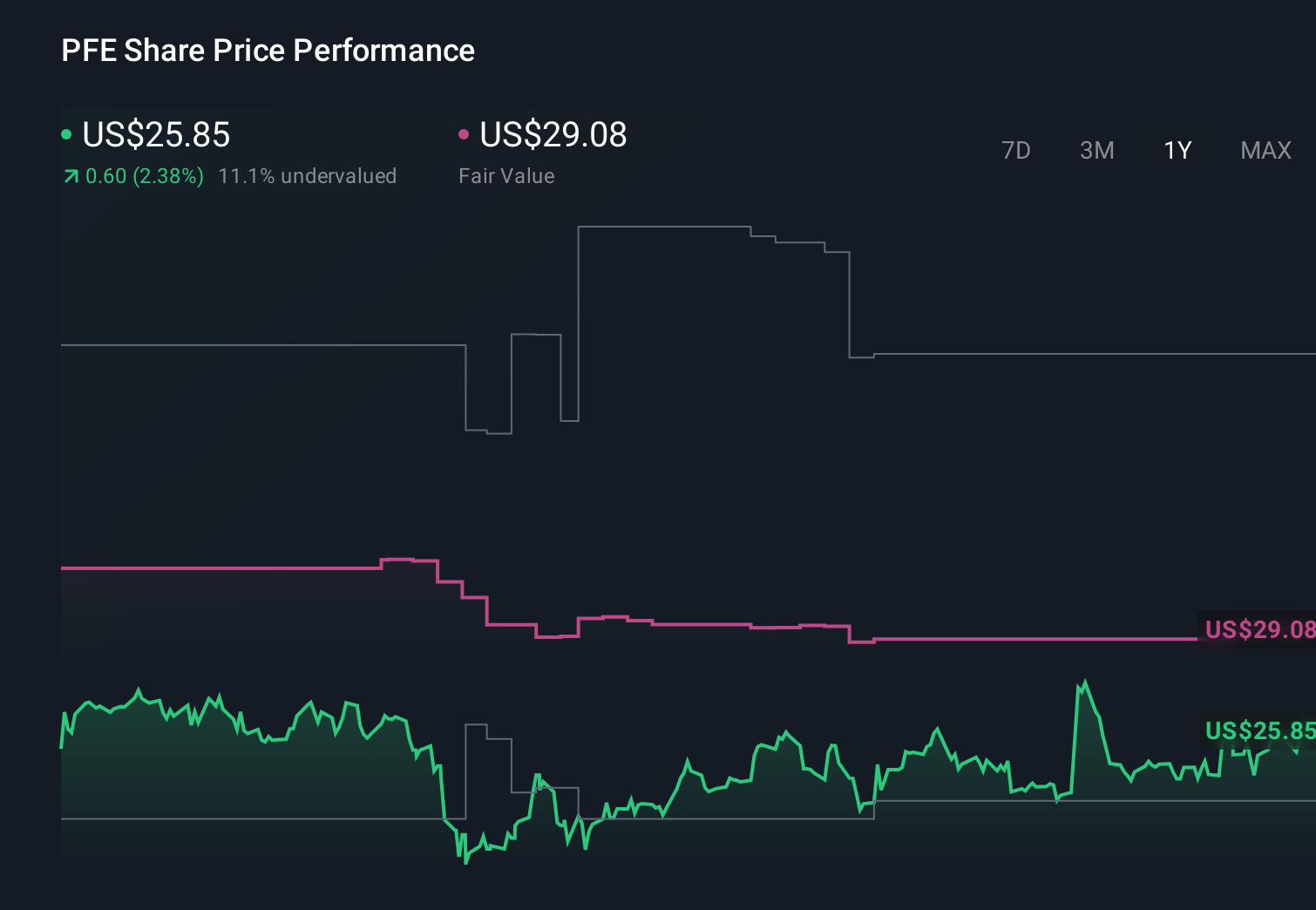
Some of the most optimistic analysts were already assuming revenue around US$59.8 billion by 2029 and higher margins, so if you see these ASCO results as strengthening Pfizer’s case for becoming a next generation oncology leader, you might also want to compare that upbeat view with the risk that heavy reliance on deals over internal R&D could still...
Explore 22 other fair value estimates on Pfizer - why the stock might be worth over 2x more than the current price!
Form Your Own Verdict
Disagree with existing narratives? Extraordinary investment returns rarely come from following the herd, so go with your instincts.
- A great starting point for your Pfizer research is our analysis highlighting 1 key reward and 4 important warning signs that could impact your investment decision.
- Our free Pfizer research report provides a comprehensive fundamental analysis summarized in a single visual - the Snowflake - making it easy to evaluate Pfizer's overall financial health at a glance.
Seeking Other Investments?
These stocks are moving-our analysis flagged them today. Act fast before the price catches up:
- This technology could replace computers: discover 30 stocks that are working to make quantum computing a reality.
- The best AI stocks today may lie beyond giants like Nvidia and Microsoft. Find the next big opportunity with these 13 smaller AI-focused companies with strong growth potential through early-stage innovation in machine learning, automation, and data intelligence that could fund your retirement.
- The future of work is here. Discover the 33 top robotics and automation stocks leading the charge in AI-driven automation and industrial transformation.
This article by Simply Wall St is general in nature. We provide commentary based on historical data and analyst forecasts only using an unbiased methodology and our articles are not intended to be financial advice. It does not constitute a recommendation to buy or sell any stock, and does not take account of your objectives, or your financial situation. We aim to bring you long-term focused analysis driven by fundamental data. Note that our analysis may not factor in the latest price-sensitive company announcements or qualitative material. Simply Wall St has no position in any stocks mentioned.