

Intel (INTC) Is Up 12.7% After Terafab AI Chip JV With SpaceX, Tesla – Has The Bull Case Changed?
Intel Corporation INTC | 0.00 |
- Earlier this week, Intel announced a joint venture with SpaceX and Tesla to build the Terafab semiconductor fabrication facility in Texas, intended to supply chips for next‑generation robotics and autonomous vehicle platforms used across both companies.
- This collaboration places Intel at the center of a vertically integrated, US‑based AI and robotics hardware supply chain, potentially reinforcing the company’s foundry ambitions and manufacturing relevance with high‑profile partners.
- Next, we’ll examine how Intel’s Terafab joint venture with SpaceX and Tesla could influence the company’s AI‑focused investment narrative.
Invest in the nuclear renaissance through our list of 89 elite nuclear energy infrastructure plays powering the global AI revolution.
Intel Investment Narrative Recap
To own Intel today, you have to believe its heavy AI and foundry investments can eventually turn large current losses into sustainable profits, despite execution and cost pressures. The Terafab joint venture with SpaceX and Tesla could support that story by tying Intel into a US based AI hardware chain, but it does not change the immediate pressure point, which is turning high foundry spending and volatile share price performance into clearer progress on margins and cash flow.
Among recent developments, Intel’s appointment of Dean Jarnac as executive vice president and chief sales officer stands out here. With Terafab potentially adding a complex, high profile customer set, Intel’s ability to deepen customer relationships and sharpen go to market execution across data center, AI and foundry offerings becomes more important to whether new capacity and partnerships translate into revenue and, eventually, earnings.
Yet while Terafab and AI partnerships are grabbing attention, investors should also be aware of how Intel’s elevated fixed costs and past drawdowns could compound any future downturn...
Intel’s narrative projects $92.4 billion revenue and $21.7 billion earnings by 2029.
Uncover how Intel's forecasts yield a $115.65 fair value, a 14% upside to its current price.
Exploring Other Perspectives
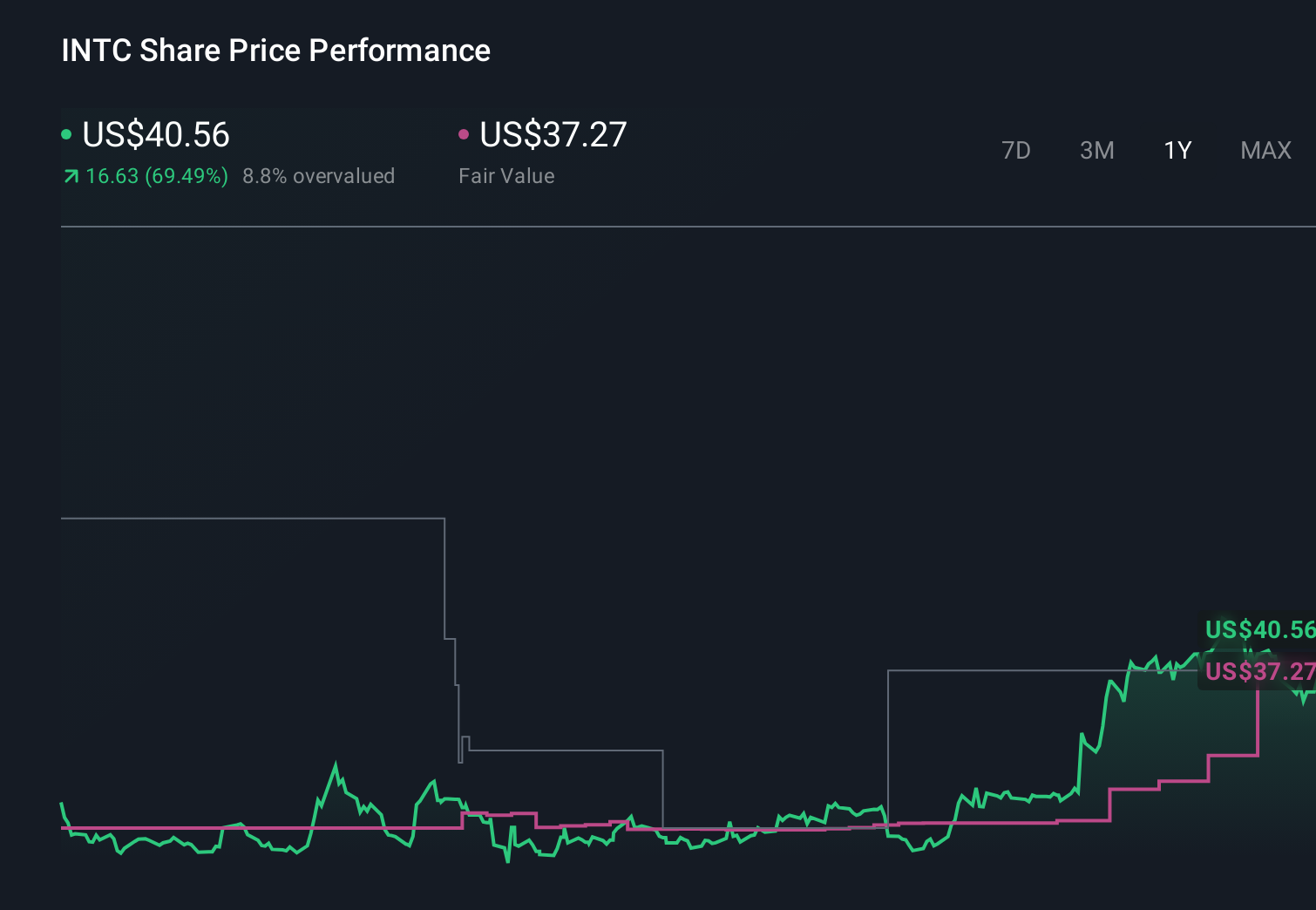
The most optimistic analysts were already assuming Intel could lift annual revenue toward about US$90.5 billion and earnings near US$16.5 billion, which is far more bullish than consensus. Compared with concerns about rising fixed costs and execution risk around Terafab, this higher bar assumes Intel overcomes process challenges and capital intensity, so it is worth recognising that your own view may sit anywhere between these extremes and may shift as the Terafab story evolves.
Explore 15 other fair value estimates on Intel - why the stock might be worth less than half the current price!
Form Your Own Verdict
Disagree with existing narratives? Extraordinary investment returns rarely come from following the herd, so go with your instincts.
- A great starting point for your Intel research is our analysis highlighting 1 key reward and 3 important warning signs that could impact your investment decision.
- Our free Intel research report provides a comprehensive fundamental analysis summarized in a single visual - the Snowflake - making it easy to evaluate Intel's overall financial health at a glance.
Contemplating Other Strategies?
Early movers are already taking notice. See the stocks they're targeting before they've flown the coop:
- We've uncovered the 8 dividend fortresses yielding 5%+ that don't just survive market storms, but thrive in them.
- This technology could replace computers: discover 26 stocks that are working to make quantum computing a reality.
- AI is about to change healthcare. These 43 stocks are working on everything from early diagnostics to drug discovery. The best part - they are all under $10b in market cap - there's still time to get in early.
This article by Simply Wall St is general in nature. We provide commentary based on historical data and analyst forecasts only using an unbiased methodology and our articles are not intended to be financial advice. It does not constitute a recommendation to buy or sell any stock, and does not take account of your objectives, or your financial situation. We aim to bring you long-term focused analysis driven by fundamental data. Note that our analysis may not factor in the latest price-sensitive company announcements or qualitative material. Simply Wall St has no position in any stocks mentioned.