

Is BlackRock’s HPS Redemption Cap Reshaping the Investment Case for Its Private Credit Ambitions (BLK)?
BlackRock, Inc. BLK | 0.00 |
- Recently, BlackRock capped investor withdrawals from its approximately US$26.00 billion HPS Corporate Lending Fund at 5% of shares, below requested levels, to manage liquidity against the longer-term nature of its private credit loans and ease pressure on the fund’s structure.
- This move has intensified attention on liquidity management and risk in private credit vehicles, raising questions about how BlackRock balances investor access with the realities of less liquid, higher-yielding assets across its broader business.
- We’ll now examine how BlackRock’s decision to restrict HPS fund redemptions interacts with its private credit expansion and valuation thesis.
Invest in the nuclear renaissance through our list of 88 elite nuclear energy infrastructure plays powering the global AI revolution.
BlackRock Investment Narrative Recap
To own BlackRock, you need to believe its scale in ETFs, technology and growing alternatives can offset fee pressure and execution risks as the business evolves. The HPS redemption cap highlights liquidity and valuation risk in private credit, but does not appear to alter the key near term catalyst, which is whether BlackRock can successfully grow higher fee alternatives without eroding margins, or the biggest current risk, that private markets expansion adds operational and regulatory complexity.
The most relevant recent development alongside the HPS decision is the U.S. Department of Justice investigation into valuation practices in BlackRock’s private credit fund TCP Capital Corp. Together, these events focus attention on how BlackRock manages valuation, liquidity and governance as it scales private markets, which directly intersects with the core catalyst of building a larger alternatives platform without sacrificing profitability or inviting materially higher regulatory and legal risk.
Yet investors still need to consider how liquidity limits and private credit valuation scrutiny could affect...
BlackRock’s narrative projects $34.5 billion revenue and $9.4 billion earnings by 2029. This requires 10.4% yearly revenue growth and about a $3.1 billion earnings increase from $6.3 billion today.
Uncover how BlackRock's forecasts yield a $1251 fair value, a 22% upside to its current price.
Exploring Other Perspectives
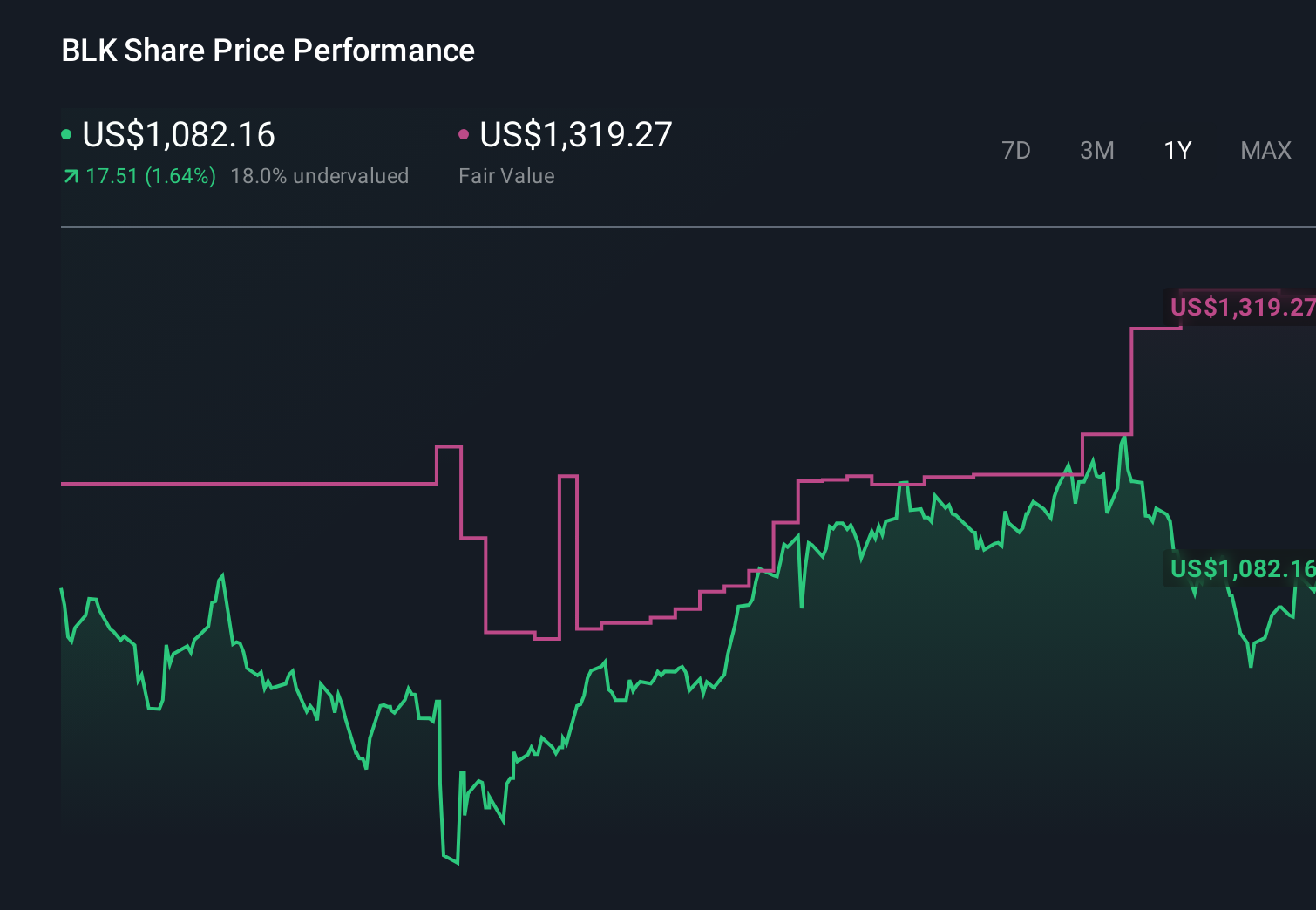
Six fair value estimates from the Simply Wall St Community span roughly US$1,063 to US$1,319 per share, underscoring how far apart individual views can be. You can weigh those opinions against the growing focus on BlackRock’s private markets expansion and related liquidity and regulatory risks, and then explore several alternative viewpoints before deciding how that might influence the company’s longer term performance.
Explore 6 other fair value estimates on BlackRock - why the stock might be worth just $1063!
The Verdict Is Yours
Don't just follow the ticker - dig into the data and build a conviction that's truly your own.
- A great starting point for your BlackRock research is our analysis highlighting 3 key rewards and 2 important warning signs that could impact your investment decision.
- Our free BlackRock research report provides a comprehensive fundamental analysis summarized in a single visual - the Snowflake - making it easy to evaluate BlackRock's overall financial health at a glance.
Want Some Alternatives?
Right now could be the best entry point. These picks are fresh from our daily scans. Don't delay:
- AI is about to change healthcare. These 40 stocks are working on everything from early diagnostics to drug discovery. The best part - they are all under $10b in market cap - there's still time to get in early.
- Capitalize on the AI infrastructure supercycle with our selection of the 48 best 'picks and shovels' of the AI gold rush converting record-breaking demand into massive cash flow.
- Uncover the next big thing with 24 elite penny stocks that balance risk and reward.
This article by Simply Wall St is general in nature. We provide commentary based on historical data and analyst forecasts only using an unbiased methodology and our articles are not intended to be financial advice. It does not constitute a recommendation to buy or sell any stock, and does not take account of your objectives, or your financial situation. We aim to bring you long-term focused analysis driven by fundamental data. Note that our analysis may not factor in the latest price-sensitive company announcements or qualitative material. Simply Wall St has no position in any stocks mentioned.