

Is Liberty Energy’s Shift Into Russell Growth Indices Altering The Investment Case For Liberty Energy (LBRT)?
Liberty Energy, Inc. Class A LBRT | 0.00 |
- In late June 2026, Liberty Energy Inc. (NYSE: LBRT) was removed from several Russell value and defensive indices and simultaneously added to multiple Russell growth benchmarks, including the Russell 2000 Growth, 2500 Growth, 3000 Growth, 3000E Growth, and Small Cap Comp Growth indices.
- This broad reclassification toward growth-oriented indices meaningfully shifts Liberty Energy’s exposure to passive capital and could influence how investors categorize its risk and return profile.
- We’ll now examine how Liberty Energy’s move into multiple Russell growth benchmarks may influence its investment narrative and future positioning.
Outshine the giants: these 15 early-stage AI stocks could fund your retirement.
Liberty Energy Investment Narrative Recap
To own Liberty Energy, you need to believe its core North American frac business can weather softer completions activity while its newer power solutions gradually take hold. The Russell reclassification toward growth indices mainly affects who owns the stock rather than these fundamentals, so it does not materially change the near term catalyst of how sharply pricing and utilization soften, or the key risk that earnings may stagnate as management holds CapEx to maintenance levels.
The recent affirmation of a US$0.09 quarterly dividend, following steady increases since 2023, is the most relevant announcement in light of Liberty’s shift into growth indices. It highlights management’s continued commitment to returning cash even as analysts expect revenue to grow and earnings to come under pressure, which may matter for investors weighing the appeal of a higher growth classification against the risk of margin compression and slower profit trends.
Yet even as Liberty is being reclassified into growth indices, investors should be aware that its heavy reliance on North American shale activity means...
Liberty Energy's narrative projects $6.2 billion revenue and $73.8 million earnings by 2029.
Uncover how Liberty Energy's forecasts yield a $33.92 fair value, a 26% upside to its current price.
Exploring Other Perspectives
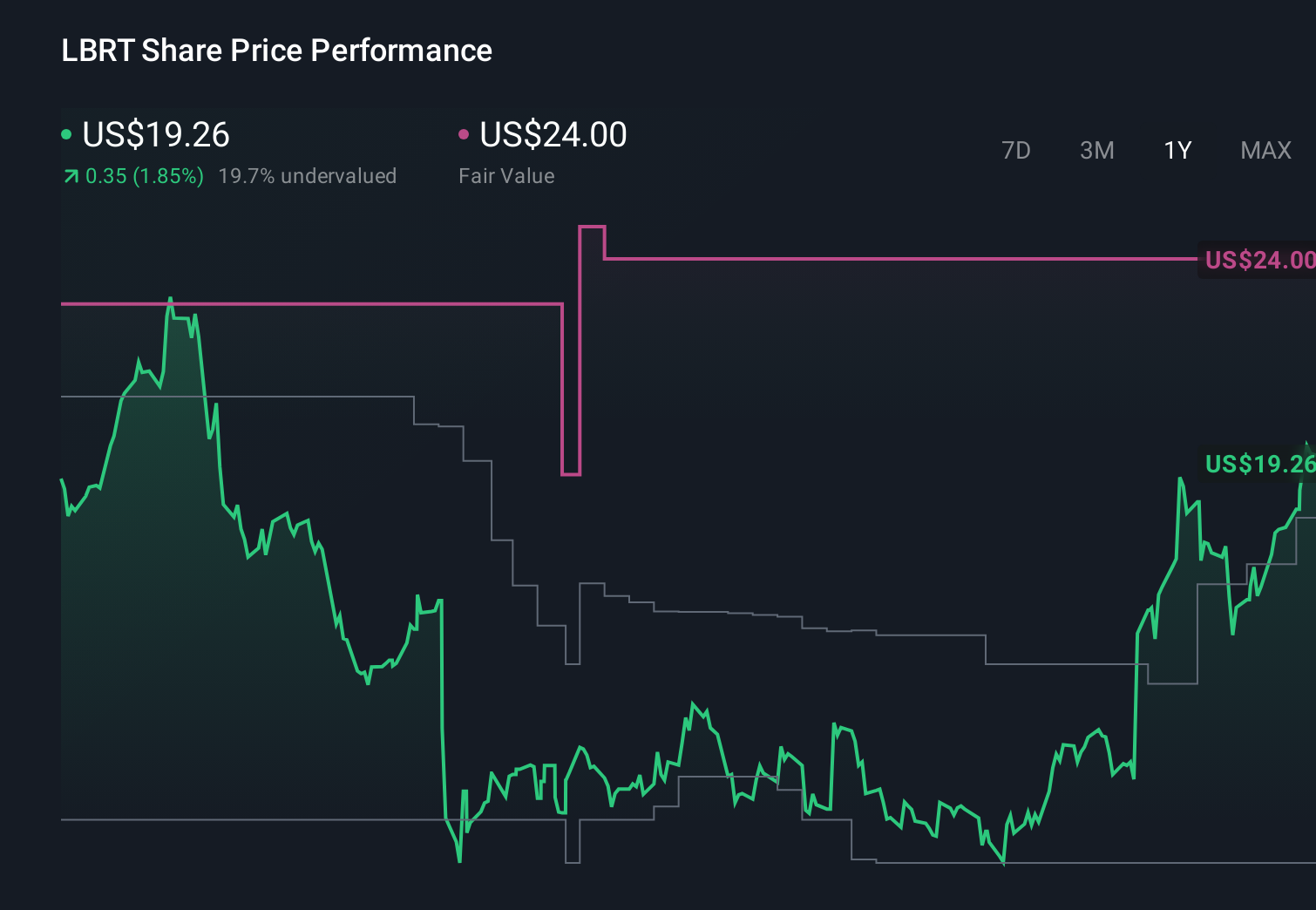
Some of the most optimistic analysts already projected revenue near US$6.5 billion by 2029, yet also saw earnings near US$35 million, showing how sharply views on Liberty’s risks and upside can diverge and how this new index shift might further reshape those expectations.
Explore 6 other fair value estimates on Liberty Energy - why the stock might be worth less than half the current price!
Reach Your Own Conclusion
Disagree with existing narratives? Extraordinary investment returns rarely come from following the herd, so go with your instincts.
- A great starting point for your Liberty Energy research is our analysis highlighting 3 key rewards and 3 important warning signs that could impact your investment decision.
- Our free Liberty Energy research report provides a comprehensive fundamental analysis summarized in a single visual - the Snowflake - making it easy to evaluate Liberty Energy's overall financial health at a glance.
Searching For A Fresh Perspective?
Markets shift fast. These stocks won't stay hidden for long. Get the list while it matters:
- Find 44 companies with promising cash flow potential yet trading below their fair value.
- Capitalize on the AI infrastructure supercycle with our selection of the 51 best 'picks and shovels' of the AI gold rush converting record-breaking demand into massive cash flow.
- We've uncovered the 8 dividend fortresses yielding 5%+ that don't just survive market storms, but thrive in them.
This article by Simply Wall St is general in nature. We provide commentary based on historical data and analyst forecasts only using an unbiased methodology and our articles are not intended to be financial advice. It does not constitute a recommendation to buy or sell any stock, and does not take account of your objectives, or your financial situation. We aim to bring you long-term focused analysis driven by fundamental data. Note that our analysis may not factor in the latest price-sensitive company announcements or qualitative material. Simply Wall St has no position in any stocks mentioned.