

Is Lyft’s Q1 Earnings Miss And Expansion Pivot Altering The Investment Case For Lyft (LYFT)?
Lyft LYFT | 0.00 |
- In early May 2026, Lyft reported first-quarter revenue of US$1,650.49 million and net income of US$14.25 million, alongside updates on international expansion, premium services, new partnerships with DoorDash and United Airlines, and progress in autonomous vehicle initiatives.
- These developments underline Lyft’s push to deepen customer loyalty and expand beyond North America, even as the company absorbs higher costs linked to acquisitions and growth initiatives.
- We’ll now examine how Lyft’s push into premium rides and international markets, despite an earnings miss, could influence its investment narrative.
We've uncovered the 12 dividend fortresses yielding 5%+ that don't just survive market storms, but thrive in them.
Lyft Investment Narrative Recap
To own Lyft today, you need to believe its push into higher value rides, global expansion and AV initiatives can offset competitive and regulatory pressures. The key near term catalyst remains execution on premium and international growth, which Q1’s revenue beat but earnings miss did not materially change, given acquisition costs and weather disruptions. The biggest current risk is that heavier spending on expansion and AV raises costs faster than Lyft can sustain through pricing and rider growth.
Among the recent announcements, the expanded United Airlines MileagePlus integration stands out. Letting members pay for Lyft rides directly with miles ties airport trips and premium rides more tightly to Lyft’s network, reinforcing the premium and loyalty angle that underpins the investment case. How effectively Lyft converts these partnerships into higher frequency and higher value rides will be central to whether the recent earnings volatility proves temporary or more persistent.
But even with these encouraging partnerships, investors should be aware that growing regulatory and cost pressures on drivers could...
Lyft's narrative projects $8.8 billion revenue and $458.2 million earnings by 2029. This requires 11.5% yearly revenue growth and a $2.3 billion earnings decrease from $2.8 billion today.
Uncover how Lyft's forecasts yield a $19.28 fair value, a 34% upside to its current price.
Exploring Other Perspectives
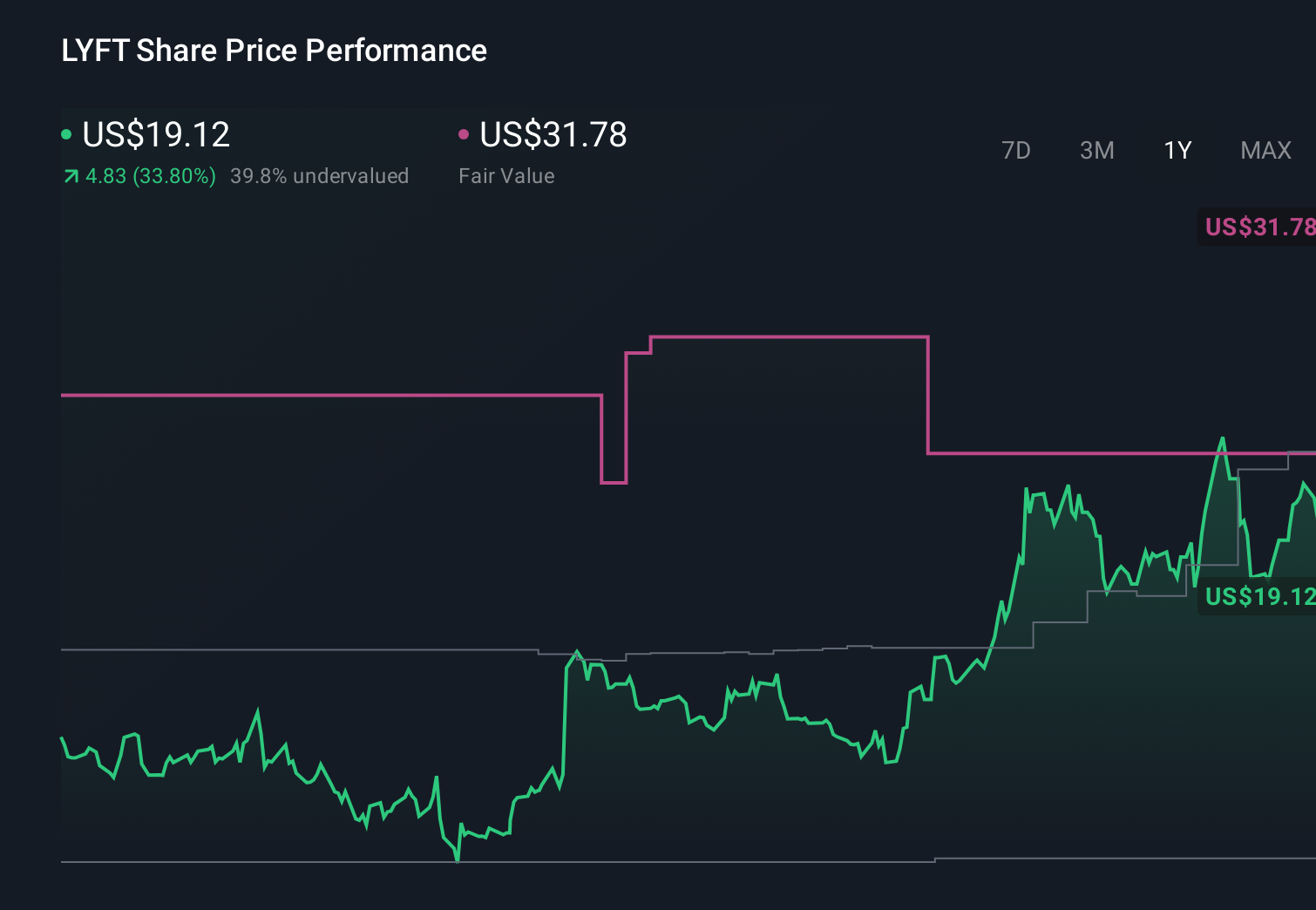
Some of the lowest ranked analysts were assuming revenue of about US$7.7 billion and earnings near US$173.7 million by 2029, which paints a far more cautious picture than the consensus. When you compare that to the latest earnings miss and rising expansion costs, you can see how views on risks like driver reclassification and margin pressure can diverge sharply, and why it is worth weighing several different scenarios before you decide what Lyft’s future might look like.
Explore 8 other fair value estimates on Lyft - why the stock might be worth just $19.10!
Reach Your Own Conclusion
Disagree with existing narratives? Extraordinary investment returns rarely come from following the herd, so go with your instincts.
- A great starting point for your Lyft research is our analysis highlighting 3 key rewards and 2 important warning signs that could impact your investment decision.
- Our free Lyft research report provides a comprehensive fundamental analysis summarized in a single visual - the Snowflake - making it easy to evaluate Lyft's overall financial health at a glance.
Interested In Other Possibilities?
Opportunities like this don't last. These are today's most promising picks. Check them out now:
- Explore 27 top quantum computing companies leading the revolution in next-gen technology and shaping the future with breakthroughs in quantum algorithms, superconducting qubits, and cutting-edge research.
- Invest in the nuclear renaissance through our list of 91 elite nuclear energy infrastructure plays powering the global AI revolution.
- Uncover the next big thing with 25 elite penny stocks that balance risk and reward.
This article by Simply Wall St is general in nature. We provide commentary based on historical data and analyst forecasts only using an unbiased methodology and our articles are not intended to be financial advice. It does not constitute a recommendation to buy or sell any stock, and does not take account of your objectives, or your financial situation. We aim to bring you long-term focused analysis driven by fundamental data. Note that our analysis may not factor in the latest price-sensitive company announcements or qualitative material. Simply Wall St has no position in any stocks mentioned.