

Is Mastercard (MA) Quietly Building the Trust Layer for AI Commerce With Verifiable Intent?
Mastercard Incorporated Class A MA | 504.17 | +0.36% |
- Lobster.cash recently announced it will integrate Mastercard Agent Pay and Verifiable Intent, allowing AI agents on open platforms like OpenClaw to make secure, issuer-controlled transactions using consumers’ existing Mastercard cards.
- This move embeds cryptographic proof of user authorization into agent-led payments, positioning Mastercard’s network as a core trust layer for emerging AI commerce.
- Next, we’ll examine how embedding Verifiable Intent into AI agent payments could influence Mastercard’s investment narrative and long-term ecosystem role.
The latest GPUs need a type of rare earth metal called Neodymium and there are only 31 companies in the world exploring or producing it. Find the list for free.
Mastercard Investment Narrative Recap
To own Mastercard, you need to believe in the resilience of its global card network and its ability to keep layering higher-margin services on top of that base. The Lobster.cash integration with Agent Pay and Verifiable Intent directly addresses one of the biggest near term risks, which is that new agentic and alternative payment rails could bypass the card networks, but it does not remove broader competitive and regulatory pressures.
The most relevant recent context here is L1 Capital’s view that Mastercard’s share price has lagged partly because of concerns around disruption from agentic commerce and alternative rails. The Lobster.cash announcement ties directly into that debate by placing Mastercard’s network and Verifiable Intent at the center of open agent payments, which could matter for how investors think about future payment volumes and the role of value added services in offsetting competitive threats.
Yet behind the enthusiasm for AI agents and Verifiable Intent, there is still meaningful risk that alternative domestic payment systems could quietly reshape Mastercard’s long term volume profile that investors should be aware of...
Mastercard's narrative projects $46.7 billion revenue and $22.1 billion earnings by 2029.
Uncover how Mastercard's forecasts yield a $657.11 fair value, a 26% upside to its current price.
Exploring Other Perspectives
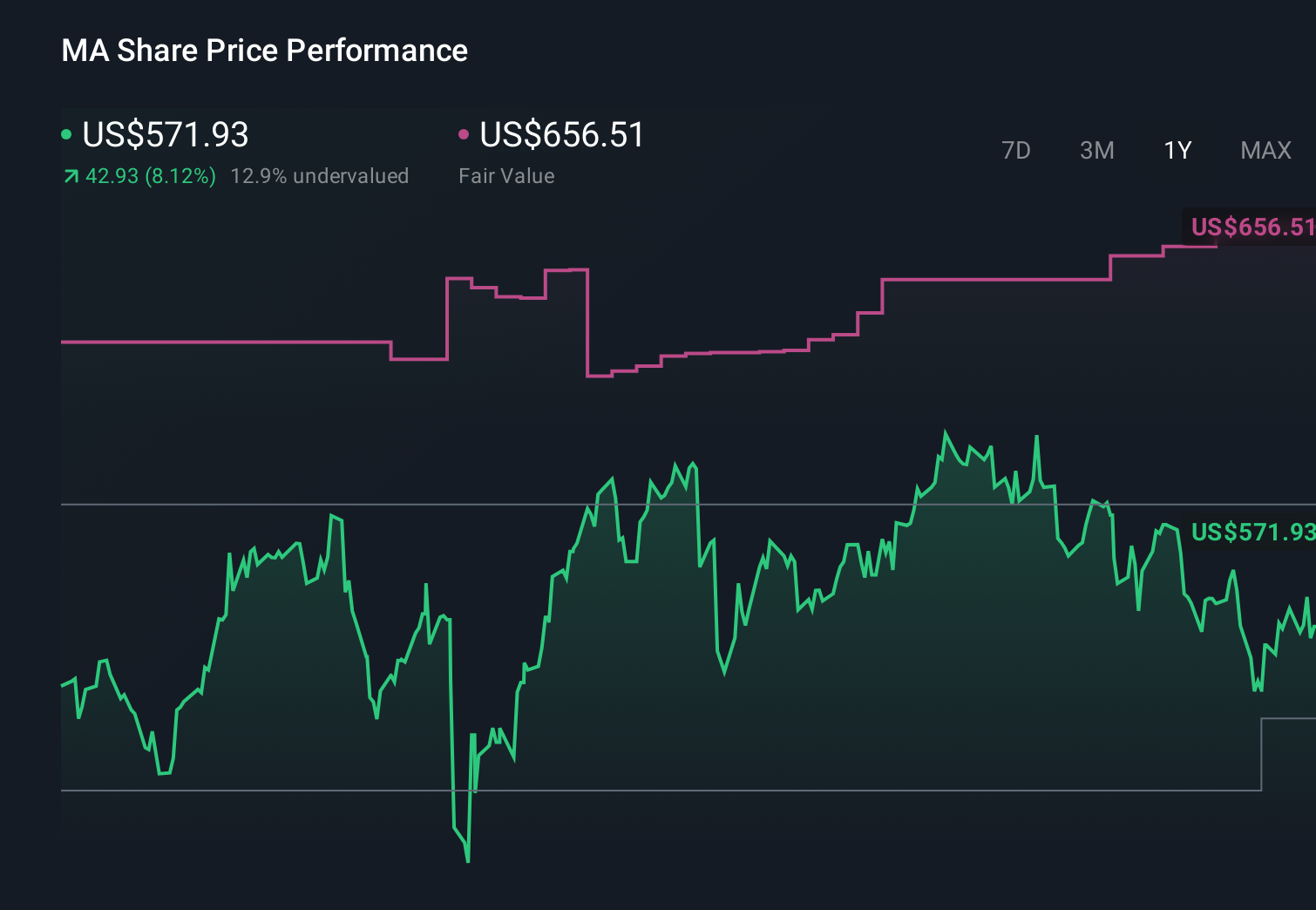
Twenty two fair value estimates from the Simply Wall St Community span roughly US$520 to US$657 per share, with views clustered across that full range. Against this diversity of opinion, the question many investors are now asking is how Mastercard’s push into AI agent payments might interact with the risk that alternative payment rails and real time domestic systems could pressure long term volumes and earnings power.
Explore 22 other fair value estimates on Mastercard - why the stock might be worth as much as 26% more than the current price!
Reach Your Own Conclusion
Disagree with existing narratives? Extraordinary investment returns rarely come from following the herd, so go with your instincts.
- A great starting point for your Mastercard research is our analysis highlighting 4 key rewards and 1 important warning sign that could impact your investment decision.
- Our free Mastercard research report provides a comprehensive fundamental analysis summarized in a single visual - the Snowflake - making it easy to evaluate Mastercard's overall financial health at a glance.
No Opportunity In Mastercard?
Early movers are already taking notice. See the stocks they're targeting before they've flown the coop:
- Find 59 companies with promising cash flow potential yet trading below their fair value.
- We've uncovered the 11 dividend fortresses yielding 5%+ that don't just survive market storms, but thrive in them.
- Capitalize on the AI infrastructure supercycle with our selection of the 38 best 'picks and shovels' of the AI gold rush converting record-breaking demand into massive cash flow.
This article by Simply Wall St is general in nature. We provide commentary based on historical data and analyst forecasts only using an unbiased methodology and our articles are not intended to be financial advice. It does not constitute a recommendation to buy or sell any stock, and does not take account of your objectives, or your financial situation. We aim to bring you long-term focused analysis driven by fundamental data. Note that our analysis may not factor in the latest price-sensitive company announcements or qualitative material. Simply Wall St has no position in any stocks mentioned.