

Is Palo Alto Networks’ (PANW) Lumen SOC Alliance Subtly Redefining Its AI Cybersecurity Moat?
Palo Alto Networks, Inc. PANW | 0.00 |
- Lumen Technologies recently announced Lumen Defender Advanced Managed Detection and Response for Palo Alto Networks’ Cortex XSIAM, combining its managed detection, automation and Black Lotus Labs network threat intelligence with Palo Alto Networks’ AI-driven SOC platform to help enterprises modernize security operations.
- This collaboration reinforces Palo Alto Networks’ position in AI-enabled cybersecurity by extending its platform into co-managed and fully managed SOC models powered by network-level intelligence.
- We’ll now examine how this expanded AI-driven SOC collaboration with Lumen could influence Palo Alto Networks’ broader investment narrative.
The best AI stocks today may lie beyond giants like Nvidia and Microsoft. Find the next big opportunity with these 16 smaller AI-focused companies with strong growth potential through early-stage innovation in machine learning, automation, and data intelligence that could fund your retirement.
Palo Alto Networks Investment Narrative Recap
To own Palo Alto Networks, you need to believe that enterprises will keep consolidating around AI driven, cloud based security platforms and pay a premium for integrated protection. The Lumen Defender announcement strengthens the near term AI SOC story but does not clearly change the key near term catalyst, which remains execution on large platform deals, or the biggest risk, which is complex integration across acquisitions and product lines that could strain operations and margins.
Among recent announcements, the IBM and Red Hat collaboration is particularly relevant, because it also extends Palo Alto Networks’ reach through another major partner into complex, hybrid environments. Together with Lumen’s AI driven MDR for Cortex XSIAM, it shows how the company is embedding its platform into third party services that can support demand for higher value subscriptions and AI security offerings, while still leaving questions about how rising competition and integration costs will play out.
Yet even as these partnerships expand the AI story, investors should also be aware of integration and cost risks that could...
Palo Alto Networks' narrative projects $17.9 billion revenue and $2.6 billion earnings by 2029. This requires 19.0% yearly revenue growth and an earnings increase of about $1.8 billion from $842.9 million today.
Uncover how Palo Alto Networks' forecasts yield a $318.32 fair value, a 4% downside to its current price.
Exploring Other Perspectives
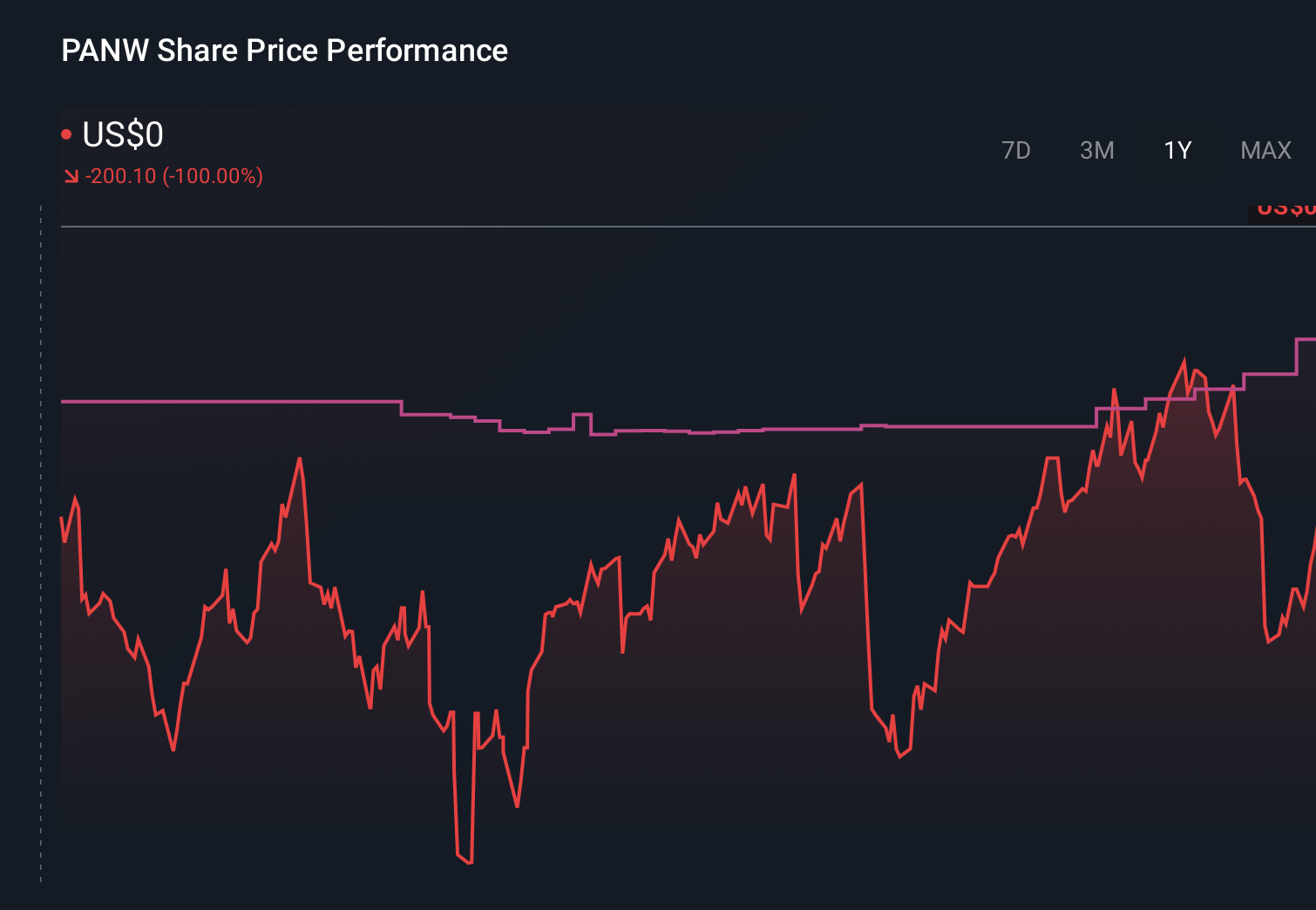
While the consensus view focuses on integration and spending risks, the most optimistic analysts were assuming revenue could reach about US$17.3 billion by 2029, so you should expect their AI security thesis to be tested and possibly revised as collaborations like Lumen Defender reshape what is realistic.
Explore 16 other fair value estimates on Palo Alto Networks - why the stock might be worth as much as $318.32!
Form Your Own Verdict
Disagree with existing narratives? Extraordinary investment returns rarely come from following the herd, so go with your instincts.
- A great starting point for your Palo Alto Networks research is our analysis highlighting 1 key reward and 3 important warning signs that could impact your investment decision.
- Our free Palo Alto Networks research report provides a comprehensive fundamental analysis summarized in a single visual - the Snowflake - making it easy to evaluate Palo Alto Networks' overall financial health at a glance.
Curious About Other Options?
Our daily scans reveal stocks with breakout potential. Don't miss this chance:
- Uncover the next big thing with 20 elite penny stocks that balance risk and reward.
- Capitalize on the AI infrastructure supercycle with our selection of the 52 best 'picks and shovels' of the AI gold rush converting record-breaking demand into massive cash flow.
- We've uncovered the 8 dividend fortresses yielding 5%+ that don't just survive market storms, but thrive in them.
This article by Simply Wall St is general in nature. We provide commentary based on historical data and analyst forecasts only using an unbiased methodology and our articles are not intended to be financial advice. It does not constitute a recommendation to buy or sell any stock, and does not take account of your objectives, or your financial situation. We aim to bring you long-term focused analysis driven by fundamental data. Note that our analysis may not factor in the latest price-sensitive company announcements or qualitative material. Simply Wall St has no position in any stocks mentioned.