

Is Peabody Energy (BTU) Balancing Centurion Setbacks With Portfolio Strength or Stretching Its Limits?
Peabody Energy BTU | 0.00 |
- Peabody Energy recently cut its first-quarter 2026 sales forecast for the Centurion metallurgical coal mine in Australia to about 250,000 tons because of commissioning challenges, while keeping its full-year 10.3–11.3 million ton met coal volume guidance unchanged.
- This gap between a weaker near-term ramp-up at Centurion and an intact full-year volume target raises questions about execution risk and operational resilience across Peabody’s portfolio.
- We’ll now examine how the slower-than-planned Centurion ramp-up could affect Peabody’s previously outlined investment narrative and risk-reward profile.
Invest in the nuclear renaissance through our list of 93 elite nuclear energy infrastructure plays powering the global AI revolution.
Peabody Energy Investment Narrative Recap
To own Peabody Energy, you need to believe that policy support, firm power demand, and a shift toward higher margin metallurgical coal can offset structural headwinds to coal. The key near term catalyst is execution at assets like Centurion; the reduced first quarter 2026 sales outlook highlights that ramp risk is real, but the unchanged full year met coal guidance suggests management does not yet see a material reset to the broader production or cash flow story.
The Centurion update sits alongside Peabody’s recent track record of steady capital returns, including a recurring US$0.075 quarterly dividend and sizeable buybacks, which together had been reinforcing the idea of a more stable, cash generative miner. With Centurion’s commissioning issues now front of mind, some investors may reassess how dependable those cash flows are, at least until the company provides more detail with its first quarter 2026 results on May 5.
Yet this sits against the ongoing risk that tighter environmental rules and rising reclamation obligations could limit how much of that cash ultimately reaches shareholders...
Peabody Energy’s narrative projects $4.8 billion revenue and $449.0 million earnings by 2029. This requires 7.9% yearly revenue growth and a $501.7 million earnings increase from -$52.7 million today.
Uncover how Peabody Energy's forecasts yield a $39.75 fair value, a 18% upside to its current price.
Exploring Other Perspectives
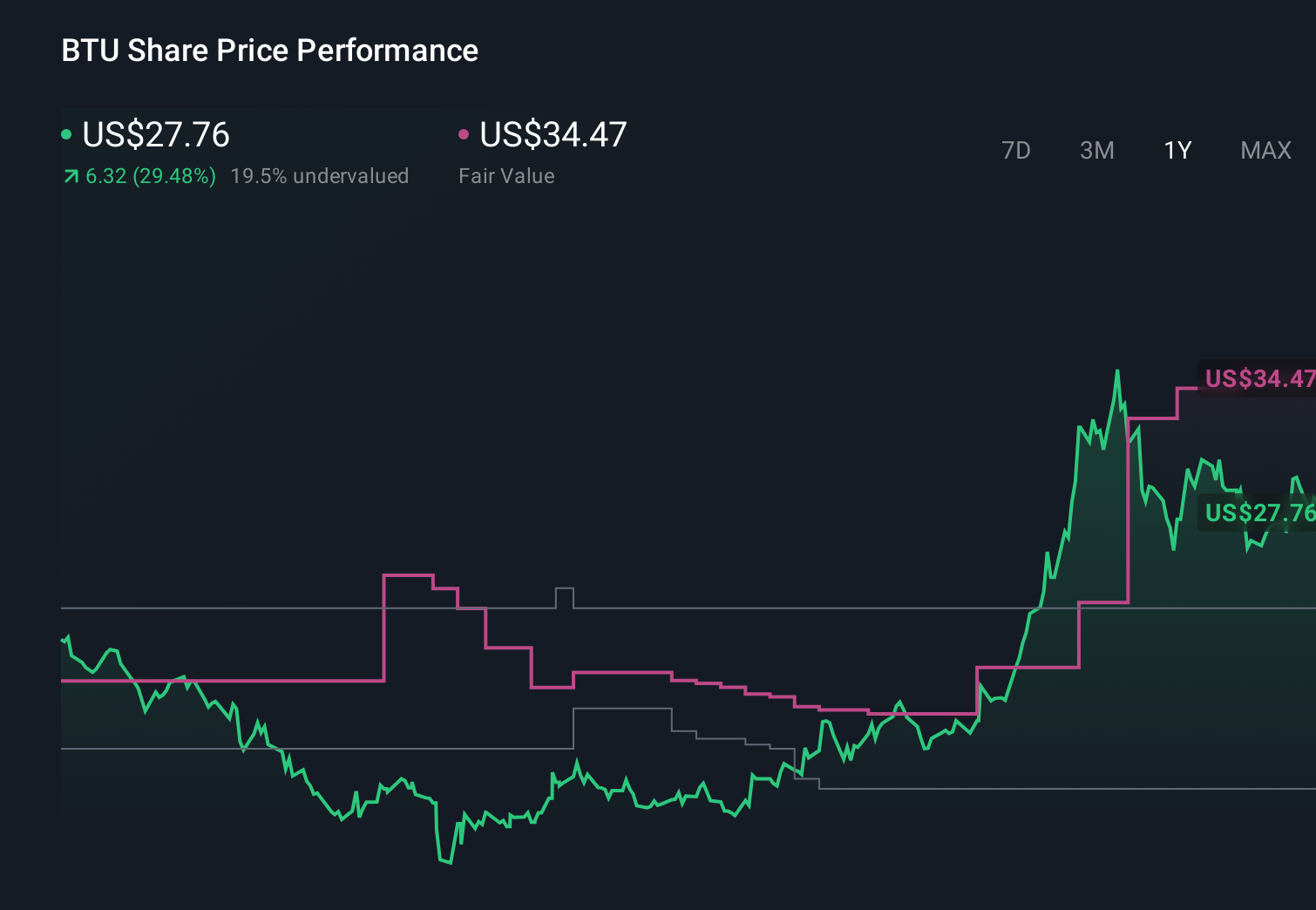
Some of the most optimistic analysts once projected about US$5.4 billion of revenue and US$406.6 million of earnings by 2028, but Centurion’s setback shows how quickly that upside story, and concerns over reserve quality and customer concentration, could be reassessed.
Explore 6 other fair value estimates on Peabody Energy - why the stock might be worth just $33.00!
The Verdict Is Yours
Disagree with existing narratives? Extraordinary investment returns rarely come from following the herd, so go with your instincts.
- A great starting point for your Peabody Energy research is our analysis highlighting 3 key rewards and 1 important warning sign that could impact your investment decision.
- Our free Peabody Energy research report provides a comprehensive fundamental analysis summarized in a single visual - the Snowflake - making it easy to evaluate Peabody Energy's overall financial health at a glance.
No Opportunity In Peabody Energy?
Right now could be the best entry point. These picks are fresh from our daily scans. Don't delay:
- Capitalize on the AI infrastructure supercycle with our selection of the 36 best 'picks and shovels' of the AI gold rush converting record-breaking demand into massive cash flow.
- Find 62 companies with promising cash flow potential yet trading below their fair value.
- AI is about to change healthcare. These 37 stocks are working on everything from early diagnostics to drug discovery. The best part - they are all under $10b in market cap - there's still time to get in early.
This article by Simply Wall St is general in nature. We provide commentary based on historical data and analyst forecasts only using an unbiased methodology and our articles are not intended to be financial advice. It does not constitute a recommendation to buy or sell any stock, and does not take account of your objectives, or your financial situation. We aim to bring you long-term focused analysis driven by fundamental data. Note that our analysis may not factor in the latest price-sensitive company announcements or qualitative material. Simply Wall St has no position in any stocks mentioned.