

Is QUBT’s New CRO-CPO Duo a Turning Point for Its Commercial and Product Strategy?
Quantum Computing Inc. QUBT | 0.00 |
- On July 17, 2026, Quantum Computing Inc. appointed Susan G. Hunt as Chief Revenue Officer and moved former CRO Dr. Pouya Dianat into the new role of Chief Product Officer to concentrate on product development.
- This leadership reshuffle pairs an experienced enterprise revenue builder with an internal product specialist, potentially tightening the link between QCi’s commercial execution and its quantum technology roadmap.
- We’ll now examine how Hunt’s appointment as Chief Revenue Officer may influence Quantum Computing Inc.’s existing investment narrative and future execution.
AI is about to change healthcare. These 41 stocks are working on everything from early diagnostics to drug discovery. The best part - they are all under $10b in market cap - there's still time to get in early.
Quantum Computing Investment Narrative Recap
To own Quantum Computing Inc., you have to believe its room temperature photonic and quantum platforms can transition from small contracts to meaningful, repeatable revenue while costs remain manageable. The appointment of Susan G. Hunt as Chief Revenue Officer and Pouya Dianat as Chief Product Officer is directionally aligned with that thesis, but does not, by itself, change the core near term catalyst of converting pilots like NeuraWave into scalable deployments or the key risk of operating expenses outpacing revenue.
Among recent announcements, the NeuraWave framework agreement with Planck Dynamics, with an initial five system order and potential value above US$10 million, looks most connected to this leadership move. Hunt’s remit across global sales, partnerships and customer success will likely intersect directly with executing and expanding this kind of edge AI contract, which sits at the heart of QCi’s catalyst of moving from niche projects to larger, higher margin production volumes.
Yet investors should be aware that if operating costs keep rising faster than this revenue pipeline grows, the path to sustainable profitability could...
Quantum Computing's narrative projects $243.4 million revenue and $1.8 million earnings by 2029. This requires 283.0% yearly revenue growth and a $41.5 million earnings increase from -$39.7 million today.
Uncover how Quantum Computing's forecasts yield a $18.33 fair value, a 99% upside to its current price.
Exploring Other Perspectives
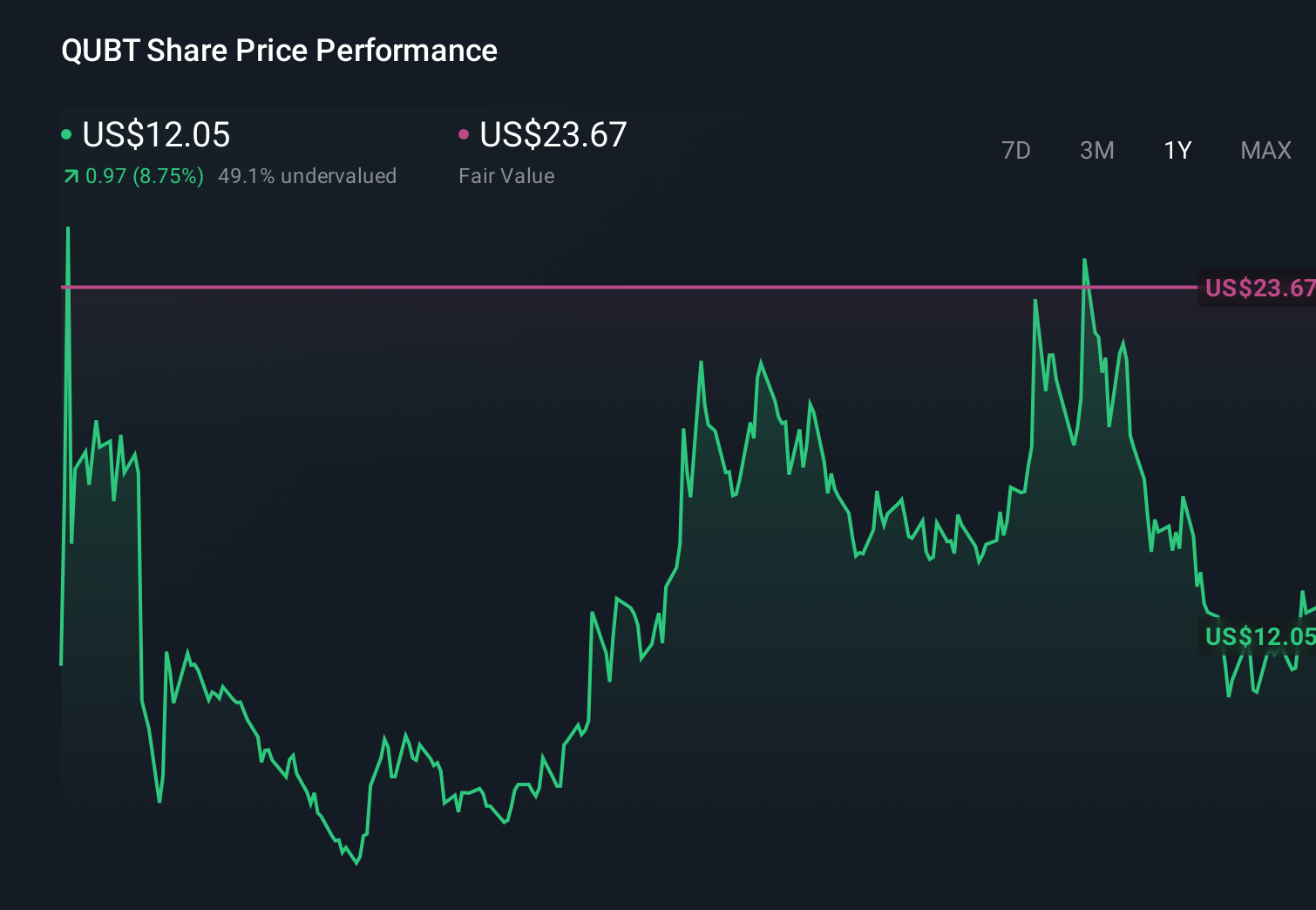
Compared with the consensus optimism, the lowest analyst estimates paint a tougher picture, with revenue only reaching about US$72.6 million and earnings roughly US$5.4 million by 2029, highlighting how much depends on whether new leaders like Hunt can accelerate product adoption while bears still worry that manufacturing scale and customer demand may not ramp as quickly as hoped.
Explore 8 other fair value estimates on Quantum Computing - why the stock might be worth over 3x more than the current price!
Decide For Yourself
Don't just follow the ticker - dig into the data and build a conviction that's truly your own.
- A great starting point for your Quantum Computing research is our analysis highlighting 1 key reward and 3 important warning signs that could impact your investment decision.
- Our free Quantum Computing research report provides a comprehensive fundamental analysis summarized in a single visual - the Snowflake - making it easy to evaluate Quantum Computing's overall financial health at a glance.
Seeking Other Investments?
The market won't wait. These fast-moving stocks are hot now. Grab the list before they run:
- Explore 26 top quantum computing companies leading the revolution in next-gen technology and shaping the future with breakthroughs in quantum algorithms, superconducting qubits, and cutting-edge research.
- Find 52 companies with promising cash flow potential yet trading below their fair value.
- Capitalize on the AI infrastructure supercycle with our selection of the 56 best 'picks and shovels' of the AI gold rush converting record-breaking demand into massive cash flow.
This article by Simply Wall St is general in nature. We provide commentary based on historical data and analyst forecasts only using an unbiased methodology and our articles are not intended to be financial advice. It does not constitute a recommendation to buy or sell any stock, and does not take account of your objectives, or your financial situation. We aim to bring you long-term focused analysis driven by fundamental data. Note that our analysis may not factor in the latest price-sensitive company announcements or qualitative material. Simply Wall St has no position in any stocks mentioned.