

Is Rocket Lab (RKLB) Quietly Redefining Small-Satellite Infrastructure With Its New Gauss Thruster?
Rocket Lab RKLB | 0.00 |
- Earlier in April 2026, Rocket Lab Corporation introduced its Gauss electric satellite thruster for high-volume production and unveiled a next-generation High-Performance Star Tracker, while also successfully flying its second dedicated Japan Aerospace Exploration Agency mission to deploy eight technology-demonstration satellites from New Zealand.
- These advancements in propulsion, precision navigation hardware, and repeat government launch work highlight Rocket Lab’s push toward being an end-to-end small-satellite infrastructure provider for commercial and national security customers.
- Next, we’ll examine how Rocket Lab’s new high-volume Gauss electric thruster shapes the company’s investment narrative and long-term growth profile.
Invest in the nuclear renaissance through our list of 91 elite nuclear energy infrastructure plays powering the global AI revolution.
Rocket Lab Investment Narrative Recap
To own Rocket Lab, you need to believe the company can turn its vertically integrated launch and space systems platform into a durable, profitable business before its cash burn and Neutron spending become a problem. The Gauss thruster and new High-Performance Star Tracker add to the near term story of building recurring component revenue, but they do not materially change the key catalyst of Neutron progress or the biggest risk of sustained negative free cash flow and potential dilution.
Among the recent announcements, the Gauss electric thruster is most relevant here because it fits directly into Rocket Lab’s effort to be an end to end infrastructure provider for constellations and national security missions. High volume Gauss production, alongside Electron launch wins like the latest JAXA mission, could support the backlog story that analysts are watching ahead of Q1 2026 earnings and any Neutron schedule updates.
But against this upside, investors should be aware of the risk that prolonged cash burn and Neutron spending could...
Rocket Lab's narrative projects $1.5 billion revenue and $159.7 million earnings by 2029. This requires 36.8% yearly revenue growth and a $357.9 million earnings increase from -$198.2 million today.
Uncover how Rocket Lab's forecasts yield a $86.83 fair value, a 6% upside to its current price.
Exploring Other Perspectives
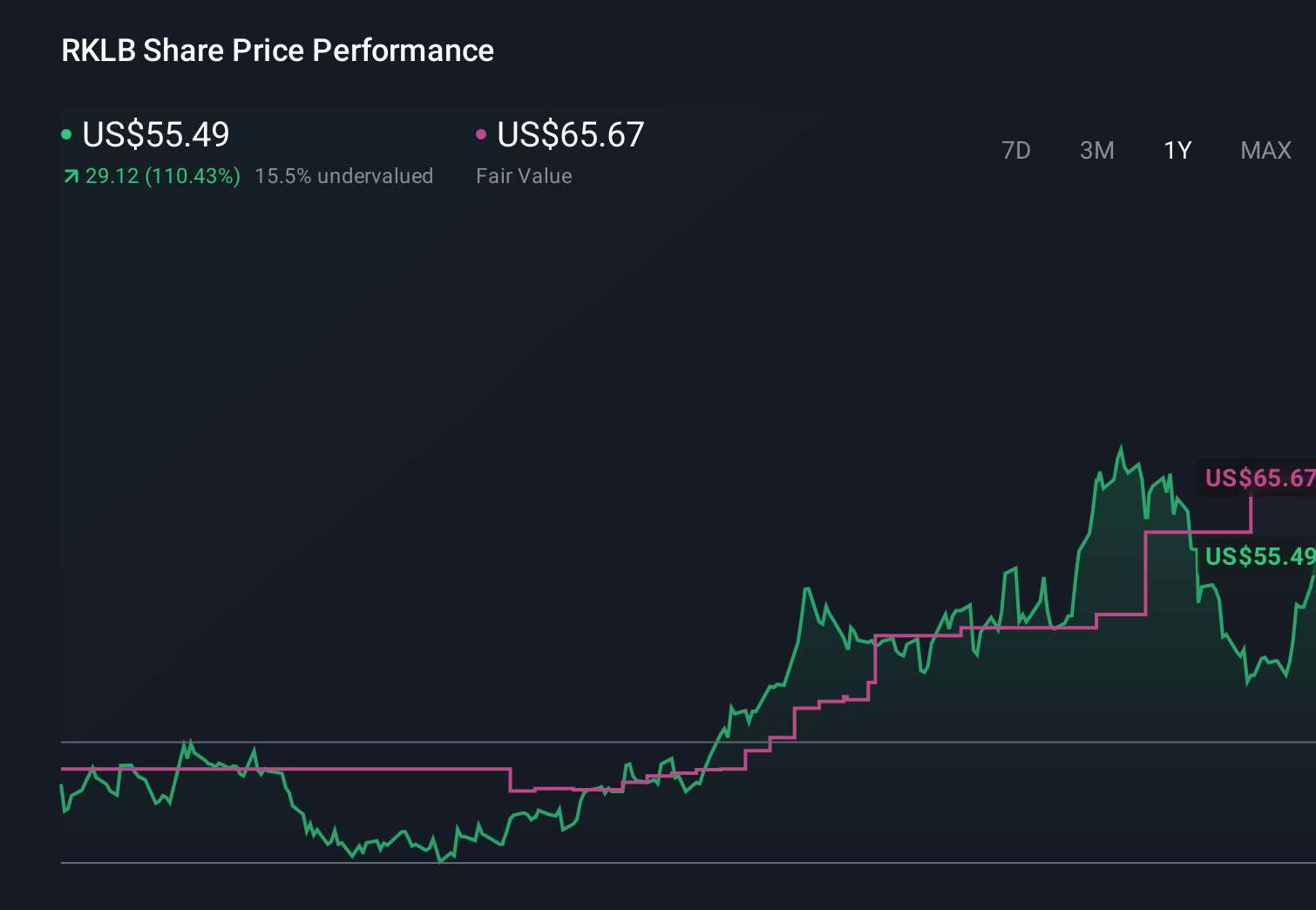
Some of the most optimistic analysts already expected Rocket Lab to reach about US$2.0 billion of revenue and US$300.0 million of earnings by 2029, yet the Gauss and star tracker news could push those expectations further, while others may see it as reinforcing the concern that heavy Neutron and systems investment keeps free cash flow negative for longer.
Explore 53 other fair value estimates on Rocket Lab - why the stock might be worth less than half the current price!
The Verdict Is Yours
Don't just follow the ticker - dig into the data and build a conviction that's truly your own.
- A great starting point for your Rocket Lab research is our analysis highlighting 1 key reward and 3 important warning signs that could impact your investment decision.
- Our free Rocket Lab research report provides a comprehensive fundamental analysis summarized in a single visual - the Snowflake - making it easy to evaluate Rocket Lab's overall financial health at a glance.
Ready For A Different Approach?
Don't miss your shot at the next 10-bagger. Our latest stock picks just dropped:
- Find 53 companies with promising cash flow potential yet trading below their fair value.
- The best AI stocks today may lie beyond giants like Nvidia and Microsoft. Find the next big opportunity with these 18 smaller AI-focused companies with strong growth potential through early-stage innovation in machine learning, automation, and data intelligence that could fund your retirement.
- Uncover the next big thing with 24 elite penny stocks that balance risk and reward.
This article by Simply Wall St is general in nature. We provide commentary based on historical data and analyst forecasts only using an unbiased methodology and our articles are not intended to be financial advice. It does not constitute a recommendation to buy or sell any stock, and does not take account of your objectives, or your financial situation. We aim to bring you long-term focused analysis driven by fundamental data. Note that our analysis may not factor in the latest price-sensitive company announcements or qualitative material. Simply Wall St has no position in any stocks mentioned.