

Is Stanley Black & Decker’s (SWK) New Cost‑Cutting and Buyback Plan Redefining Its Core Strategy?
Stanley Black & Decker, Inc. SWK | 0.00 |
- Earlier this month, Stanley Black & Decker outlined its transition from a multi‑year recovery into a growth and shareholder‑return phase, underpinned by a US$2.00 billion cost‑reduction program, portfolio divestitures, and increased capital returns including a US$500.00 million share repurchase authorization and a dividend yield a little above 4%.
- A key element of this shift is the combination of balance‑sheet repair and operational restructuring, which aims to free up cash for investors while simplifying the business around its core tools and outdoor franchises.
- We’ll now examine how this pivot toward cost reductions and higher capital returns could influence Stanley Black & Decker’s existing investment narrative.
The future of work is here. Discover the 33 top robotics and automation stocks leading the charge in AI-driven automation and industrial transformation.
Stanley Black & Decker Investment Narrative Recap
To be comfortable owning Stanley Black & Decker today, you need to believe that its cost reset, supply chain work, and focus on core tools can offset sluggish DIY demand and tariff pressures, turning operational fixes into durable earnings. The latest update about moving into a growth and shareholder return phase, backed by a US$2.00 billion cost reduction plan and higher capital returns, reinforces that story, but leaves execution risk as the key near term swing factor.
The most relevant recent move here is the new US$500.00 million share repurchase authorization, paired with a dividend yield a little above 4%. Together, these signal that management sees room to return more cash even as it continues restructuring the portfolio and investing behind brands like DEWALT and supply chain programs tied to its margin recovery and earnings improvement goals.
However, against these positives, investors should be aware that the heavy reliance on cost cuts and capital returns could complicate the picture if...
Stanley Black & Decker's narrative projects $16.2 billion revenue and $1.1 billion earnings by 2029. This requires 2.3% yearly revenue growth and about a $698.1 million earnings increase from $401.9 million today.
Uncover how Stanley Black & Decker's forecasts yield a $89.87 fair value, a 7% upside to its current price.
Exploring Other Perspectives
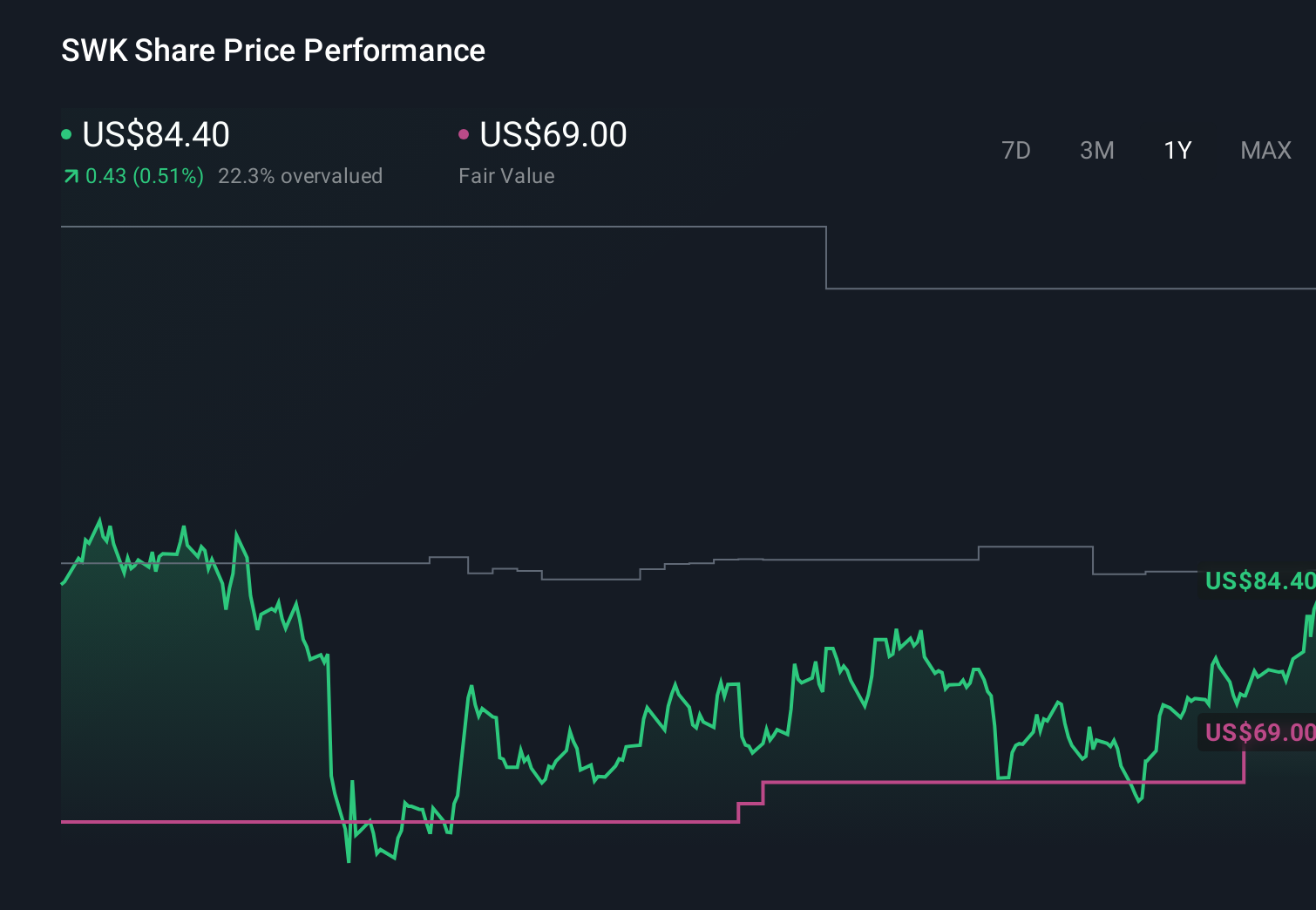
Some of the lowest ranked analysts paint a much harsher picture for you, with revenue growth near 1.5% and earnings of about US$1.1 billion by 2029, highlighting that even with supply chain gains, demographics and smart home shifts could still weigh heavily on the longer term story compared with the more balanced consensus outlook.
Explore 4 other fair value estimates on Stanley Black & Decker - why the stock might be worth 22% less than the current price!
Reach Your Own Conclusion
Don't just follow the ticker - dig into the data and build a conviction that's truly your own.
- A great starting point for your Stanley Black & Decker research is our analysis highlighting 2 key rewards and 3 important warning signs that could impact your investment decision.
- Our free Stanley Black & Decker research report provides a comprehensive fundamental analysis summarized in a single visual - the Snowflake - making it easy to evaluate Stanley Black & Decker's overall financial health at a glance.
Ready For A Different Approach?
These stocks are moving-our analysis flagged them today. Act fast before the price catches up:
- Outshine the giants: these 14 early-stage AI stocks could fund your retirement.
- Find 43 companies with promising cash flow potential yet trading below their fair value.
- AI is about to change healthcare. These 38 stocks are working on everything from early diagnostics to drug discovery. The best part - they are all under $10b in market cap - there's still time to get in early.
This article by Simply Wall St is general in nature. We provide commentary based on historical data and analyst forecasts only using an unbiased methodology and our articles are not intended to be financial advice. It does not constitute a recommendation to buy or sell any stock, and does not take account of your objectives, or your financial situation. We aim to bring you long-term focused analysis driven by fundamental data. Note that our analysis may not factor in the latest price-sensitive company announcements or qualitative material. Simply Wall St has no position in any stocks mentioned.