

Is Visa’s Stablecoin Push And Regulatory Test Altering The Investment Case For Visa (V)?
Visa V | 0.00 |
- In recent days, Visa reported quarterly results that exceeded expectations on the back of higher payment volumes and cross-border activity, while also pushing ahead with stablecoin settlement efforts and industry alliances such as the Agentic Payments Alliance and the Open USD stablecoin project.
- At the same time, Visa is managing regulatory pressure, including a long-running U.S. antitrust case over its debit business, even as it seeks a new stablecoin settlement partner following BVNK’s acquisition by Mastercard.
- We’ll now examine how Visa’s expanded role in stablecoins and agentic payments could influence its existing investment narrative and long-term positioning.
Rare earth metals are the new gold rush. Find out which 28 stocks are leading the charge.
Visa Investment Narrative Recap
To own Visa, you need to believe its global network, value added services and cross border capabilities will keep compounding transaction revenue despite mounting competition and new payment rails. The latest earnings beat supports that core thesis, while the U.S. antitrust case around debit remains, in my view, the most immediate overhang. Visa’s expanding stablecoin and agentic payment efforts are interesting, but they have not yet altered the main near term catalyst, which is continued growth in payment volumes.
The launch of the Agentic Payments Alliance, with Visa helping set standards for autonomous, AI driven transactions, looks especially relevant here. It ties directly into one of Visa’s key catalysts: extending its network and risk tools into new forms of digital commerce that could sit on top of both card and non card payment rails, potentially reinforcing the role of Visa’s value added services even as stablecoins and real time systems gain traction.
However, against this longer term opportunity, investors should also weigh the growing regulatory scrutiny of Visa’s debit and interchange economics, which...
Visa's narrative projects $61.1 billion revenue and $33.3 billion earnings by 2029. This requires 11.2% yearly revenue growth and a $10.9 billion earnings increase from $22.4 billion today.
Uncover how Visa's forecasts yield a $411.63 fair value, a 11% upside to its current price.
Exploring Other Perspectives
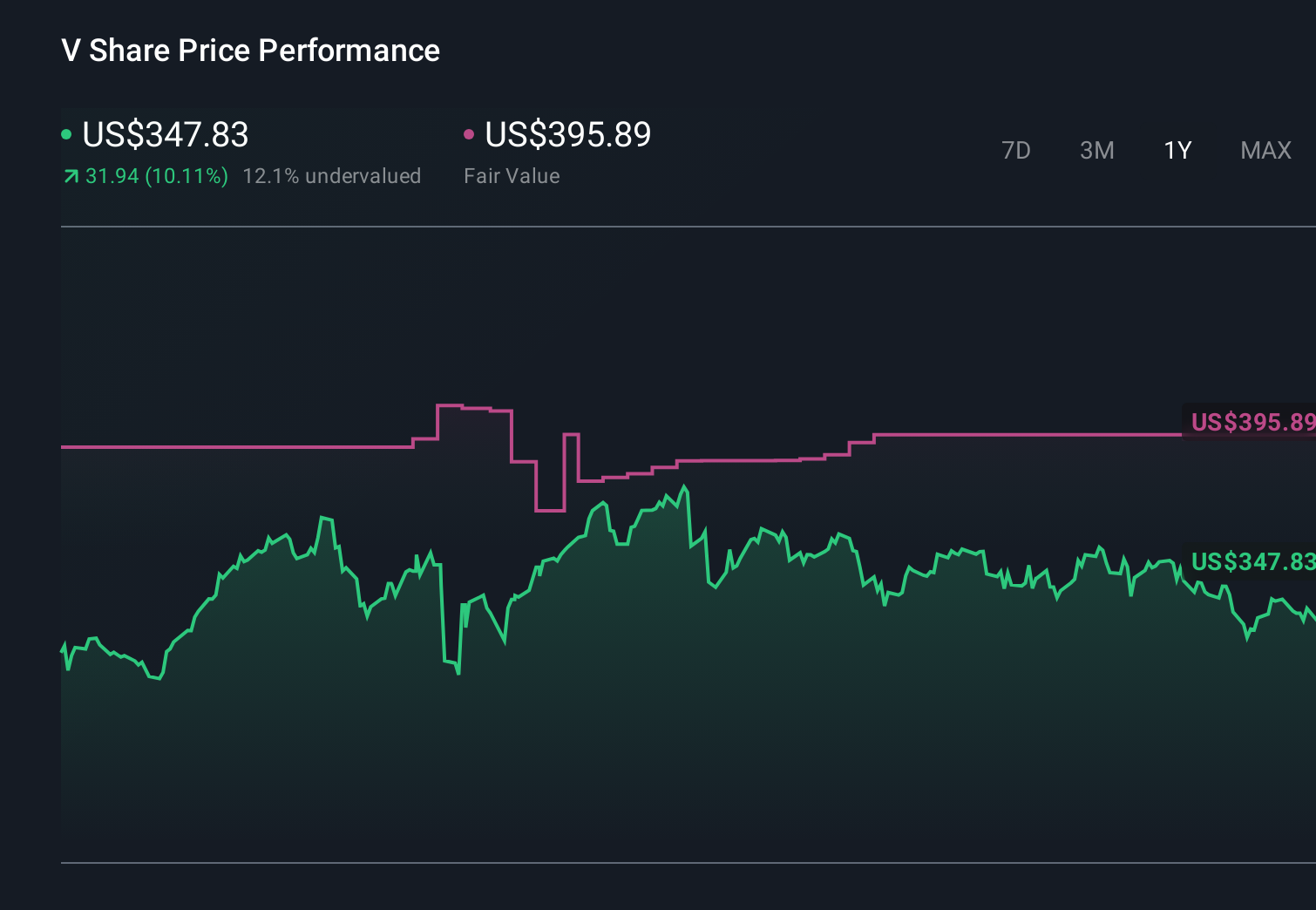
Twenty six Simply Wall St Community fair value estimates for Visa span roughly US$303 to US$463, showing how far apart individual views can be. Against that spread, the key question many are wrestling with is how much value to place on Visa’s push into cross border and stablecoin enabled money movement while regulatory and competitive risks continue to evolve, so it is worth examining several of these perspectives side by side.
Explore 26 other fair value estimates on Visa - why the stock might be worth 18% less than the current price!
Reach Your Own Conclusion
Don't just follow the ticker - dig into the data and build a conviction that's truly your own.
- A great starting point for your Visa research is our analysis highlighting 3 key rewards and 1 important warning sign that could impact your investment decision.
- Our free Visa research report provides a comprehensive fundamental analysis summarized in a single visual - the Snowflake - making it easy to evaluate Visa's overall financial health at a glance.
Want Some Alternatives?
Every day counts. These free picks are already gaining attention. See them before the crowd does:
- Invest in the nuclear renaissance through our list of 92 elite nuclear energy infrastructure plays powering the global AI revolution.
- The future of work is here. Discover the 37 top robotics and automation stocks leading the charge in AI-driven automation and industrial transformation.
- Capitalize on the AI infrastructure supercycle with our selection of the 55 best 'picks and shovels' of the AI gold rush converting record-breaking demand into massive cash flow.
This article by Simply Wall St is general in nature. We provide commentary based on historical data and analyst forecasts only using an unbiased methodology and our articles are not intended to be financial advice. It does not constitute a recommendation to buy or sell any stock, and does not take account of your objectives, or your financial situation. We aim to bring you long-term focused analysis driven by fundamental data. Note that our analysis may not factor in the latest price-sensitive company announcements or qualitative material. Simply Wall St has no position in any stocks mentioned.