

JBS (JBS) Is Down 18.2% After U.S. Beef Margins Squeezed Despite Higher Sales
JBS N.V. Class A JBS | 0.00 |
- In the first quarter of 2026, JBS N.V. reported higher sales of US$21,608.63 million but a sharply lower net income of US$220.59 million, with management pointing to severe cattle shortages, high North American livestock costs and ongoing margin pressure in its key U.S. beef segment.
- At the same time, JBS is moving to enhance its capital markets profile by voluntarily adopting U.S.-style quarterly reporting and investing in new projects such as a R$75 million egg production farm in Brazil, even as labor disputes and political scrutiny around its U.S. operations highlight rising social and regulatory sensitivities.
- We’ll now examine how this earnings squeeze in the U.S. beef business could reshape JBS’s investment narrative and long-term appeal.
The future of work is here. Discover the 32 top robotics and automation stocks leading the charge in AI-driven automation and industrial transformation.
JBS Investment Narrative Recap
To own JBS today, you need to believe its global, multi protein platform can offset a bruising U.S. beef cycle and convert scale into resilient cash generation. The Q1 2026 earnings squeeze and guidance for continued negative U.S. beef margins keep that segment’s profitability as the key short term catalyst and risk, but they do not yet invalidate the broader thesis built around diversification and higher margin prepared foods.
The company’s decision to voluntarily adopt U.S. style quarterly reporting, while keeping IFRS and adding select U.S. GAAP metrics, stands out here. Greater transparency and comparability could matter for index inclusion and liquidity at a time when weak U.S. beef margins, labor disputes and political scrutiny are already in focus for investors weighing JBS’s long term appeal.
Yet behind the scale and diversification story, investors should be aware that prolonged U.S. cattle tightness could...
JBS' narrative projects $92.9 billion revenue and $2.3 billion earnings by 2028. This requires 3.4% yearly revenue growth and a $0.2 billion earnings increase from $2.1 billion.
Uncover how JBS' forecasts yield a $20.04 fair value, a 60% upside to its current price.
Exploring Other Perspectives
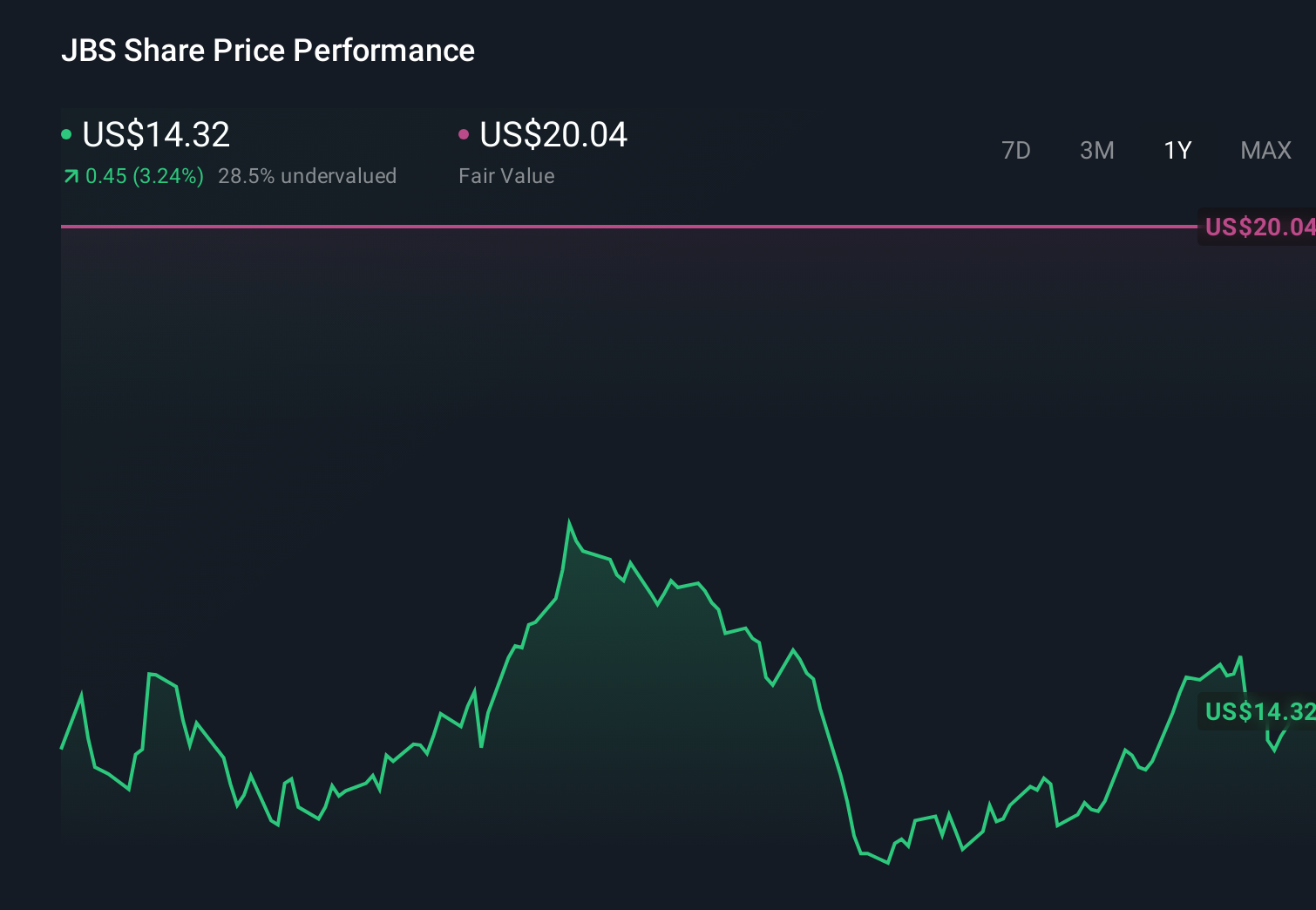
Six fair value estimates from the Simply Wall St Community span roughly US$12.55 to US$155.65 per share, showing just how far apart individual views can be. As you weigh those against the pressure from high North American livestock costs and negative U.S. beef margins, it is worth exploring several of these perspectives to see how others are thinking about JBS’s earnings resilience.
Explore 6 other fair value estimates on JBS - why the stock might be a potential multi-bagger!
The Verdict Is Yours
Disagree with existing narratives? Extraordinary investment returns rarely come from following the herd, so go with your instincts.
- A great starting point for your JBS research is our analysis highlighting 4 key rewards and 2 important warning signs that could impact your investment decision.
- Our free JBS research report provides a comprehensive fundamental analysis summarized in a single visual - the Snowflake - making it easy to evaluate JBS' overall financial health at a glance.
Contemplating Other Strategies?
These stocks are moving-our analysis flagged them today. Act fast before the price catches up:
- Capitalize on the AI infrastructure supercycle with our selection of the 43 best 'picks and shovels' of the AI gold rush converting record-breaking demand into massive cash flow.
- AI is about to change healthcare. These 29 stocks are working on everything from early diagnostics to drug discovery. The best part - they are all under $10b in market cap - there's still time to get in early.
- The best AI stocks today may lie beyond giants like Nvidia and Microsoft. Find the next big opportunity with these 14 smaller AI-focused companies with strong growth potential through early-stage innovation in machine learning, automation, and data intelligence that could fund your retirement.
This article by Simply Wall St is general in nature. We provide commentary based on historical data and analyst forecasts only using an unbiased methodology and our articles are not intended to be financial advice. It does not constitute a recommendation to buy or sell any stock, and does not take account of your objectives, or your financial situation. We aim to bring you long-term focused analysis driven by fundamental data. Note that our analysis may not factor in the latest price-sensitive company announcements or qualitative material. Simply Wall St has no position in any stocks mentioned.