

Kimberly Clark (KMB) Stock Looks Reasonable On Earnings With Strong Cash Flow
Kimberly-Clark Corporation KMB | 0.00 |
Kimberly-Clark stock has fallen 15.9% over the past year, yet an intrinsic value estimate based on a Discounted Cash Flow (DCF) approach points to the shares trading at a sizeable discount to that estimate, while market multiples look roughly in line with peers. That mix, alongside the recent pullback and a value score that is neither clearly cheap nor clearly expensive, raises questions about whether the market is underappreciating the company or correctly pricing its risks.
- The 1 year return is down 15.9%, which suggests investors have grown more cautious even as the broader valuation picture is not extreme.
- Expectations that the Kenvue acquisition can support higher margins and steadier cash flows may help the intrinsic value case, while integration and execution risks around that deal can limit how much investors are willing to pay today.
- The stock scores 4 out of 6 on our broader valuation checks, which is a mixed picture rather than a clear bargain or clear overvaluation, and you can see the breakdown of that score at 4.
For investors, the debate is whether Kimberly-Clark's recent share price weakness and the discount to intrinsic value suggest mispricing, or whether the stock is only fairly valued once deal related risks are fully accounted for.
Does Kimberly-Clark Look Undervalued on Cash Flow?
The Discounted Cash Flow (DCF) model values Kimberly-Clark by projecting its future free cash flows and discounting them back to today. On this view, the company is treated as a mature cash generator rather than a high growth story.
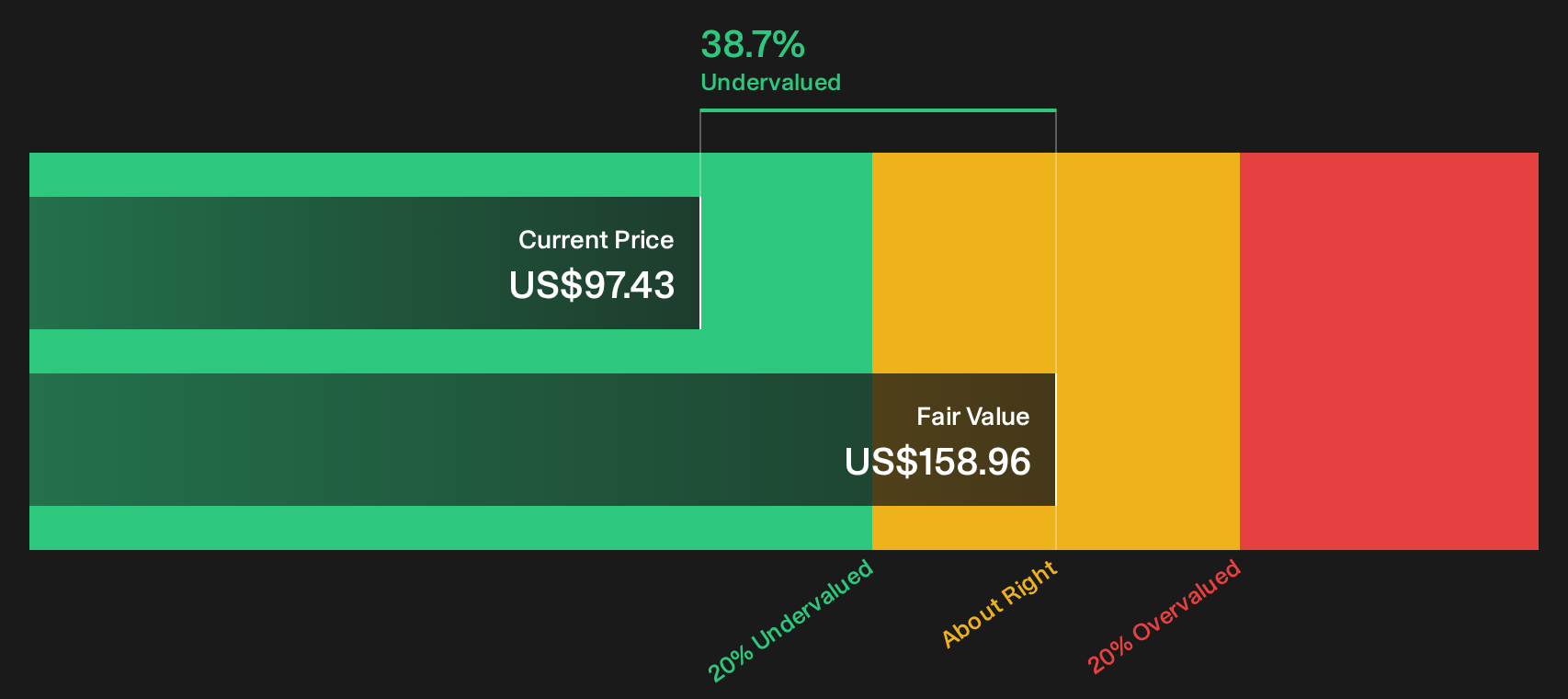
Kimberly-Clark produced around $2.3b of free cash flow over the latest twelve months, and the model assumes broadly steady to modestly growing cash flows over time. That stream of cash is used to arrive at an estimated intrinsic value of about $162 per share, which implies the stock trades at a 33.7% discount and screens as undervalued on this method. Jim Cramer’s recent focus on the Kenvue acquisition as creating a higher margin, defensive cash flow base helps explain why some investors see support for this kind of cash flow profile despite integration risk.
On the DCF numbers alone, Kimberly-Clark stock currently looks undervalued relative to the cash flows analysts expect it to produce.
Our Discounted Cash Flow (DCF) analysis suggests Kimberly-Clark is undervalued by 33.7%. Track this in your watchlist or portfolio, or discover 53 more high quality undervalued stocks.
Where Does Kimberly-Clark Sit on Earnings?
P/E is a useful cross check for Kimberly-Clark because earnings remain a core yardstick for mature consumer staples businesses. On this measure, Kimberly-Clark trades at about 20.7x earnings, which sits above the Household Products industry average of 16.5x. It is, however, below the peer group average of 24.5x, so the stock does not sit at the very top of the sector range.
A fair P/E multiple based on Kimberly-Clark's business profile is estimated at about 22.3x. That is only modestly higher than the current 20.7x. This points to the market assigning a valuation that is close to what this framework suggests, rather than a clear discount or premium. For investors weighing the DCF signal against market-based checks, the P/E suggests Kimberly-Clark is priced within a reasonable band for its sector and risk profile.
On the P/E comparison, Kimberly-Clark stock looks roughly fairly valued rather than distinctly cheap or expensive.

The Kimberly-Clark Narrative: What Would Justify Today's Price?
Simply Wall St Narratives for Kimberly-Clark aim to close the gap between the mixed signals from the DCF and P/E work above and the assumptions about growth, margins and earnings that would need to hold for the stock to be worth materially more or materially less than today’s price, and they sit on the company’s Community page. Where a single valuation ratio or model gives you one number, these Narratives outline the future that number depends on so you can watch how Kimberly-Clark's actual progress compares over time.
Community views on Kimberly-Clark sit far apart, with one side focused on long term margin upside and the other on Kenvue integration risk holding the stock back.
Bull case: 8% undervalued
"Strong brand equity and innovation pipeline position Kimberly-Clark to defend and grow share amid intensifying industry competition and shifting consumer preferences, reinforcing resilience in core categories, supporting pricing power, and driving sustainable EPS growth..."
Bear case: 20% overvalued
"Intensifying competition from private label and low-cost imports in core diaper markets could cap pricing power and limit revenue growth as consumers remain value focused..."
Do you think there's more to the story for Kimberly-Clark? Head over to our Community to see what others are saying!
The Bottom Line
Kimberly-Clark screens as undervalued on a Discounted Cash Flow (DCF) view, while the P/E comparison says the market price is about right for its peer group. That split reflects a DCF that leans on the durability of cash flows and a multiples view that leans on how investors are pricing growth, sentiment and sector risk today. With broader valuation checks landing in a mixed zone, the key question is whether the current discount to intrinsic value compensates you for Kenvue integration and execution risk, or whether that gap simply reflects the market already pricing those uncertainties in.
This article by Simply Wall St is general in nature. We provide commentary based on historical data and analyst forecasts only using an unbiased methodology and our articles are not intended to be financial advice. It does not constitute a recommendation to buy or sell any stock, and does not take account of your objectives, or your financial situation. We aim to bring you long-term focused analysis driven by fundamental data. Note that our analysis may not factor in the latest price-sensitive company announcements or qualitative material. Simply Wall St has no position in any stocks mentioned.