
Lam Research Sits At Heart Of AI Chip And CHIPS Act Cycle
Lam Research Corporation LRCX | 218.44 | -1.61% |
- Lam Research (NasdaqGS:LRCX) is drawing fresh attention as AI driven demand for advanced chips reshapes the semiconductor equipment market.
- The company is integrating AI capabilities into its manufacturing tools while focusing on High Bandwidth Memory and Gate All Around technologies.
- Recent U.S. policy support, including the CHIPS Act, is adding momentum to interest around Lam Research's role in next generation chip production.
Lam Research sits at a critical junction of chip production, supplying equipment that helps manufacturers produce advanced devices used in AI infrastructure and high performance memory. For investors, the current spotlight on AI data centers, High Bandwidth Memory and the shift toward more complex architectures puts a company like Lam Research at the center of key industry conversations.
With the CHIPS Act supporting domestic semiconductor investment and the industry working toward 2nm production nodes, attention is turning to which equipment providers are aligned with these priorities. As you look at NasdaqGS:LRCX, the themes of AI integration, advanced memory requirements and new transistor designs form the backdrop for how the company may fit into a broader semiconductor allocation.
Stay updated on the most important news stories for Lam Research by adding it to your watchlist or portfolio. Alternatively, explore our Community to discover new perspectives on Lam Research.
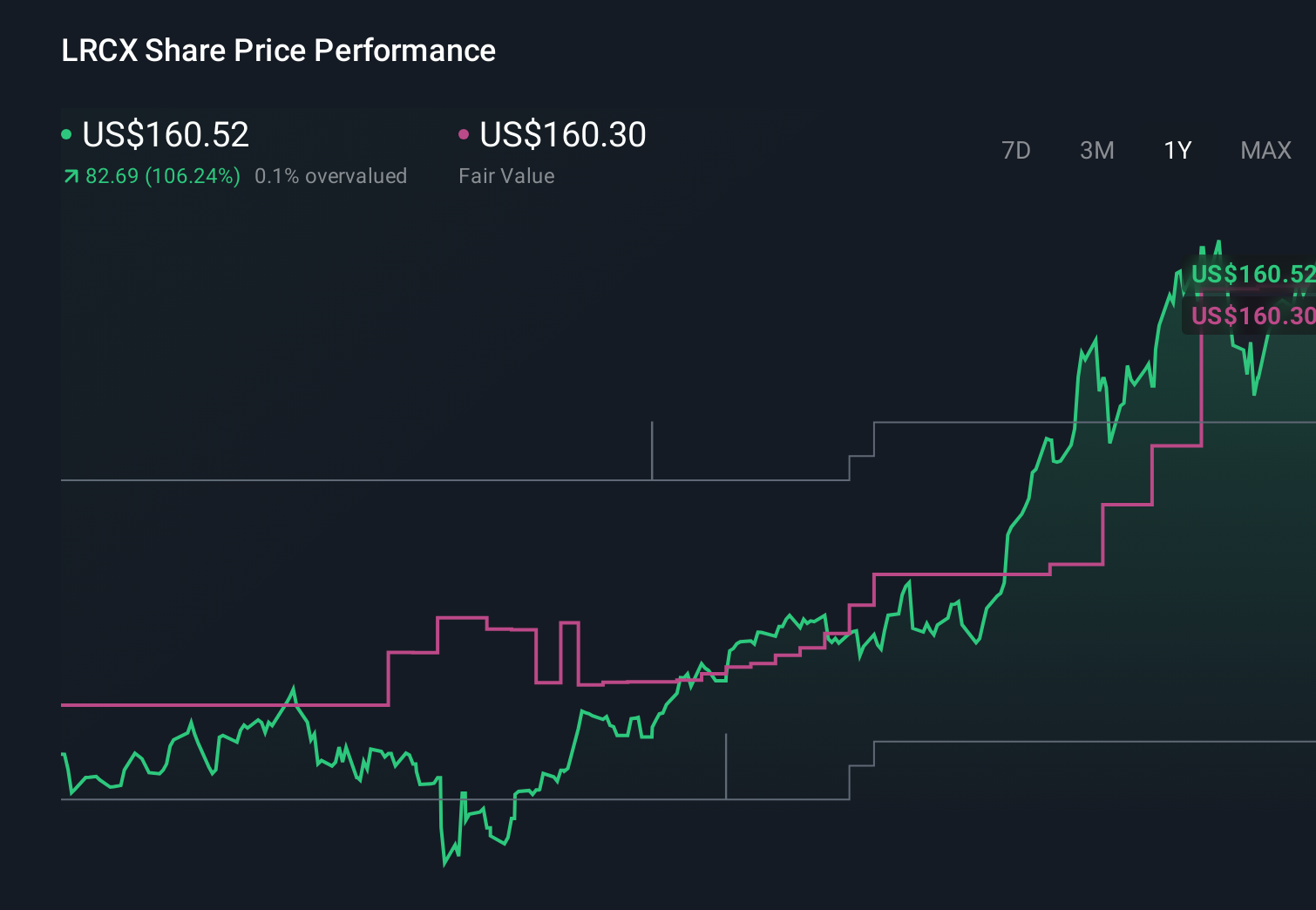
For Lam Research, the AI driven equipment cycle and focus on High Bandwidth Memory and Gate All Around tools are front and center in current investor activity, with recent reports pointing to strong demand for its gear and a stock move of more than 25% linked to the wider AI trade. At the same time, the CHIPS Act and the push toward 2nm nodes keep Lam closely tied to policy headlines and capex decisions at major manufacturers, which can influence how concentrated or diversified your semiconductor exposure feels.
Lam Research narrative, where the AI supercycle story meets expectations
Recent commentary placing Lam at the center of an AI related semiconductor supercycle, together with references to earnings beats and AI integration in its tools, reinforces the idea that some investors see the stock as a direct way to express views on AI infrastructure and advanced memory spending. However, there are also voices suggesting the equipment group may be late in the current cycle, which introduces a different storyline where Lam shifts from being a high conviction AI beneficiary to a more mature, later cycle play within portfolios.
Risks and rewards investors are weighing right now
- 🎁 Earnings have been described as growing, with past year profit growth and forecasts for further increases, which supports the thesis that AI and memory demand are feeding into Lam's fundamentals.
- 🎁 Policy support like the CHIPS Act and the ongoing transition to 2nm nodes keep Lam closely aligned to areas where chipmakers are directing significant capital spending.
- ⚠️ Bank of America has suggested equipment makers such as Lam may have peaked for this cycle, raising the risk of profit taking if sentiment turns away from tools toward AI chip designers.
- ⚠️ One identified risk is recent insider selling over the past 3 months, which some investors treat as a caution signal when enthusiasm around a theme like AI is already elevated.
What to watch next
Looking ahead, investors are likely to focus on Lam's upcoming earnings, commentary on AI related orders, and any change in tone from management or policymakers that could shift capex plans, while also watching how sector calls from large banks influence flows between equipment makers and AI chip designers. You can stay close to how other investors are framing these moving pieces by reading and contributing to community narratives at this dedicated hub, which can help you sense when the story around Lam Research starts to change.
This article by Simply Wall St is general in nature. We provide commentary based on historical data and analyst forecasts only using an unbiased methodology and our articles are not intended to be financial advice. It does not constitute a recommendation to buy or sell any stock, and does not take account of your objectives, or your financial situation. We aim to bring you long-term focused analysis driven by fundamental data. Note that our analysis may not factor in the latest price-sensitive company announcements or qualitative material. Simply Wall St has no position in any stocks mentioned.