
Market Sell-Off Sparks Debate: When is the Right Time to Bet on a Rebound?
ETF-S&P 500 SPY | 655.83 | +0.09% |
PowerShares QQQ Trust,Series 1 QQQ | 584.98 | +0.11% |
ETF-Dow Jones Industrial Average DIA | 465.06 | -0.09% |
S&P 500 index SPX | 6582.69 | +0.11% |
NASDAQ IXIC | 21879.18 | +0.18% |
Introduction
The recent sharp downturn in the US stock market, triggered by unexpected tariff announcements, has left investors grappling with intense volatility and a critical question: Is now the time to buy the dip, or is more pain ahead?
While historical data and some technical signals suggest potential for short-term relief, analysts caution that a sustained recovery hinges on fundamental policy shifts and clearer economic skies.
The Trigger: A Policy Shock, Not a Systemic Breakdown
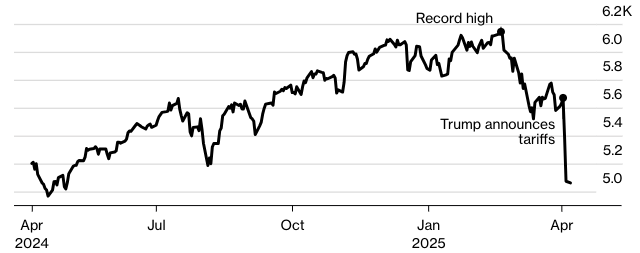
Market analysts emphasize a crucial distinction regarding this sell-off. "It is worth remembering that this market shock happened as the result of a surprising change in policy – not a fundamental breakdown in a key sector, such as housing in 2008 or tech in 2000," notes Carol Schleif at BMO Private Wealth.
This perspective suggests the market's foundation may be more resilient than during past crises, though the immediate impact of the tariff uncertainty is severe, wiping $10 trillion off global equities recently.
USA President Donald Trump has indicated openness to negotiation, with USA Treasury Secretary Scott Bessent noting approaches from nearly 70 countries, but has simultaneously rejected an EU proposal and threatened further tariffs on China, keeping markets on edge.
Volatility Spikes: Reading the 'Fear Gauge'
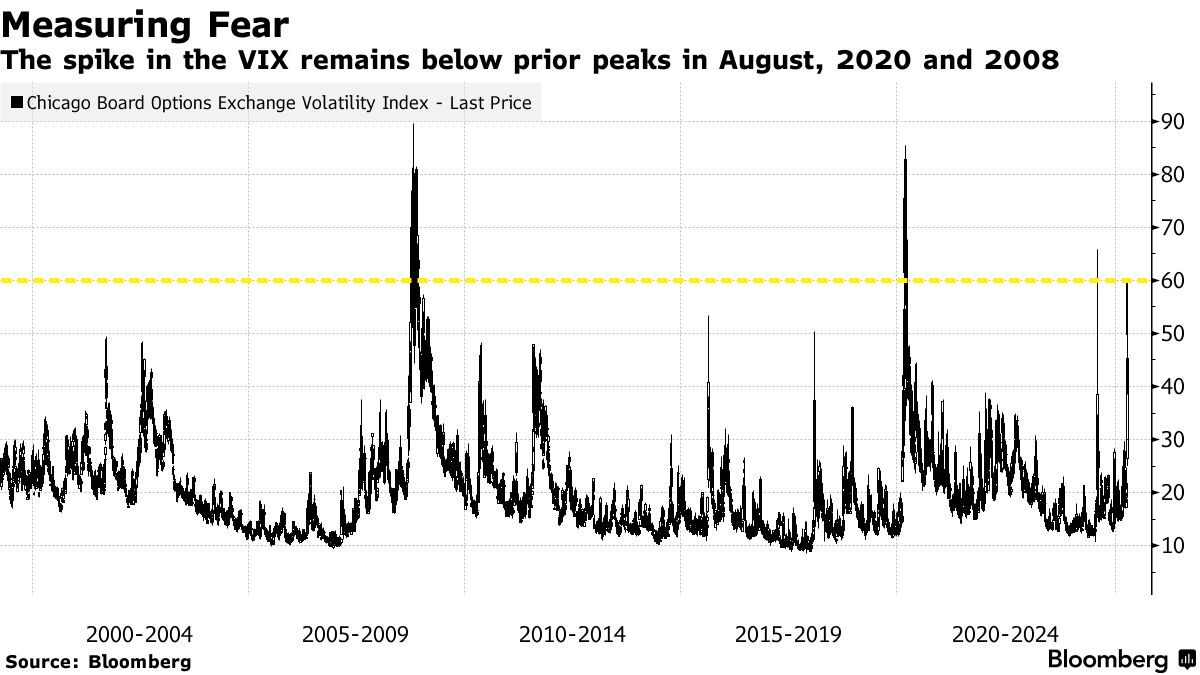
The market's anxiety is vividly reflected in the CBOE Volatility Index (VIX), often called the "Fear Index." Last Friday (April 4th), the VIX surged past 45, a level breached on only 1.74% of trading days since 2000, and briefly hit 60 on Monday (April 7th).
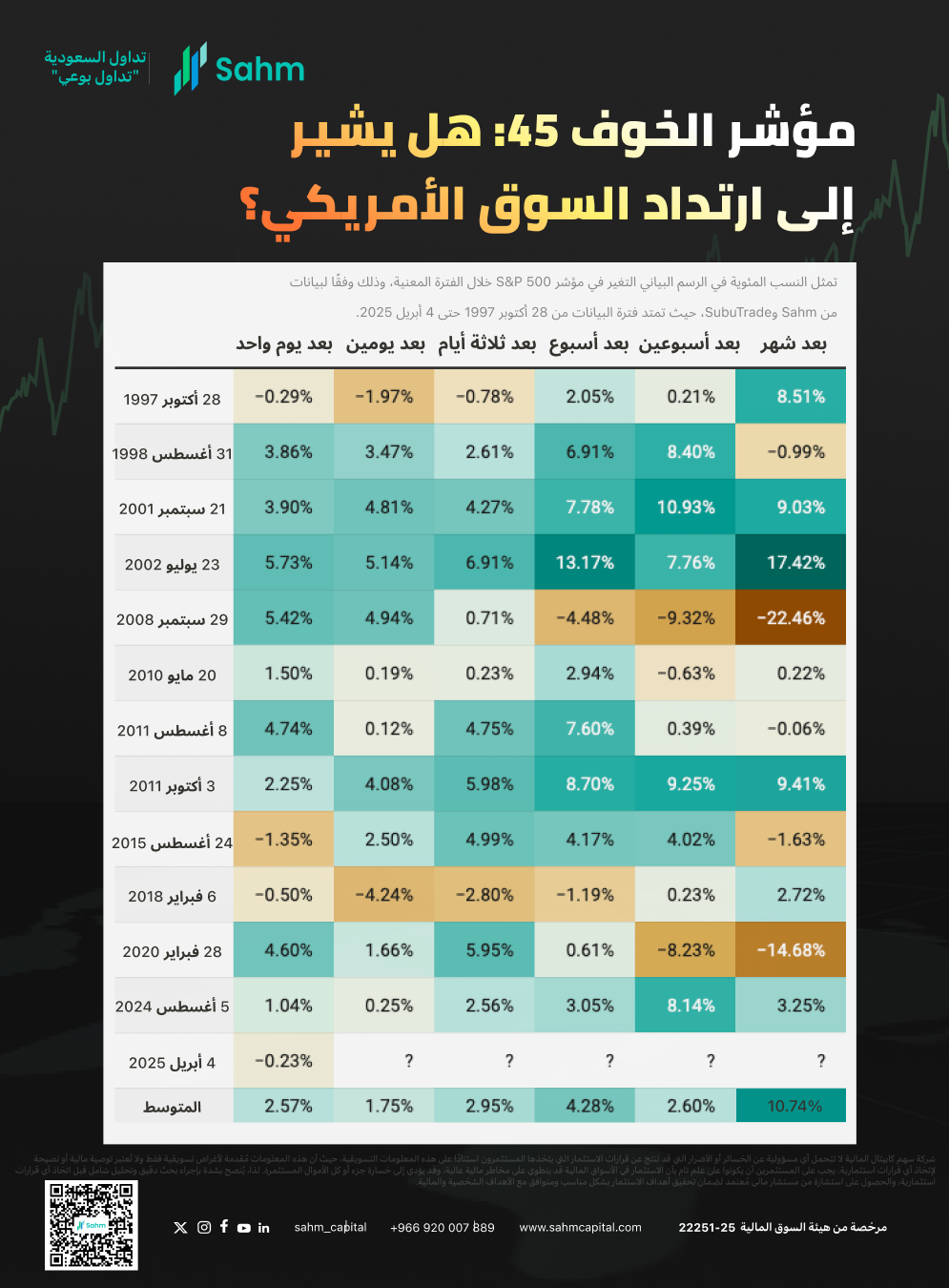
We've compiled historical data since 1997 shows that when the VIX first hits 45 in a month, the S&P 500 index(SPX.US) often experiences a short-term rebound opportunity as extreme panic subsides.
"Many metrics are at panic levels associated with meaningful bottoms over the past 40 years," observes Jonathan Krinsky at BTIG.
However, he cautions, "when you get into the capitulation zone, markets often move beyond what many think is likely or possible."
Indeed, the historical data also reveals that in severe instances like 2008 or 2020, short-term bounces were followed by larger declines.
Current VIX levels, while high, haven't yet reached the peaks seen in the 2008 crisis (near 90) or the 2020 pandemic sell-off (85).
Potential for a Near-Term Bounce?
Some technical factors and analyst views hint at the possibility of temporary relief. Michael Brown at Pepperstone Group noted the setup for a "'Turnaround Tuesday' [April 8th] as calmer heads tend to prevail, and dip buyers emerge."
HSBC strategist Max Kettner also makes the case for a "very short-term bounce," potentially favouring mega-cap tech stocks.
Matt Maley at Miller Tabak concurs that "we should see a strong bounce at some point soon."
This aligns with the historical VIX pattern suggesting that extreme fear can create tactical, short-term buying opportunities for investors willing to navigate the volatility. Below are related Hedging Tools for "Offense and Defense" Strategy.
Caution Advised: Durable Recovery Needs More
Despite potential short-term opportunities, the overwhelming consensus among analysts is that a sustained market rebound requires more than just oversold conditions.
- Policy Clarity is Key: "It will be tough for markets to move upward until policy relief is clearer," states BMO's Schleif. Michael Brown echoes this: "I wouldn’t exactly be betting the house on a durable bounce, though, unless and until we get a decisive policy pivot." Market direction remains highly sensitive to the "tariff news cycle," according to Larry Tentarelli at the Blue Chip Daily Trend Report.
- Fundamental Conditions: Richard Saperstein at Treasury Partners argues that markets won't truly rebound "until tariffs are negotiated and reduced, until valuations move even lower to very compelling levels, and until fundamentals improve, and none of these factors are in the cards at this time." Morgan Stanley’s Michael Wilson warns the S&P 500 could drop further if tariff angst doesn't subside.
- Economic Concerns & Bear Market Risks: Reflecting growing concerns, Wall Street strategists (JPMorgan, Oppenheimer, Goldman Sachs, etc.) are slashing S&P 500 targets. Goldman Sachs strategists, while currently viewing this as an "event-driven bear market" (typically shorter with faster recovery), warn it could morph into a longer-lasting "cyclical bear market" if recession risks mount, potentially taking years to fully recover. BlackRock recently downgraded USA equities to neutral on a short-term horizon, citing the trade tensions and advising a move into safer short-term Treasuries. Titans like Bill Ackman ("economic nuclear winter") and Jamie Dimon ("may be disastrous") have sounded significant alarms.
Investor Positioning and Outlook
While hedge funds reportedly increased short positions significantly ("smart money" hedging), data suggests the retail crowd hasn't sold meaningfully yet, posing a potential risk of further selling pressure.
For now, caution prevails. Larry Tentarelli advises investors to "maintain defensive positioning, above average cash levels, and reduced if any new buying until volatility comes down."
Conclusion: Navigating the Uncertainty
The current market environment presents a complex picture. While extreme fear, reflected in the VIX spike, has historically created short-term rebound opportunities, the path to a durable recovery appears blocked by significant policy uncertainty and potential economic headwinds from the tariff conflict.
Investors eyeing a rebound must weigh the allure of potentially lower prices against the clear warnings from analysts that a true market bottom likely requires concrete progress on trade negotiations and signs of economic stabilization.
As Bespoke Investment Group aptly put it, predicting the exact bottom is guesswork; navigating the current volatility requires careful risk assessment and a close eye on policy developments.