
Market Sentiment Indices Wrap-Up - Jan. 1st, 2026
S&P 500 index SPX | 6582.69 | +0.11% |
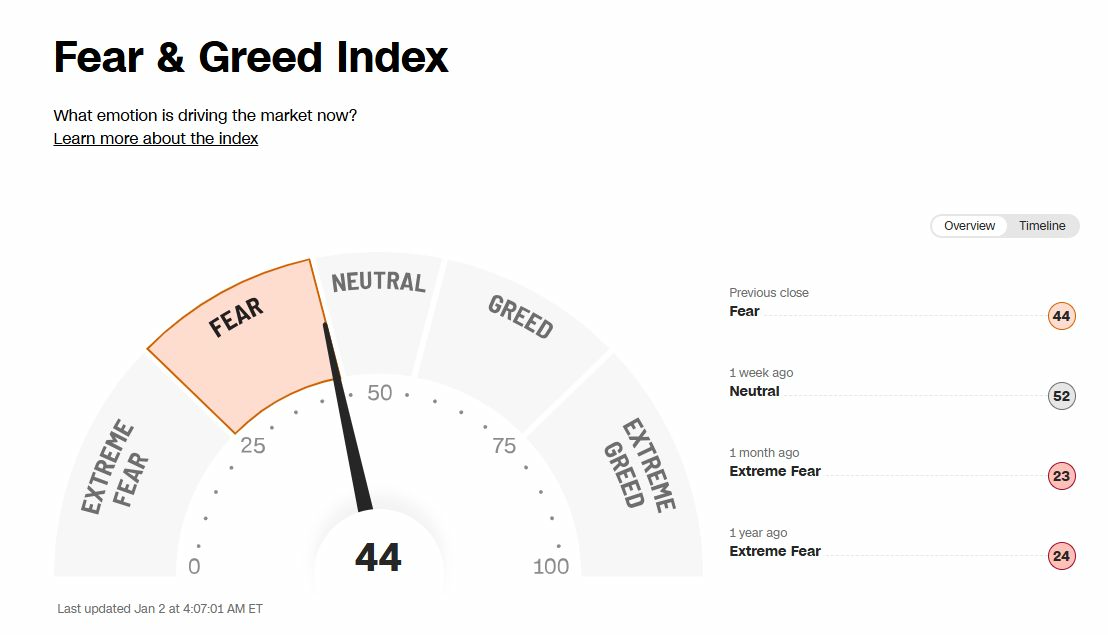
The main "Fear & Greed Index" sits at 44, squarely in the "Fear" zone. This is a shift from just a week ago (52, "Neutral") and suggests a cautious start to the new year, even though we just finished a strong 2025.
First, the FEAR signals are loud and clear.
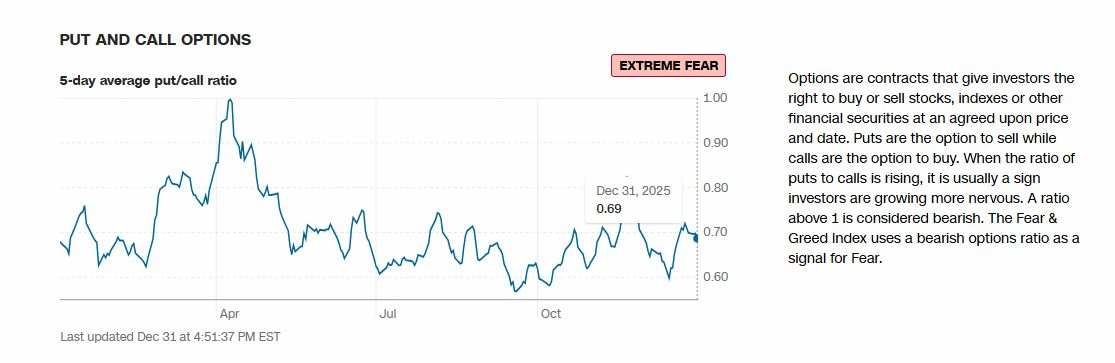
Options Market (Extreme Fear): This caution is clear in a few areas. The "Put/Call Options" reading screams "Extreme Fear." The put/call ratio is at 0.69, meaning investors are buying a lot of puts for protection. They're hedging, preparing for a potential drop.
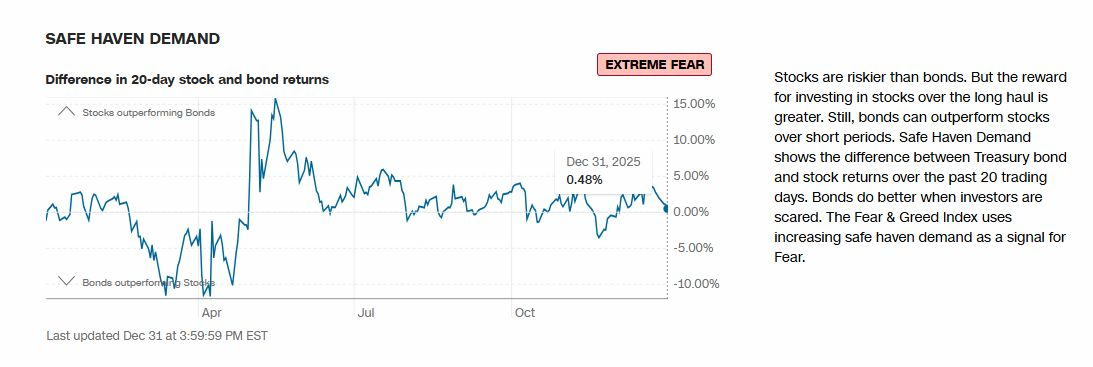
Safe Haven Demand (Fear): The 0.48% difference between stock and bond returns over 20 days is tiny. This means investors aren't strongly choosing risky stocks over safer bonds. Money is sitting on the fence between these two big asset classes, showing a lack of conviction.
But at the same time, there's a huge signal of GREED.
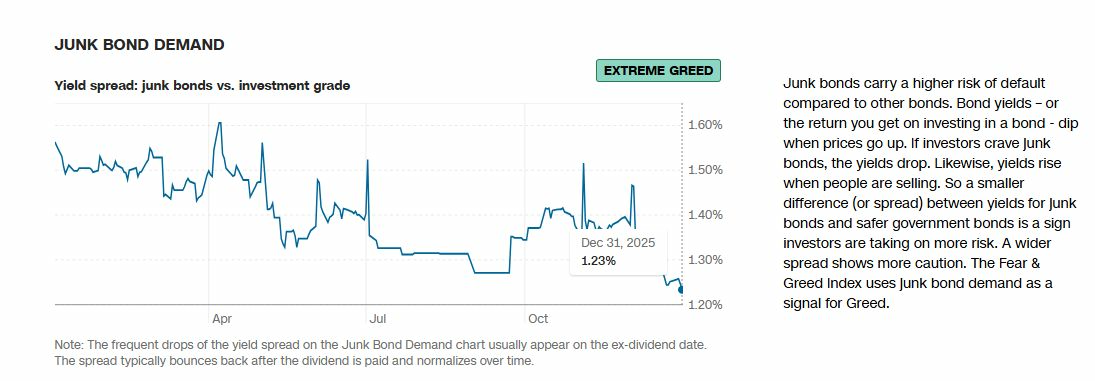
Junk Bond Demand (Extreme Greed): This is the standout. The yield spread between risky junk bonds and safer bonds is only 1.23%, a very low number. When this spread is low, it means investors are so eager to buy risky junk bonds that they're accepting very little extra reward for the risk. Big money is rushing into the riskiest part of the bond market.
What about stocks themselves?
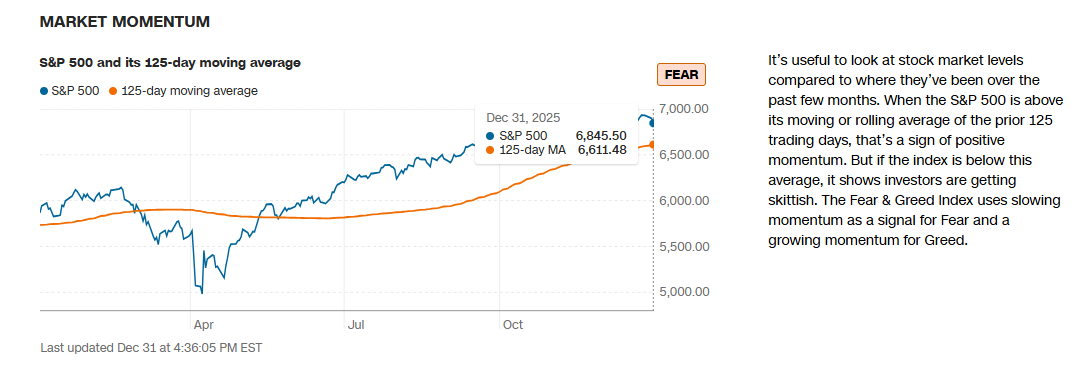
Market Momentum: The S&P 500 is above its 125-day average, which is technically a positive sign. But the index labels this "Fear." This might mean the rally is narrow.
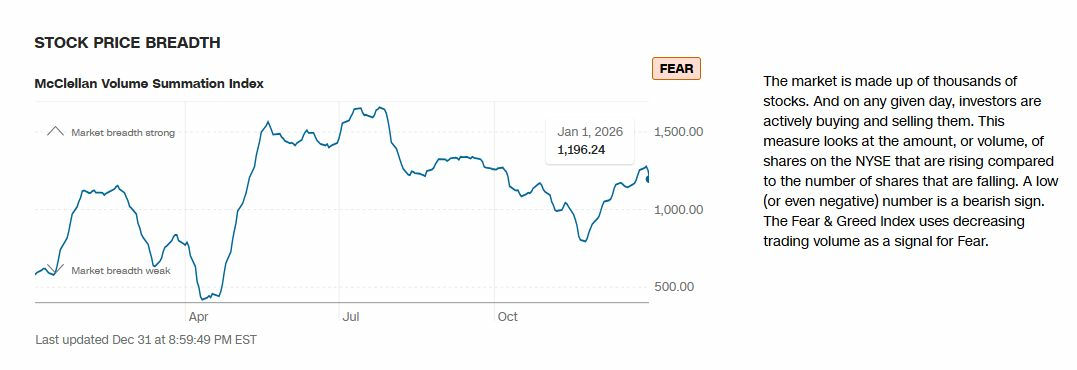
Stock Price Breadth (Fear): The "Stock Price Breadth" indicator also shows "Fear." The McClellan Volume Summation Index, while positive, is below a key level. This tells us the recent market moves might lack broad, strong volume support—it feels a bit fragile.
So, what's the story? We have a split personality.
On one hand, equity investors are nervous, buying insurance (puts) and showing weak volume breadth. On the other hand, other investors are aggressively chasing yield in the riskier parts of the bond market. This conflict explains the overall "Fear" reading—it's an average of very different emotions.
Recent fund flow data adds clarity. In the final week of 2025, money flowed into stocks, especially in the U.S., and into sectors like Financials, Real Estate, and Industrials. But money flowed out of Healthcare stocks. At the same time, money rushed into gold and precious metals for an 8th straight week—a classic safe-haven move. Bond funds saw slight outflows overall, but within that, money went into corporate and European bonds.
So, where is the money going? It's flowing in several directions at once:
- A Mixed Picture in Bonds: While overall bond flows are soft, there's selective interest in corporate and certain government bonds, showing a search for safer income, but not a full-scale panic into top-quality government debt.
- To Hedges: Money is paying for portfolio insurance (via put options) and flowing into physical assets like gold.
- To High-Yield Credit: The "Extreme Greed" in junk bonds shows a big hunt for yield, pulling money into riskier corporate debt.
- Within Stocks: Toward cyclical sectors (Financials, Industrials) and real estate, but away from defensive ones like Healthcare.
In short: The market is in a tug-of-war. One side is aggressively chasing risk in corporate bonds. The other is nervously buying insurance for their stock portfolios. The equity rally itself looks fragile, supported by a narrow set of leaders. This isn't a market with a unified vision; it's a market where different types of investors are placing very different bets based on their own nerves and goals.
Read more:
- Stocks make upbeat start to 2026; precious metals extend sparkling rally
- Global equity funds see strong inflows in final week of 2025
- Take Five: New Year, same FOMO
- AI spending, strong corporate profits, Fed rate cuts seen as key to 2026 US stock market
- Wall Street ends year's final session lower but ends 2025 with big annual gains