
Mid-America Apartment Communities Settlement Puts Revenue Software Practices In Focus
Mid-America Apartment Communities, Inc. MAA | 124.88 | +1.90% |
- Mid-America Apartment Communities (NYSE: MAA) has agreed to a $53 million settlement to resolve a class action lawsuit related to its business practices.
- The agreement, which includes both financial and operational commitments, remains subject to court approval.
- The settlement covers MAA's use of revenue management software and may change if class member opt outs reach a high level.
MAA is a large owner and operator of multifamily rental properties, so legal outcomes tied to its leasing and pricing practices can matter for how it runs its core business. For readers following apartment real estate investment trusts, the case fits into a broader conversation around how landlords use software and data in setting rents and managing occupancy.
Looking ahead, the key issues to watch are whether the court approves the settlement as proposed and how any required operational changes affect MAA's use of revenue management tools. The final structure of the settlement, including any adjustments driven by class member participation, could shape future legal and compliance considerations for the company.
Stay updated on the most important news stories for Mid-America Apartment Communities by adding it to your watchlist or portfolio. Alternatively, explore our Community to discover new perspectives on Mid-America Apartment Communities.
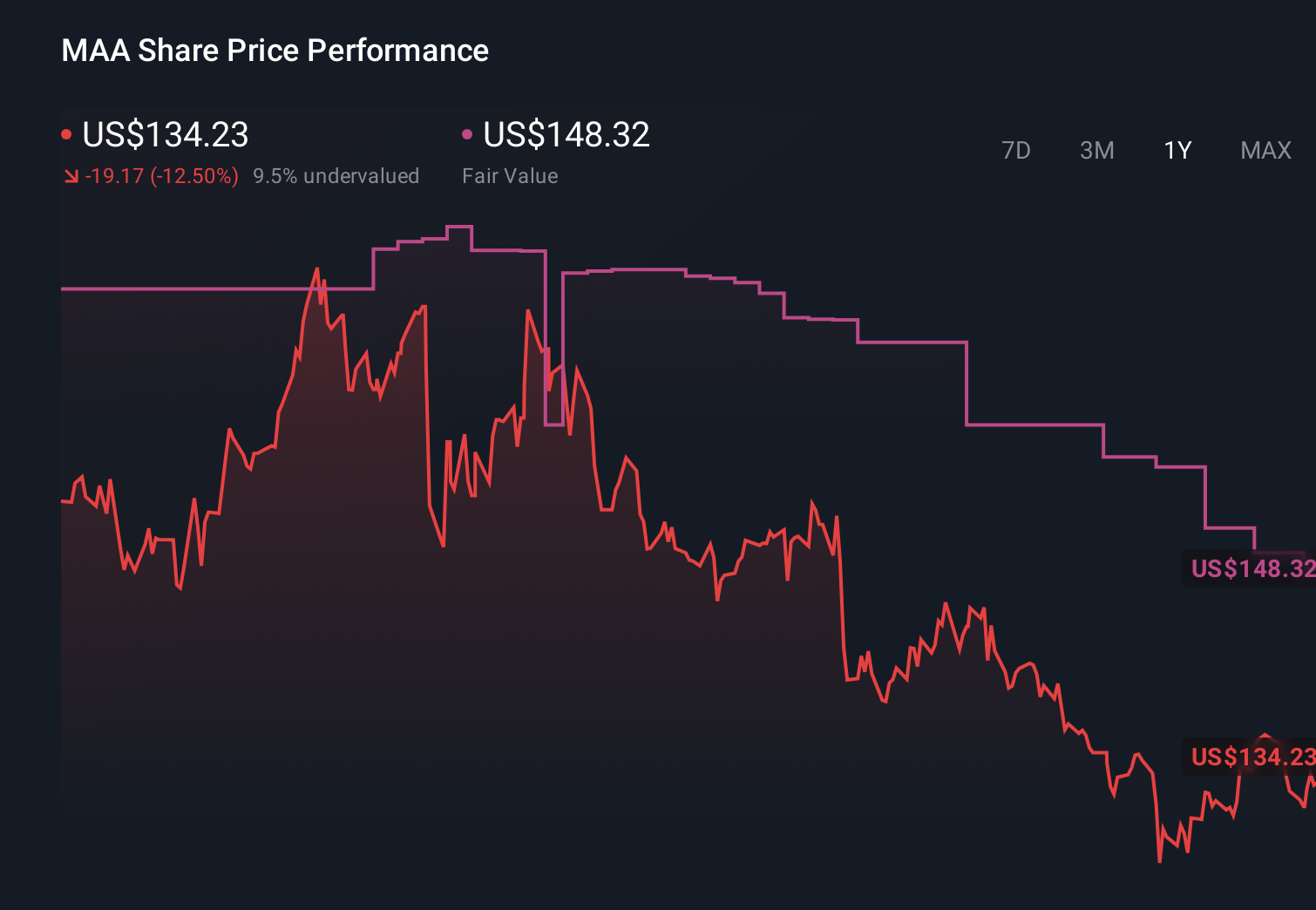
The proposed US$53m settlement is relatively small compared with Mid-America Apartment Communities' recent full year sales of about US$2.2b, but it still matters because it involves how the company uses revenue management software and nonpublic data in its leasing business. For a large multifamily REIT competing with peers like Equity Residential and AvalonBay Communities, any court approved changes to pricing practices could influence how it sets rents, manages occupancy and communicates with tenants.
How this fits the Mid-America Apartment Communities narrative
The class action settlement sits alongside an earnings picture where full year net income and earnings per share from continuing operations were lower than a year earlier, even as funds from operations for the latest quarter slightly topped analyst expectations. For investors following the existing narrative around Sunbelt demand, supply pressures and a steady dividend approach, this development adds a legal and compliance layer to an already detailed story about operations and capital allocation.
Key risks and rewards to keep in mind
- ⚠️ The agreement is subject to court approval and could be revised or terminated if too many class members opt out, which keeps legal uncertainty on the table.
- ⚠️ Any future legal or regulatory scrutiny of rent setting tools across the sector could affect pricing flexibility for MAA and competitors.
- 🎁 Management states that the operational commitments are consistent with current practices, which may limit disruption to day to day operations if the settlement is approved.
- 🎁 Resolving the case could reduce overhang from ongoing litigation and allow more focus on core metrics such as funds from operations and portfolio performance.
What to watch next
From here, the key checkpoints are filing for preliminary court approval, the level of class member participation and any court required changes to how MAA uses revenue management tools compared with other apartment REITs. If you want a fuller picture of how this legal update fits into the longer term story, take a look at the community narratives for MAA on the company's dedicated page.
This article by Simply Wall St is general in nature. We provide commentary based on historical data and analyst forecasts only using an unbiased methodology and our articles are not intended to be financial advice. It does not constitute a recommendation to buy or sell any stock, and does not take account of your objectives, or your financial situation. We aim to bring you long-term focused analysis driven by fundamental data. Note that our analysis may not factor in the latest price-sensitive company announcements or qualitative material. Simply Wall St has no position in any stocks mentioned.