
Navient Buybacks And 2025 Loss Put Capital Return Choices In Focus
Navient Corp NAVI | 8.30 | +0.12% |
- Navient (NasdaqGS:NAVI) has completed large share repurchase programs that together cover more than half of its shares since 2021.
- The company recently reported a full year net loss for 2025, compared with net income in the prior year.
- These updates involve both capital returns to shareholders and a shift in annual profitability.
Navient focuses on education loan management and business processing services, so its results often reflect trends in student lending, credit quality and servicing contracts. For you as a shareholder or potential investor, the combination of heavy buybacks and a move from net income to a net loss ties directly to how the business is being run and how cash is being used.
Looking ahead, the key questions are how Navient balances further capital returns with the health of its core operations and balance sheet. As more details emerge around 2025 earnings drivers and any updates to capital plans, you can reassess whether the company’s current approach lines up with your risk tolerance and income or growth goals.
Stay updated on the most important news stories for Navient by adding it to your watchlist or portfolio. Alternatively, explore our Community to discover new perspectives on Navient.
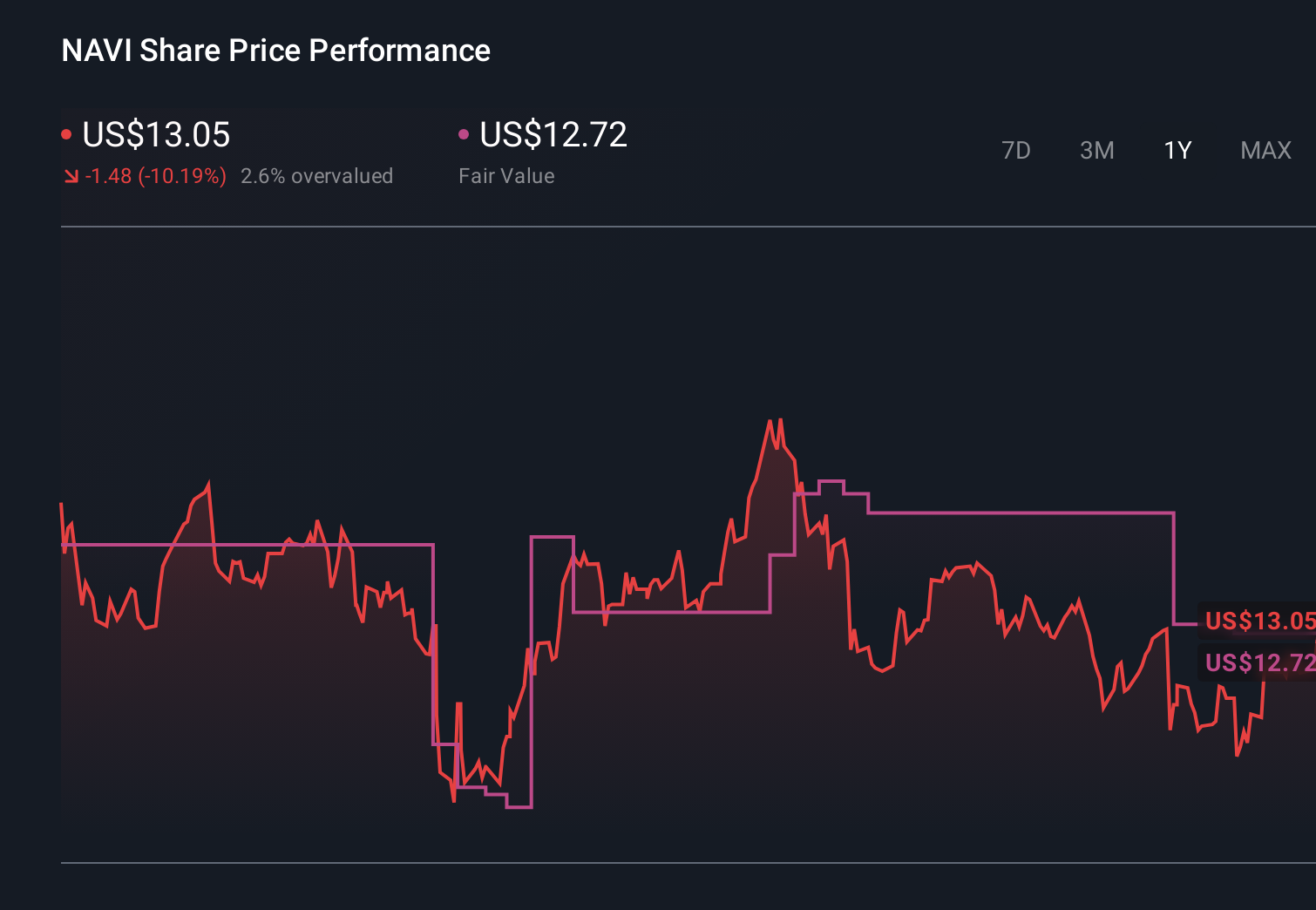
The update combines two strong signals for shareholders: Navient has now retired about 50.39% of its share count since 2021 for a total of US$1.0b, while reporting a full year 2025 net loss of US$80 million, or US$0.81 loss per share from continuing operations. That scale of buyback shrinks the equity base and can magnify future per share results, but set against a swing from US$131 million in net income a year ago to a loss, it also raises questions about how much flexibility Navient has to keep returning cash if credit costs or funding needs stay elevated.
How this fits into the Navient narrative
These results sit squarely in the existing narrative around Navient, where earlier 2025 losses were linked to higher provisions for loan losses and credit stress in older student loan books rather than a lack of loan demand. The fresh US$21.18 million and US$4.82 million buyback tranches show management still leaning into capital returns even as analysts looking at Navient and peers like Sallie Mae, Discover Financial Services and Synchrony Financial weigh the trade off between supporting the share price and keeping balance sheets resilient against further credit pressure.
Risks and rewards on investor activity
- ⚠️ A full year net loss and prior commentary about credit stress underline that earnings quality is sensitive to provisions and delinquency trends in legacy loan portfolios.
- ⚠️ Analysts have flagged 2 key risks overall, including concerns that debt is not well covered by operating cash flow and that the dividend is not fully covered by earnings.
- 🎁 On the reward side, forecasts point to earnings growth that is described as very large, which could make the 50% reduction in share count more meaningful if those profits materialize.
- 🎁 The completion of US$1.0b in buybacks signals management confidence in equity value and can concentrate future upside for remaining shareholders if profitability stabilizes.
What to watch next
From here, you may want to focus on upcoming earnings calls and disclosures around credit quality, funding costs and any changes to the new US$100 million repurchase authorization, as these will show whether management still prioritizes buybacks over further de-risking. For a fuller picture of how other investors and analysts are thinking about these trade offs, check out community narratives on the company through the Navient discussion and narrative page.
This article by Simply Wall St is general in nature. We provide commentary based on historical data and analyst forecasts only using an unbiased methodology and our articles are not intended to be financial advice. It does not constitute a recommendation to buy or sell any stock, and does not take account of your objectives, or your financial situation. We aim to bring you long-term focused analysis driven by fundamental data. Note that our analysis may not factor in the latest price-sensitive company announcements or qualitative material. Simply Wall St has no position in any stocks mentioned.