
Old Republic Buyback Reshapes Capital Returns And Earnings Per Share
Old Republic International Corporation ORI | 40.39 | +1.97% |
- Old Republic International (NYSE:ORI) has completed a substantial share repurchase program.
- Since March 2024, the company has retired over 11% of its outstanding shares.
- The buyback reflects a material capital allocation decision that directly affects existing shareholders.
Old Republic International focuses on insurance products and related services, a space that often sees companies return capital through dividends and buybacks. With more than 11% of its share count retired since March 2024, NYSE:ORI has reshaped its capital structure in a way that existing investors may monitor closely. This move sits alongside broader sector discussions about capital strength, underwriting discipline, and shareholder returns.
For investors, the completed buyback raises questions about how NYSE:ORI intends to balance future capital returns with growth and risk management. The reduced share base may change per share metrics over time, so tracking earnings quality, reserve practices, and any updates to dividend policy could be useful next steps when evaluating the company.
Stay updated on the most important news stories for Old Republic International by adding it to your watchlist or portfolio. Alternatively, explore our Community to discover new perspectives on Old Republic International.
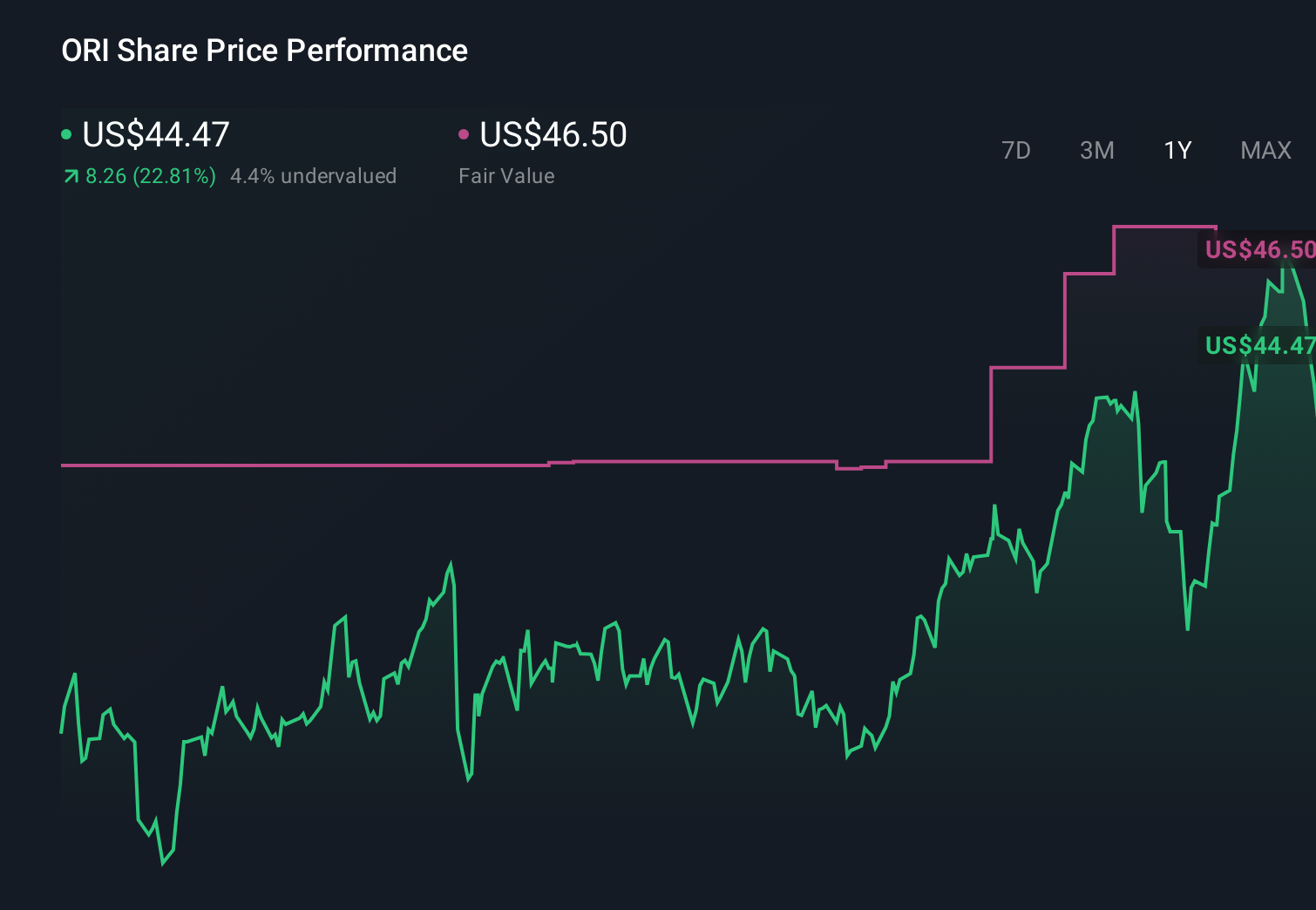
For you as a shareholder, the key takeaway is that Old Republic International has paired a completed buyback of 30,229,925 shares, or 11.47% of its share count, with what the company reports as solid 2025 results, including net income of US$935.4 million and basic EPS from continuing operations of US$3.82. Retiring that many shares concentrates future earnings and dividends over a smaller base, so the EPS figures now sit on a meaningfully leaner share count, which can matter when you compare ORI with peers like Travelers, Chubb, or Cincinnati Financial.
Old Republic International Narrative, Capital Returns And Reset Expectations
The latest buyback slots neatly into the existing narrative that ORI is leaning on capital returns plus steady operations rather than rapid top line expansion. Analysts focusing on Old Republic have already been highlighting digital investments, specialty insurance growth, and recurring buybacks as part of the long-term story, and this completed program looks consistent with that playbook rather than a one off move.
Risks and rewards investors should keep in mind
- Large completed buyback and prior special dividend signal a shareholder friendly capital return pattern that some investors watch closely.
- Reported net income of US$935.4 million and full year revenue of US$9.1b provide earnings power that supports the decision to return almost US$1b through repurchases.
- Analysts have flagged that earnings are forecast to decline by an average of 5% per year over the next 3 years, so shrinking the share count may not offset weaker profit trends if those forecasts play out.
- A flagged concern around dividend stability and an unstable dividend track record may matter more now that investors are relying heavily on capital return as part of the thesis.
What to watch next
From here, you may want to watch whether management continues buybacks under the newer August 2025 authorization, how much of EPS growth is driven by actual underwriting and investment results versus the smaller share base, and how ORI’s capital returns compare with peers like Travelers and Chubb. If you want a broader view of how other investors are thinking about these trade offs between growth, risk, and capital returns, you can check community narratives on Old Republic International here.
This article by Simply Wall St is general in nature. We provide commentary based on historical data and analyst forecasts only using an unbiased methodology and our articles are not intended to be financial advice. It does not constitute a recommendation to buy or sell any stock, and does not take account of your objectives, or your financial situation. We aim to bring you long-term focused analysis driven by fundamental data. Note that our analysis may not factor in the latest price-sensitive company announcements or qualitative material. Simply Wall St has no position in any stocks mentioned.